Resume Writing Guide: How to Write a Resume in 2026
A section-by-section resume writing guide for 2026: the framework, the bullet formula, what to cut, and how to get past ATS and into interviews.

Raman M.
Software Engineer & Career Coach
On this page
Build a resume that gets interviews
- ATS-optimized templates
- AI-powered writing
- Free to start
No credit card required
You have rewritten your resume four times this month. You moved the skills section up, then back down. You tried a two-column layout, then a one-column one. You are still not sure if it is too long, too short, too plain, or too clever. And the silence from employers is not telling you which.
Here is the reassuring part: a resume that gets interviews is not a work of art. It is a predictable document built from predictable parts, in a predictable order, judged in about 7.4 seconds by a recruiter and a fraction of a second by software before that. Once you understand what each part is for, writing one stops being guesswork.
This guide walks through every section, in priority order, with the rules that actually move the needle. It is the hub for our resume cluster, so each section links to a deeper guide when you want to go further.
What a great resume actually does
A resume is a marketing document, not an autobiography. Its only job is to convince a skim-reading stranger, in seconds, that you are worth a 30-minute conversation. It does not need to list everything you have ever done. It needs to make the case for one specific role.
That reframing changes every decision below. When you are unsure whether to include something, ask one question: does this help a busy recruiter say "let's talk to this person" for this job? If not, it is taking up space that something better could use.
The Interview-First Resume Framework
Most advice gives you a pile of disconnected tips. Here is a simple order of operations that keeps you from polishing the wrong things:
- Target one role. Pull a real job posting. Your resume is written for that posting, not for "jobs in general."
- Lead with proof. Put your strongest, most relevant, most quantified achievements highest on the page.
- Cut to fit, not to fill. Every line earns its place or gets deleted. Length follows from relevance, not the other way around.
- Make it machine-readable. A clean, single-column, standard-section layout so the applicant tracking system parses you correctly.
- Tailor and repeat. Adjust keywords and emphasis per application. The base stays; the surface changes.
Work top to bottom and you will never again stare at a blank page wondering where to start.
Resume sections, in priority order
Recruiters read in an F-shaped pattern: across the top, then down the left, skimming as they go. So the order of your sections is itself a ranking. Put what sells you near the top.
| Section | What it is for | The rule |
|---|---|---|
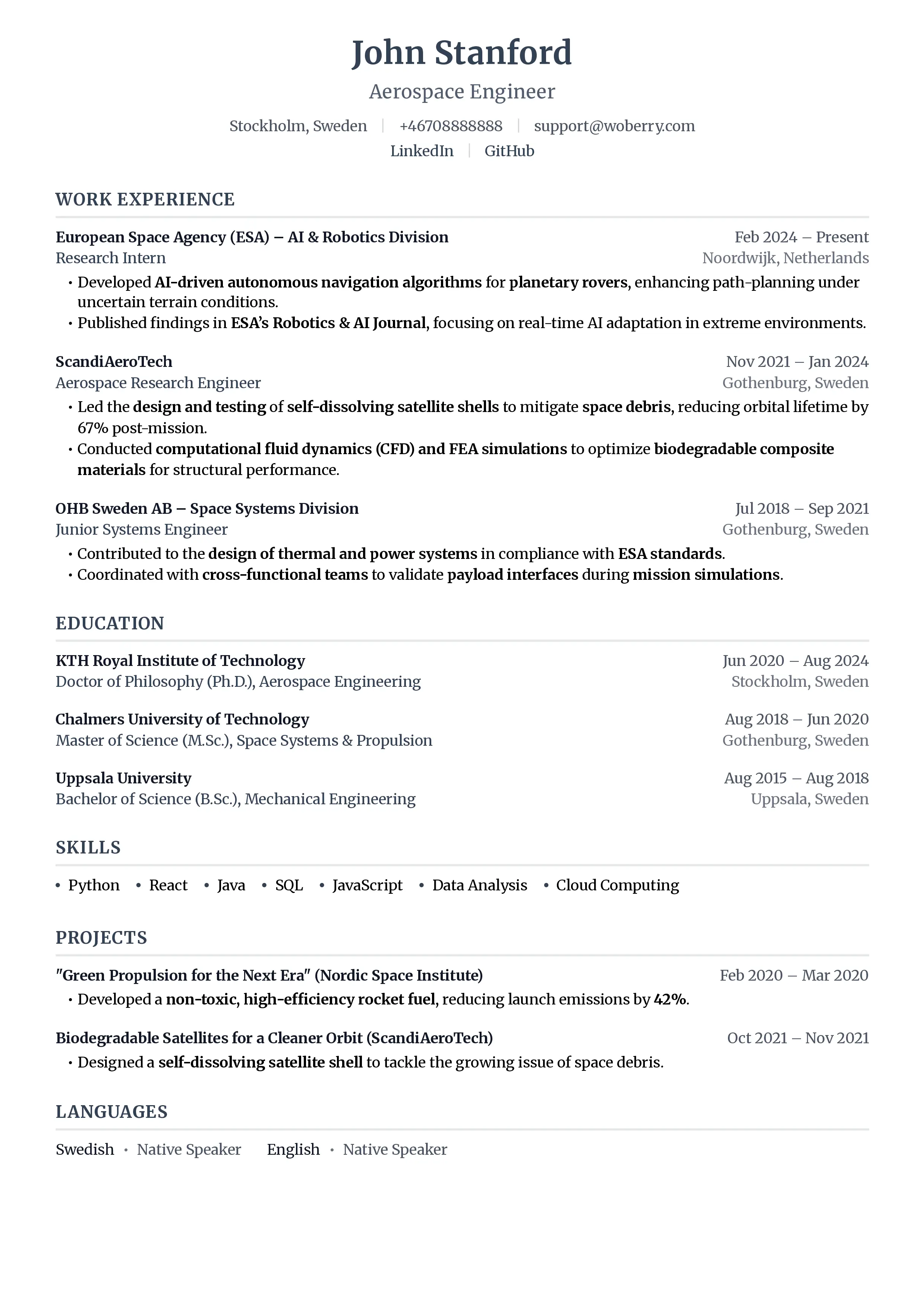
| Contact info | Let them reach you, pass ATS parsing | One clean line, no full street address |
| Headline + summary | Frame who you are in one breath | Specific role + proof, not a job title |
| Work experience | Carry 80% of the persuasion | Achievements, quantified, most recent first |
| Skills | Match keywords, show range | Mirror the posting, hard skills first |
| Education | Confirm the baseline | Brief once you have experience |
| Optional sections | Tie-breakers | Projects, certs, volunteering, only if relevant |
Let's go through each.
Contact information
Keep it to a single line or small block: name, email, phone, city and state, and links to your LinkedIn or portfolio. Do not include your full street address in 2026. It is a privacy risk, it can trigger location-based filtering, and it does nothing for you. We cover the exact rules and the rare exceptions in should you put your address on your resume.
Use a professional email, not the one you made in tenth grade. And make sure the contact block is real text, not an image or a header field, so ATS software can actually read it.
Headline and summary
This is the first thing a human reads, and most people waste it on a generic job title. Your headline should pair a role with proof. Compare:
❌ Marketing Professional
✅ B2B Marketing Manager | Grew SaaS pipeline 3x in 18 months
The second one earns the next seven seconds of attention. We break down the formula and give a dozen role-by-role examples in resume headline examples that get interviews.
Underneath, a two or three sentence summary frames your pitch. If you are early-career or changing fields, you may want an objective instead. Which one fits you is covered in resume summary vs objective.
Work experience
This section does most of the work, so spend most of your effort here. Two principles govern it.
First, write achievements, not duties. A duty describes what you were supposed to do. An achievement describes what changed because you did it.
❌ Responsible for managing the company's social media accounts
✅ Grew Instagram from 2K to 15K followers in 8 months, generating 200+ qualified leads
The second is the same job, told as a result. The full method lives in the resume bullet point formula, and the case for putting numbers on everything is in how to quantify your achievements.
Second, weight by recency. Your current role gets the most space and the strongest bullets. Older roles shrink. Roles past 10 to 15 years can be a single line or dropped entirely. How many bullets each job deserves is its own question, answered in how many bullet points per job, and the deeper section walkthrough is in the work experience section guide.
Start every bullet with a strong action verb and lead with the result when you can.
Skills
The skills section has two readers: the ATS scanning for keyword matches, and the recruiter scanning for range. Serve both by mirroring the language of the job posting and listing concrete, hard skills first.
List the tools, technologies, methods, and certifications the role names. Keep soft skills minimal and prove them through your bullets instead of claiming them in a list. The difference, and how ATS treats each, is in hard skills vs soft skills. If you are pivoting, learn to surface transferable skills so a hiring manager sees the bridge to the new role.
Education
Once you have a few years of experience, education becomes a quick confirmation, not a centerpiece: degree, institution, graduation year, and honors if notable. New graduates can expand it with relevant coursework and projects. The placement and formatting details are in how to list education on your resume.
Optional sections that earn their place
These are tie-breakers. Include them only when they support your case for this specific role:
- Projects are gold for early-career applicants and career changers. See the resume projects section.
- Certifications can be decisive in regulated or technical fields. See certifications on your resume.
- Hobbies and interests are usually optional and only worth it when they fill space or signal something relevant. The honest guidance is in should you put hobbies on your resume.
- References do not belong on the resume itself, and neither does "references available on request." Here is why, and what to do instead.
Formatting: make it readable by humans and machines
A brilliant resume that the ATS cannot parse never reaches a human. The fix is boring and effective: a clean, single-column layout with standard section headings. Skip the tables, text boxes, columns, and graphics that break parsers. Use a standard font and consistent spacing.
The full formatting rulebook is in the resume formatting guide, the ATS mechanics are in the complete ATS resume guide, and if you are choosing a layout, the best resume format for ATS compares the options. You can pressure-test any draft for free with the ATS resume checker.
Length and what to cut
The one-page rule is a guideline, not a law. One page for early to mid-career, two pages once you have the experience to justify it, never padded to reach a number. We bust the dogma in the one-page resume myth.
When you trim, cut from the bottom and the past first. How far back your resume should go gives the recency rules, and if you have employment gaps, address them honestly using the resume gaps guide rather than hiding them.
Tailor for every application
The single highest-return habit in job searching is tailoring. Two candidates with identical experience get different results because one mirrored the posting and one sent a generic file.
You do not rewrite from scratch each time. You adjust the headline, reorder skills, and swap in the keywords that matter for that role. The workflow is in how to tailor your resume, and the fastest way to find the right terms is pulling keywords from the job description. An AI resume builder like ResumeFast makes this a two-minute step instead of an evening.
The mistakes that quietly kill resumes
| ❌ Mistake | ✅ Fix |
|---|---|
| Listing duties | Lead with quantified achievements |
| One resume for every job | Tailor to each posting |
| Decorative template that breaks ATS | Clean single-column layout |
| Full street address and personal data | City and state only |
| Vague soft-skill claims | Prove skills in your bullets |
| Padding to fill a page | Cut to what is relevant |
| Typos and inconsistent tense | Proofread, keep past roles past tense |
None of these are about talent. They are about discipline, which means they are all fixable today.
Putting it together
Write for one role. Lead with proof. Quantify everything you can. Keep the layout clean enough for a machine and scannable enough for a human reading in seconds. Cut what does not serve the case, and tailor what remains. That is the whole game.
When you are ready to build or rebuild, ResumeFast handles the formatting and ATS-safety for you, scores your draft against a real job posting, and helps you turn duties into achievements. Start from a proven template or a real resume example in your field, then work through the sections above in order.
Frequently Asked Questions
What are the most important sections of a resume in 2026?
Contact information, a headline and summary, work experience, skills, and education are the core sections. Work experience carries most of the persuasion, so it deserves the most space and your strongest, most quantified bullets.
How long should a resume be?
One page is right for early and mid-career job seekers, and two pages are fine once your experience genuinely justifies it. Length should follow from relevance, so never pad a resume to reach a page count.
Should I write duties or achievements on my resume?
Write achievements. A duty says what you were responsible for, while an achievement says what changed because you did it. Lead with the result and add a number wherever you can.
Do I need to tailor my resume for every job?
Yes, at least lightly. You do not rewrite from scratch, but adjusting your headline, reordering skills, and matching the keywords in the posting is the highest-return habit in job searching.
How do I make sure my resume passes ATS?
Use a clean single-column layout with standard section headings, real text instead of images or tables, and a standard font. Then run it through a free ATS checker to confirm it parses correctly before you apply.
Your resume is your first impression. Make it count.
Join 50,000+ job seekers using ResumeFast to build ATS-optimized resumes that actually get interviews.
No credit card required. Free forever.
Continue Reading
View all articles
Declaration in Resume: Do You Still Need One in 2026?
Cover Letter vs Resume: Differences and When You Need Both
The Complete ATS Resume Guide (2026)

Should You Put Hobbies and Interests on Your Resume?
How Many Bullet Points Per Job on a Resume?
Should You Put Your Address on Your Resume in 2026?
Build a resume that gets interviews
Ready to build your resume?