Should You Put Your Address on Your Resume in 2026?
Wondering about the address on your resume? Here is when to include your full address, when city and state is enough, and when to leave it off entirely.

Raman M.
Software Engineer & Career Coach
On this page
Build a resume that gets interviews
- ATS-optimized templates
- AI-powered writing
- Free to start
No credit card required
You are staring at the top of your resume, cursor blinking after your phone number, wondering whether to type out your full street address. Part of you worries it looks unprofessional to leave it off. Another part does not love the idea of a stranger knowing exactly where you sleep. And if you are applying out of state, you are terrified that one line about your current city quietly kills your application before a human ever reads it. That hesitation is reasonable, and the good news is the answer is simpler than the anxiety.
In 2026, you generally should not put your full street address on your resume. The modern standard is to include only your city and state (or City, Country if you are applying internationally), because your house number and ZIP code create privacy risk and offer almost no benefit. There are a few specific exceptions, mostly federal and government roles, where a full address is expected. Outside of those, city and state is enough.
This post explains the reasoning, walks through every common situation, and shows you exactly what your contact line should contain.
Why the full street address fell out of favor
Resumes used to require a mailing address because that is how companies actually contacted you. Today, the entire hiring process runs on email, phone, and applicant tracking systems. Nobody is mailing you an interview invitation. The street address is a leftover habit, not a functional field.
Here is what that leftover habit costs you.
Privacy and safety. Your resume travels further than you think. It gets forwarded between recruiters, uploaded to third party job boards, and stored in databases you will never see. Publishing your exact home address to all of those parties is an unnecessary exposure, and it matters even more if you have any personal safety concerns.
Location based filtering. Some recruiters and some ATS configurations sort candidates by distance from the office. A full address with a ZIP code makes that filtering more aggressive. If you live 40 minutes away or you are planning to relocate, a precise address can get you screened out before anyone reads your experience. City and state gives the recruiter the context they need without handing them a reason to auto reject you.
ATS parsing. Applicant tracking systems read the contact block first, and a long messy address line is more likely to be misparsed than a clean one. When an ATS chokes on your contact information, your phone or email can land in the wrong field. A short City, State string is the safest thing to feed it. For a deeper look at how parsers read that top section, see the complete ATS resume guide.
The 7 second scan recruiters do on a first pass is about pattern matching, not reading. Your address is not a pattern they are looking for. You can read more about that scanning behavior in our resume statistics for 2026.
What to include based on your situation
There is no single rule that fits everyone, so here is a decision table. Find your row and follow it.
| Situation | What to put | Why |
|---|---|---|
| Applying to local in office roles | City and state | Signals you are local and commutable without exposing your full address |
| Fully remote roles | City and state, or just state, or nothing | Location barely matters, so a region or time zone is plenty. See the remote tips below |
| Relocating to a new city | The target city and state, with a note like Relocating to Austin, TX | Tells the recruiter you are available where the job is, not where you live now |
| Privacy or safety concerns | City and state only, never the street | Protects your physical location while still giving needed context |
| Federal or government applications | Full mailing address | USAJOBS and many government forms expect a complete address, so follow the instructions |
The pattern is consistent. For almost every private sector job, city and state is the right answer. The full street address only comes back when the application explicitly asks for it.
A note on remote and relocation
For a fully remote role, recruiters often care about your time zone or your eligibility to work in a country, not your address. Listing your state and a time zone like Denver, CO (Mountain Time) is genuinely useful. For more on framing yourself for distributed teams, read the remote job resume guide.
For relocation, do not list your current out of state city and hope nobody notices. Instead, put the destination. A clean line such as Relocating to Seattle, WA (June 2026) answers the recruiter's only real question, which is can this person actually work here.
What your contact line should actually contain in 2026
Strip the contact section down to what hiring teams actually use. Here is the full checklist.
- Full name, as the largest text on the page
- City and state (or City, Country), no street, no ZIP
- Phone number with the country code if you are applying internationally
- Professional email address, ideally some version of your name
- LinkedIn URL, cleaned up to a custom handle
- Portfolio or GitHub link, only if relevant to the role
- Skip: street address, ZIP code, full date of birth, marital status, a headshot (for US applications)
A clean example looks like this:
Before (oversharing):
Jane Doe 1428 Maple Street, Apt 3B, Columbus, OH 43215 jane.doe.92.coolgirl@email.com | 614-555-0188
After (2026 standard):
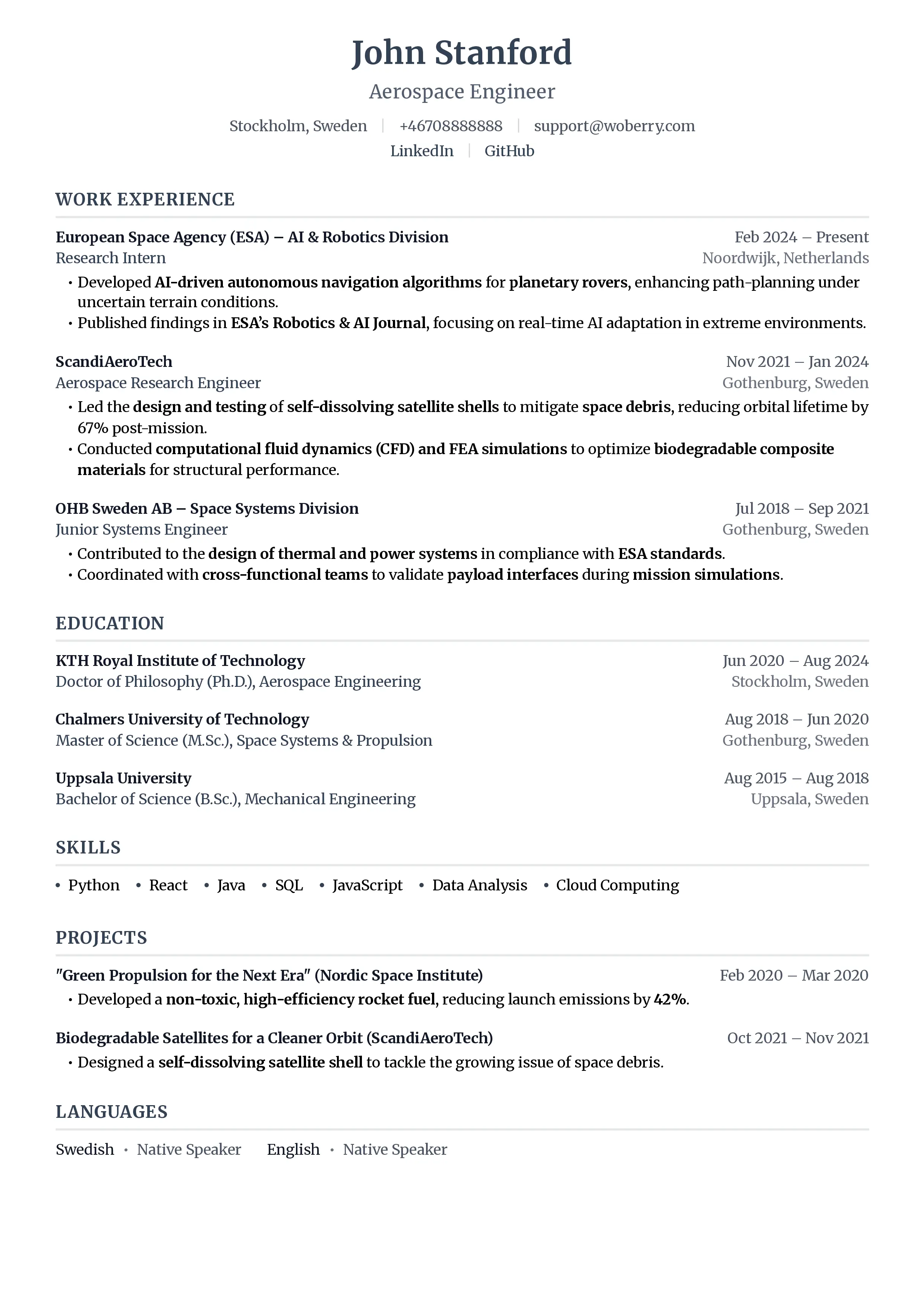
Jane Doe Columbus, OH | (614) 555-0188 jane.doe@email.com | linkedin.com/in/janedoe
The second version gives a recruiter everything they need and nothing they can use against you. You can build an ATS friendly contact section in seconds with ResumeFast, and then confirm the parser reads every field correctly using our free ATS checker.
The short version
Lead with city and state. Drop the street address unless a federal or government application demands it. Point your location toward the job when you are relocating, and lean on region or time zone for remote work. Your contact block exists to make you easy to reach and easy to picture in the role, not to publish your front door.
For how this section fits into the rest of your document, head back to the resume writing guide.
Frequently Asked Questions
Do you need a full street address on a resume in 2026?
No. For almost all private sector jobs, city and state is the standard. A full street address is only expected for federal or government applications that specifically request it.
Will leaving my address off hurt my application?
Not if you still include your city and state. Recruiters want to know your general location for commute or time zone reasons, and city and state answers that without the privacy risk of a full street address.
What address should I use if I am relocating?
List the city and state you are moving to, not your current one. Adding a short note like Relocating to Austin, TX tells recruiters you will be available where the job is located.
Your resume is your first impression. Make it count.
Join 50,000+ job seekers using ResumeFast to build ATS-optimized resumes that actually get interviews.
No credit card required. Free forever.
Continue Reading
View all articles
Declaration in Resume: Do You Still Need One in 2026?

Should You Put Hobbies and Interests on Your Resume?
How Many Bullet Points Per Job on a Resume?

Resume Headline Examples That Get Interviews (2026)
Resume Writing Guide: How to Write a Resume in 2026

Europass CV Guide: When to Use It and When to Avoid It
Build a resume that gets interviews
Ready to build your resume?