How Many Bullet Points Per Job on a Resume?
How many bullet points per job on a resume? Use 3-6 per role, with your most recent job getting the most. A simple Bullet Budget framework and table.

Raman M.
Software Engineer & Career Coach
On this page
Build a resume that gets interviews
- ATS-optimized templates
- AI-powered writing
- Free to start
No credit card required
You're staring at one job entry on your resume, cursor blinking after the third bullet. Three feels thin, like you barely did anything there. But you've also seen resumes with eight or nine bullets per role, and they read like a wall of text nobody finishes. So which is it? Does three look lazy, or does eight look bloated? You just want a number you can trust so you can move on.
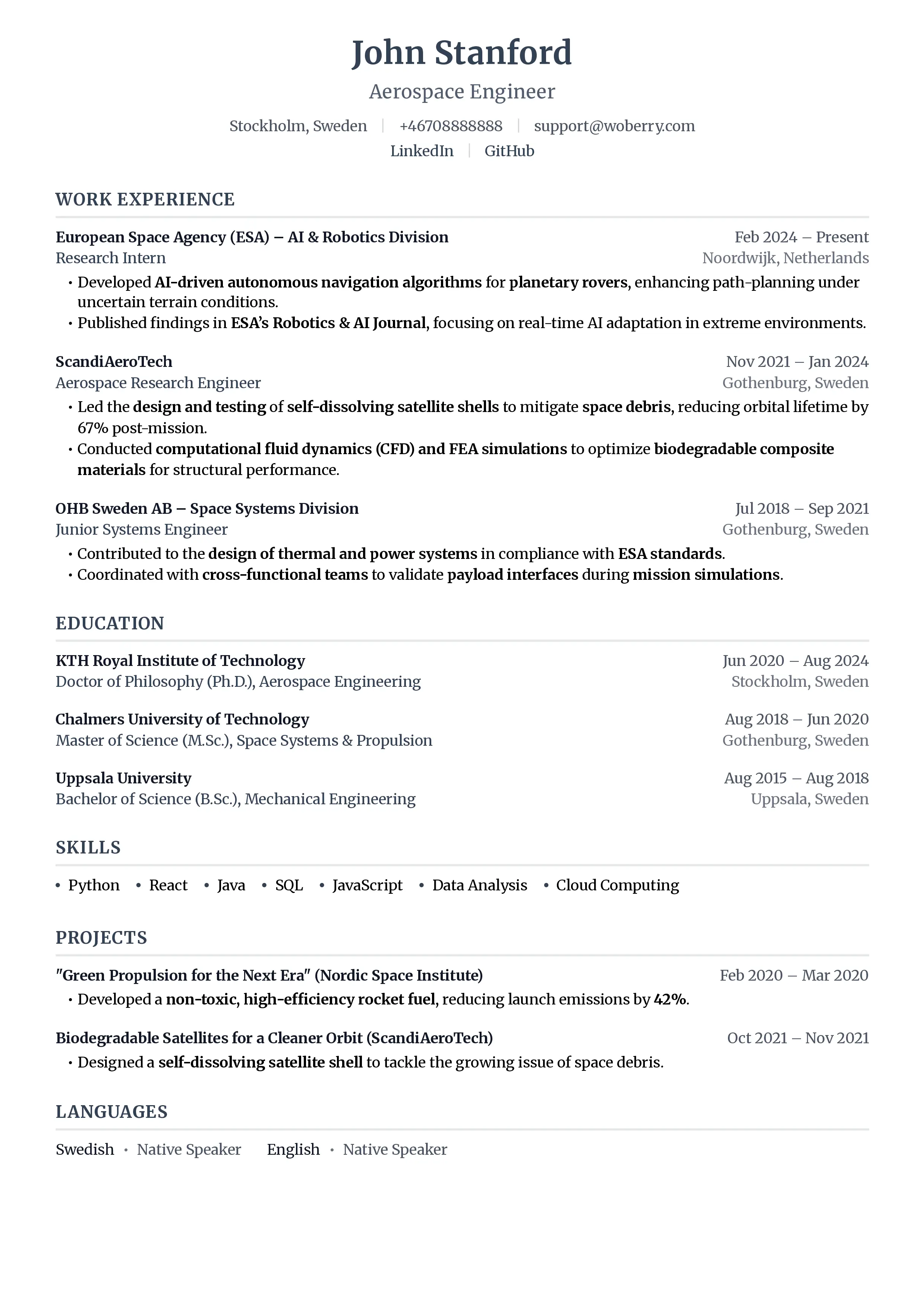
Here's the direct answer: most roles should have 3-6 bullet points. Your current or most recent role gets the most (5-6 bullets), older roles get fewer (2-3 bullets), and roles past roughly 10-15 years can shrink to a single line or be dropped entirely. There is no rule that every job needs the same count. The right number depends on how recent and how relevant the role is.
Why bullet counts should vary by role
The instinct to give every job the same number of bullets feels fair, but it works against you. Recruiters spend an average of about 7.4 seconds on an initial scan. They aren't reading every word. They're pattern-matching, looking for recent, relevant signal. Three forces shape how many bullets each role deserves.
Recency weighting. What you did last year matters more than what you did a decade ago. Recruiters read top to bottom and weight your most recent role heaviest, so that's where your strongest, most detailed bullets belong. An old role doesn't need a deep dive. It needs to confirm the timeline and show one or two transferable wins.
Signal versus noise. Every weak bullet you add dilutes your strong ones. If your top role has two genuinely impressive achievements and four filler lines about "attending meetings" and "responding to emails," the filler drags down the standouts. Fewer, sharper bullets read as more impressive than a long list padded with routine duties.
Page-space budget. A resume is a fixed canvas, usually one or two pages. Every bullet competes for that space. Spending five lines on a job from 2012 means less room for the role that actually got you this interview. Treat space as the scarce resource it is, and spend it on what's recent and relevant.
The Bullet Budget framework
Think of your bullets as a budget you spend across your work history, not a flat allowance handed to every job. The Bullet Budget allocates more bullets to roles that carry more weight: recent, relevant, and senior. Then it tapers down as roles get older and less relevant.
Here's how the budget breaks down by role age:
| Role | Suggested bullets | Why |
|---|---|---|
| Current / most recent role | 5-6 | This is what recruiters scan first and weight heaviest. Give it your strongest, most detailed achievements. |
| Role from 2-3 years ago | 4-5 | Still recent and relevant. Show solid impact, but slightly tighter than your current role. |
| Role from 5-7 years ago | 2-3 | Confirms your trajectory. Keep only the highlights and transferable wins. |
| Role from 10+ years ago | 1-2 (or one line) | Adds context, not detail. A single strong line or a one-line summary is plenty. |
| Internships / very old jobs | 0-1 | Often droppable once you have full-time experience. Keep only if uniquely relevant. |
This taper is exactly why your resume can stay tight even with a long career. The further back a job sits, the less it needs to say. For more on where to draw the cutoff line entirely, see how far back should a resume go.
Right-sizing one role: an example
Counts only get you so far. The bullets themselves have to earn their spot. Here's a current marketing manager role with too few bullets, leaving the entry feeling thin and underselling real work:
❌ Too few (looks thin):
Marketing Manager, Brightline SaaS
- Managed the company's marketing efforts and social media accounts.
That's one vague line for a role that should be carrying your resume. A recruiter learns almost nothing. Now the same role, right-sized to the Bullet Budget with specific, quantified achievements:
✅ Right-sized (5 bullets):
Marketing Manager, Brightline SaaS
- Grew marketing-sourced pipeline 38% in 12 months by rebuilding the inbound content funnel.
- Led a team of 4 across content, paid, and lifecycle, owning a $480K annual budget.
- Launched a webinar program that generated 200+ qualified leads per quarter.
- Cut customer acquisition cost 22% by reallocating spend from paid social to SEO.
- Partnered with Sales and Product to ship a referral program that drove 15% of new signups.
Five bullets, each one a distinct, measurable win. Notice the structure: action verb, what you did, and the result. If your bullets feel flat, the fix usually isn't more of them. It's better ones. Walk through the resume bullet point formula to sharpen each line before you worry about the count.
Quick rules to keep yourself honest
A few guardrails keep your bullet counts from drifting:
- Never go below 2 bullets on a role you want to highlight. A single line on a recent, relevant job reads as an afterthought.
- Never exceed 6 on a single role. Past six, recruiters skim and your best bullets get buried. If you have more than six strong achievements, you have a portfolio, not a resume entry.
- Cut any bullet that describes a routine duty. "Responsible for daily operations" tells a recruiter nothing. If a bullet doesn't show impact or a transferable skill, delete it.
- Lead each role with its strongest bullet. The first bullet of every job gets read most. Put your biggest win there, not your job description.
If you want the full picture of how bullets fit into the rest of the section, including job titles, dates, and ordering, read the work experience section guide.
Let your resume builder pace it for you
Counting bullets by hand across five jobs gets tedious, and it's easy to over-write your oldest roles out of habit. ResumeFast's resume builder helps you keep recent roles detailed and older ones tight, so your Bullet Budget stays balanced without you tracking it line by line. You write the wins. It keeps the structure honest.
For the complete approach to writing and structuring every section, start with our resume writing guide.
Frequently Asked Questions
How many bullet points should a job have on a resume?
Most roles should have 3-6 bullet points. Give your current or most recent role 5-6, roles from a few years ago 4-5, and older roles 2-3. Roles past 10-15 years can shrink to a single line.
Is it okay to have only 2 bullet points for a job?
Yes, for older or less relevant roles two bullets is fine and often ideal. For your current or most recent role, aim for at least three to four so you don't undersell recent, relevant work.
Should every job on my resume have the same number of bullets?
No. Recruiters weight recent roles most heavily, so your latest job should have the most bullets and older roles fewer. A taper keeps your resume tight and puts the focus on what matters now.
Your resume is your first impression. Make it count.
Join 50,000+ job seekers using ResumeFast to build ATS-optimized resumes that actually get interviews.
No credit card required. Free forever.
Continue Reading
View all articles
Declaration in Resume: Do You Still Need One in 2026?

Should You Put Hobbies and Interests on Your Resume?
Should You Put Your Address on Your Resume in 2026?

Resume Headline Examples That Get Interviews (2026)
Resume Writing Guide: How to Write a Resume in 2026

Europass CV Guide: When to Use It and When to Avoid It
Build a resume that gets interviews
Ready to build your resume?