Hard Skills vs Soft Skills: Which Matter for ATS?
Do ATS systems filter for hard skills or soft skills? Learn which keywords actually pass resume scanners and how to list both effectively.

Raman M.
Software Engineer & Career Coach
On this page
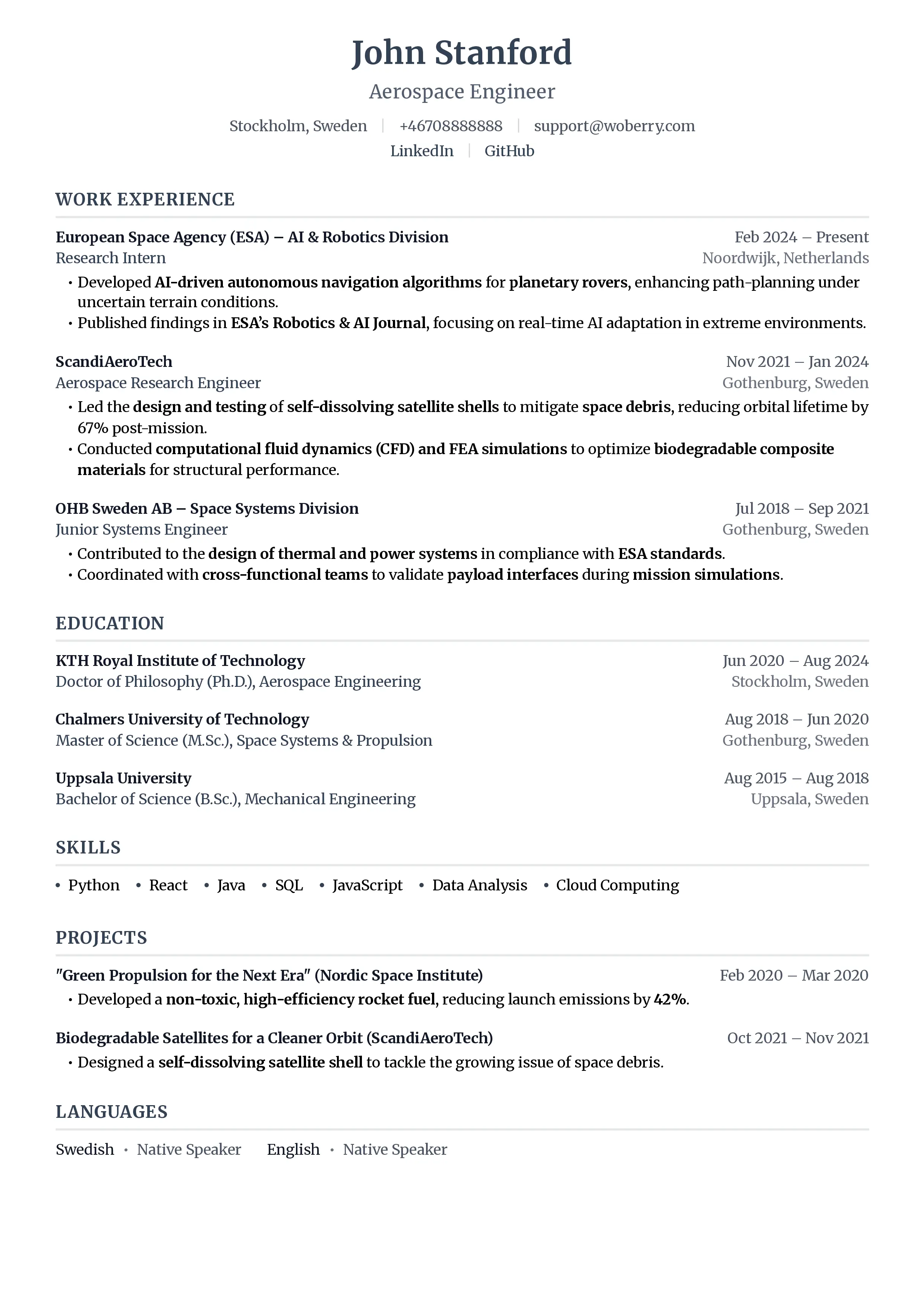
Build a resume that gets interviews
- ATS-optimized templates
- AI-powered writing
- Free to start
No credit card required
You stuffed your resume with "team player," "excellent communicator," and "detail-oriented," and you still heard nothing back. It feels unfair, because those things are genuinely true about you. The problem isn't honesty. It's that the software reading your resume first has no idea what to do with words like those.
Here's the direct answer: ATS keyword filters mostly match hard skills, the concrete, nameable tools, technologies, and certifications a job requires. Soft skills like "communication" or "team player" are rarely useful as ATS keywords, because they're vague and almost every applicant claims them. When a recruiter searches the applicant pool inside the tracking system, they search for "Python" or "Salesforce" or "CPA," not "hardworking." That means hard skills are what get you matched and surfaced. Soft skills still matter enormously, but they belong in your achievement bullets where you can prove them, not in a keyword list where they're just noise.
This single distinction explains why so many strong candidates get filtered out. With up to 75% of resumes filtered before a human ever sees them, the words you choose for your skills section aren't decoration. They're the search terms that decide whether you exist in the recruiter's results at all.
What's the actual difference?
A hard skill is something measurable and teachable that you either have or you don't. SQL. Forklift certification. French fluency. AWS. You can test it, certify it, or check it on a screen.
A soft skill is a behavioral trait or interpersonal ability. Leadership, adaptability, communication. These are real and often more important to long-term success, but they're subjective. There's no exam that certifies you as "a good collaborator."
That subjectivity is exactly why the ATS treats them so differently. A scanner can confidently confirm the literal string "JavaScript" appears in your document. It can't confirm you're "self-motivated," and recruiters don't trust the claim anyway, because every other applicant typed the same thing.
Hard skills vs soft skills for ATS, side by side
This is the comparison we use internally at ResumeFast when we help people audit a skills section:
| Aspect | Hard Skills | Soft Skills |
|---|---|---|
| Definition | Measurable, teachable abilities: tools, software, certifications, languages | Behavioral traits and interpersonal abilities |
| ATS searchability | High. Recruiters search for exact nouns like "Python" or "PMP" | Low. Rarely used as filter terms, treated as filler |
| Examples | SQL, Python, HubSpot, CPA, AWS, Figma, Spanish (fluent) | Communication, leadership, teamwork, adaptability |
| Where to put them | Dedicated Skills section, plus woven into experience bullets | Demonstrated inside achievement bullets, never as a standalone list |
| How recruiters verify them | Certifications, portfolios, technical screens, exact match to job posting | Inferred from results you describe and confirmed in interviews |
The pattern is clear. Hard skills are the searchable, verifiable terms that move you through the funnel. Soft skills are the human qualities you earn credit for once you've already been surfaced.
Exact nouns beat vague adjectives
Recruiters and the systems they use search for specific nouns that match the job description. Vague adjectives match nothing. Here are strong, ATS-parseable hard skills across a few common roles:
- Software engineer: Python, JavaScript, React, AWS, Docker, PostgreSQL
- Marketer: HubSpot, Google Analytics, SEO, Salesforce, Meta Ads
- Accountant: CPA, QuickBooks, GAAP, Excel, accounts payable
- Designer: Figma, Adobe XD, Sketch, prototyping, design systems
- Data analyst: SQL, Tableau, Python, Excel, A/B testing
Notice that every one of those is a thing a recruiter could literally type into a search box. "Proficient in modern tools" is not. If the job posting says "Salesforce," your resume should say "Salesforce," using the exact spelling and any well-known acronym. Matching the posting's own language is the single highest-leverage move you can make, and it's the core idea behind the complete guide to ATS keywords.
Don't list soft skills. Prove them.
Soft skills aren't worthless. They're just in the wrong place when they sit in a comma-separated list. A line that reads "Skills: communication, leadership, problem-solving" tells a recruiter nothing they didn't already assume you'd claim. The fix is to move the soft skill into a result that demonstrates it.
Before (vague):
Strong communicator and natural team leader.
After (proven):
Led a cross-functional team of 8 to launch a new onboarding flow, cutting first-week customer churn by 22% over two quarters.
The second version never uses the words "leader" or "communicator," yet it proves both. It shows leadership through the team size and outcome, and communication through the cross-functional coordination. It also drops in a hard, quantified result that a recruiter scanning for ~7.4 seconds can actually anchor on. That's the trade you want: replace the adjective with the evidence.
Skills section vs experience bullets: where each goes
Think of your resume as having two jobs to do, and split your skills accordingly.
Your Skills section is a keyword index. Fill it with hard skills only: the tools, languages, certifications, and platforms relevant to the role. This is the section the ATS and the recruiter scan to confirm you have the technical baseline. Keep it scannable, grouped if it's long, and aligned word-for-word with the posting.
Your experience bullets are where soft skills live. Every soft skill should show up as a behavior inside a quantified accomplishment, never as a label. Collaboration becomes "partnered with three departments." Adaptability becomes "rebuilt the reporting pipeline in two weeks after a vendor change." The reader concludes you have the trait, which is far more persuasive than you asserting it.
If you want to know why simply piling on more keywords backfires, and how matching beats stuffing, read the resume keywords myth. And if you'd rather just see which terms your resume is missing for a specific job, run it through ResumeFast's ATS Checker to spot the hard-skill gaps before a recruiter does.
Frequently asked questions
Do ATS systems scan for soft skills at all?
Rarely in a way that helps you. Most recruiter searches inside an ATS use hard-skill nouns and exact job titles, because those return a precise, verifiable list of candidates. Soft-skill words like "motivated" or "team player" are so common across every resume that filtering by them is useless, so recruiters don't. Soft skills earn you credit in the interview and through the results you describe, not in keyword matching.
Should I have a dedicated skills section?
Yes, and fill it with hard skills. A clean, dedicated Skills section gives both the ATS and the human a fast confirmation that you meet the technical requirements. List tools, software, certifications, and languages that match the posting. Leave soft skills out of this section and demonstrate them in your work experience instead.
How many hard skills should I list?
Enough to cover the core requirements of the job without padding. Aim for roughly 8 to 15 relevant hard skills, prioritizing the ones named directly in the job description. Listing skills you can't actually back up is risky, because a technical screen or interview question will expose the gap quickly.
Can a soft skill ever be a useful keyword?
Occasionally, when a posting names a specific competency repeatedly and the role is built around it, like "stakeholder management" for a program manager. Even then, the stronger move is to prove it in a bullet with a concrete outcome. Mirror the posting's exact phrase once if it's emphasized, then back it up with evidence rather than relying on the label alone.
The takeaway
Hard skills get you found. Soft skills get you hired once you're in the room. Load your Skills section with the exact, searchable nouns the job posting uses, then spend your experience bullets proving your soft skills through quantified results. Do that, and you stop being filtered as "another team player" and start being matched as the specific person the role is looking for.
Your resume is your first impression. Make it count.
Join 50,000+ job seekers using ResumeFast to build ATS-optimized resumes that actually get interviews.
No credit card required. Free forever.
Continue Reading
View all articles
The Complete ATS Resume Guide (2026)
Do Headers and Footers Break ATS Parsing?
Resume Keyword Density: How Often to Repeat Keywords
ATS-Friendly Fonts: Which Fonts Pass Resume Scanners
How to Find Resume Keywords in a Job Description
Why Columns and Tables Break Your Resume in ATS
Build a resume that gets interviews
Ready to build your resume?