
Take-Home Assignments in 2026: Do Them or Walk Away
Take-home tests can waste hours without leading to offers. Learn which assignments deserve your time, how long to spend on them, and when to politely decline.

ResumeFast Team
The team behind ResumeFast

On this page
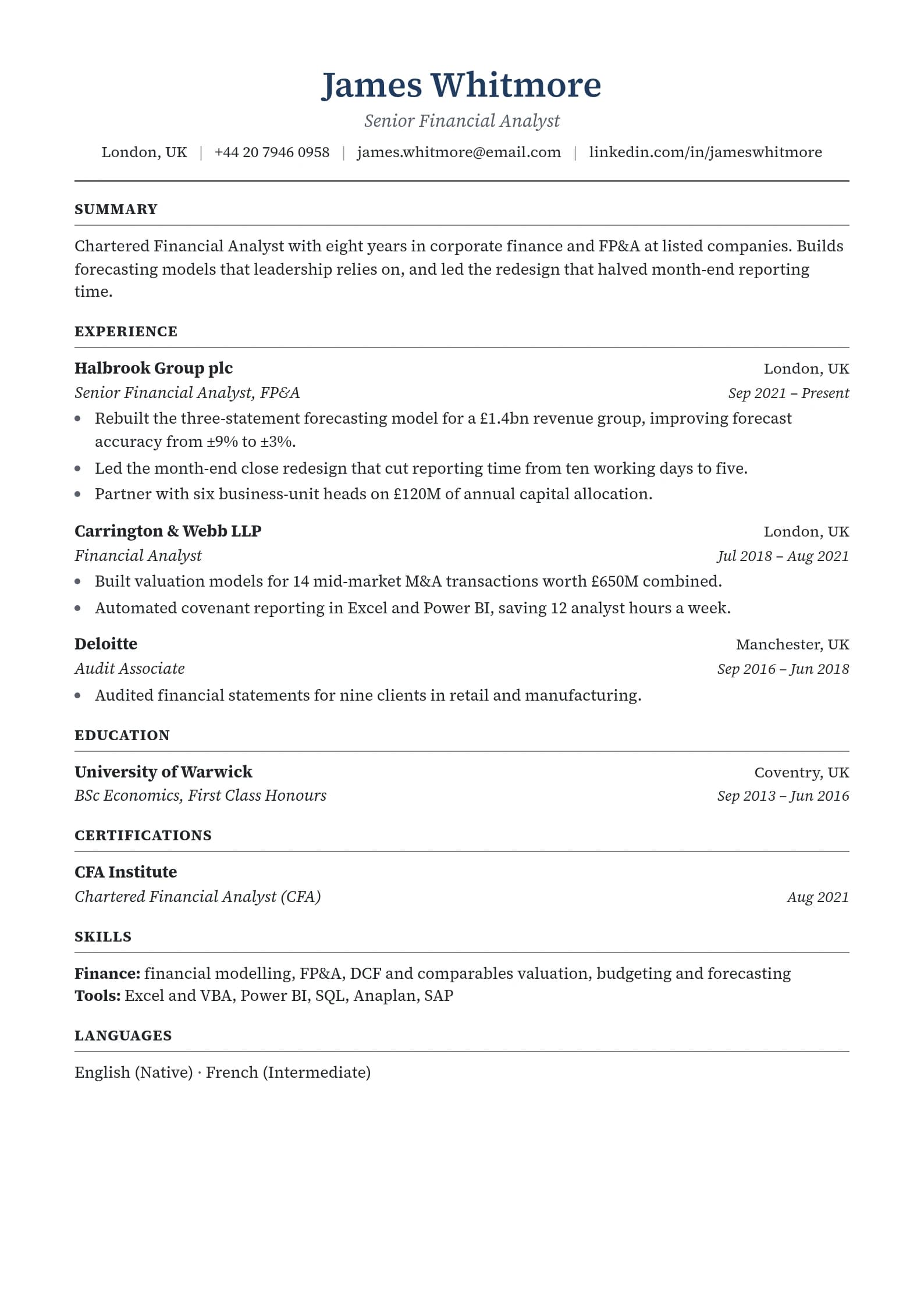
Build a resume that gets interviews
- ATS-optimized templates
- AI-powered writing
- Free to start
No credit card required
A take-home assignment lands in your inbox. Eight hours of estimated work. A two-week deadline. The job you wanted.
You're already mentally clearing your weekend. Stop. Most take-home assignments are bad investments of your time, and a meaningful share are not assignments at all but free labor in a polite costume. Knowing the difference is now a core job-search skill.
This is the 2026 playbook: how to evaluate the assignment, how long to actually spend, and how to walk away without burning the bridge.
The Direct Answer
Do the take-home if all three of these are true:
- The role is a top-3 target and you're past at least one human screening round.
- The estimated effort is realistic (4-8 hours) and the prompt is generic enough that it can't be shipped to production.
- The company has at least one public engineering or hiring blog post demonstrating they know how to assess candidates.
Politely decline if any of these are true:
- The assignment requires more than 10 hours of real work.
- The prompt closely mirrors actual production work the company is selling.
- They sent it before any human conversation.
- They want production-quality code with no compensation for senior-level scope.
Everything below is the reasoning behind those rules.
Why Take-Homes Got Worse in 2026
Take-home assignments were originally a fairer alternative to whiteboard interviews. The candidate worked at their own pace, on their own machine, with their own tools. Good idea.
Then the AI hiring arms race happened. Companies got swamped with applications. They needed cheap filters. Take-homes scaled in a way that human interviews didn't.
The result, in 2026: take-homes are the cheapest filter a company has outside of an ATS keyword scan. Many companies send them to dozens of candidates per role, knowing only 2-3 will be invited to onsites. Your effort is the company's filter.
This isn't necessarily bad. But it changes the math.
The Three Categories of Take-Home
Not all take-homes are equal. Sort the one in your inbox into one of these:
Category 1: The Calibrated Skill Test (do it)
These are short, generic, and clearly designed:
- "Build a basic [feature] using any framework. Spend 3-4 hours. We're evaluating your code structure, not the polish."
- "Here's a debugging scenario. Walk us through how you'd diagnose it."
- "Write a 1-page memo on how you'd approach [problem]."
Signals it's calibrated:
- Time estimate is honest (and matches reality)
- Rubric is shared up front
- Prompt is intentionally generic; it can't be repurposed for the company's actual roadmap
- Submitted work is reviewed by at least one engineer (you'll be told who)
These are worth doing. They actually predict job performance and your effort goes into a real evaluation.
Category 2: The Filter Test (do it strategically)
Mid-quality assignments. Often longer than they should be. Slightly suspicious specificity.
- "Build a small CRUD app with user auth, dashboards, and a billing flow. Spend ~10 hours."
- "Design a database schema for [eerily specific business problem]."
- "Build a small marketing landing page for our actual product."
These walk a line. They might be legitimate scope tests or they might be scoping work the company hasn't budgeted for engineering yet.
Strategy: time-box hard. Spend the company's stated estimate, not what would produce great work. Submit at the time-box. Annotate what you'd add with more time. A good company will respect the time-box; a bad one will quietly eliminate you for not going above and beyond. You don't want to work for the second company.
Category 3: The Free-Labor Trap (decline)
These are not assignments. They are unpaid contracting projects with a "maybe we'll hire you" wrapper.
Red flags:
- 15+ hours of estimated work
- The deliverable is a complete, ready-to-ship feature or document
- The prompt mentions "we'll use your work to inform our roadmap"
- They want production-quality code with full tests, documentation, and deployment
- The company already has competing candidates' submissions on the same prompt
- The assignment came before a human screening conversation
- The brief contains real customer data, real competitor names, or real production constraints
These are extracting value from candidates. Even if you "win" the role, you've taught the company that this works.
The Time-Boxing Rule
Whatever the company's estimate is, that's your maximum. Not your minimum.
The math: assume the company sent the assignment to 15 candidates. The top 3 will go to onsite. So your odds are 1 in 5, even if you're qualified. At those odds, every hour beyond the time-box has an expected return below minimum wage for any normal salary band.
Concrete time-boxes:
| Stated estimate | Your hard cap |
|---|---|
| 1-2 hours | 2 hours |
| 3-4 hours | 4 hours |
| 5-8 hours | 6 hours |
| 10+ hours | Decline or push back |
If the company says 4 hours and you feel like you need 12 to do it well, the prompt is broken. Submit at 4 hours with a note like:
"I capped this at the suggested 4 hours. If I had more time, I would have added [specific list]. I'm happy to discuss those decisions live."
Senior engineers respect this. Mid-managers who haven't done a real take-home in 5 years often don't. You'll learn which company you're talking to fast.
How to Decline Without Burning the Bridge
You will sometimes decline. That's healthy. Here's how to do it without losing the relationship.
Decline template (when the assignment is too long)
Hi [Name], thanks for the assignment. After reviewing, I think the scope is closer to 15 hours of work than the 5 you've outlined, and that's more than I can take on right now. I'd love to demonstrate the same skills in a 60-minute live session if your team is open to it. If not, I understand and wish you a great search.
Some companies will agree to a live alternative when you ask politely. Others will not, and that tells you something too.
Decline template (when you're walking away entirely)
Hi [Name], thank you for considering me for [role]. After thinking it over, I've decided to focus on opportunities further along in their process. I appreciated [specific positive thing from earlier conversation] and would welcome the chance to reconnect on future roles.
Short, kind, no over-explaining. Don't say "your assignment is bad." Don't say "I have other offers" unless you do. Just close the loop.
What never to do
- Do not ghost. The recruiter community is small.
- Do not submit a half-finished assignment as a protest. That hurts you, not them.
- Do not negotiate the assignment scope after starting. Either time-box and submit, or decline cleanly.
What to Submit (When You Do Submit)
Once you've decided to do the assignment, the goal is clear thinking, not heroic effort.
The high-impact moves
Write a one-page README. Most candidates don't. The README is where you explain your decisions: what you prioritized, what you cut, what you'd add with more time. This single document does more than 4 extra hours of code polish.
Comment your trade-offs, not your code. Don't write "// loops over array." Do write "// could use a hash map for O(1) lookup; chose array for code clarity at this size."
Submit on time, not early or late. Early signals you under-scoped. Late signals you can't manage. On-time signals you respect time-boxes, which is exactly what senior people look for.
Include a "next steps" section. If you had another 4 hours, what would you do? This is how you signal seniority without doing the work.
For more on signaling seniority across the application, see our resume positioning guide for higher pay.
The Walkthrough Stage
Many take-homes are followed by a "walk us through your submission" call. This is the actual interview. The take-home was just the warm-up.
Treat this like any other interview prep:
- Re-read your code/document the morning of, not the night before
- Be ready to defend every trade-off you made
- Have a clear answer for "what would you do differently"
- Anticipate the "what if we changed [requirement]" questions
For deeper interview-day prep, see the job interview preparation guide.
When to Push Back vs Comply
The assignment process is a negotiation, even if it doesn't feel like one. You have more leverage than you think, especially if you have other processes running.
Pushback that's reasonable
- "Can we extend the deadline by 5 days? I'm finishing another final round."
- "Could we do a 60-minute live session instead? I find that format more representative."
- "Is there a smaller version of this you've used before? I want to make sure I'm investing time at the right scope."
- "Could you share the rubric or evaluation criteria?"
Strong companies say yes to most of these. Weak ones get defensive. The defensive response is information.
Pushback that backfires
- Demanding payment for the assignment (unless they're explicitly senior, $1k+ ranges, the answer will be no and you'll be eliminated)
- Negotiating the scope after starting
- Re-using a similar past project verbatim without telling them
The Bigger Pattern
Take-home assignments are a small piece of a 2026 hiring market that increasingly extracts effort from candidates without committing to outcomes. The same dynamic shows up in:
- 6-round interview loops without final-round commitment
- "Cultural fit" rounds added after the offer is verbally extended
- Reference checks before any real conversation about scope
- Pre-hire job simulations that take hours
The defense is the same: time-box hard, ask for written rubrics, and be willing to walk. Companies that invest in their hiring process find candidates. Companies that extract value lose them.
Frequently Asked Questions
Should I include AI-generated code in a take-home?
If the assignment doesn't prohibit it, yes, but disclose it. "I used [tool] for [specific component], reviewed and modified for [specific reasons]." The companies that care about authentic evaluation will respect transparency. The ones that ban AI without saying so will catch it anyway through follow-up questions you can't answer.
What if the assignment specifies "no AI tools"?
Comply. It's a real test, including a test of whether you follow instructions. If you can't do the work without AI in 2026, that's a different conversation about your skill stack, not a workaround for this assignment.
How do I know if the company is reusing my work?
You usually can't, after the fact. Defenses upfront: never submit production-quality code with full tests as a take-home. Add a creative-commons license to the README. Avoid customer-specific or competitor-specific scope.
Is it normal to get a take-home before a phone screen?
Increasingly common, increasingly bad. Decline these. A company that won't spend 30 minutes on a screening call doesn't respect candidate time enough to deserve 8 hours of yours.
What if the assignment is for a role I really want but the scope is unfair?
Push back once, politely, with a specific alternative ("can we do a live session instead?"). If they refuse and you still want the role, time-box hard, do your best inside the box, and submit. Don't burn yourself out chasing a job that's already telling you what work-life balance will look like.
Bottom Line
The candidates who navigate take-homes well in 2026 share a pattern: they treat the assignment as a calibration test, not a referendum on their worth. They time-box. They decline cleanly when the math is wrong. They invest hours where the expected return is real and walk away when it isn't.
For the broader interview prep, see the interview preparation guide. For positioning your candidacy before the take-home stage, our resume tailoring guide and LinkedIn optimization guide cover the upstream work.
ResumeFast Team
The team behind ResumeFast
The team that builds ResumeFast's resume templates and ATS checker and writes its expert reviews..
Your resume is your first impression. Make it count.
Build an ATS-optimized resume that gets read, with AI help on every section.
No credit card required. Your first PDF or Word download is free; after that, Pro is $6.95 a month.
Continue Reading
View all articles
Walk Me Through Your Resume: Sample Answers That Work

Reference Checks Decoded: What Employers Verify

Two Weeks Notice Letter: 6 Samples You Can Copy

How to Pass an AI Job Interview in 2026 (and Your Rights)

How to Spot a Fake Job Posting: 2026 Scam Red Flags

Should You Apply for Jobs You're Not Qualified For?
Build a resume that gets interviews
Ready to build your resume?