
Pre-Hire Job Simulations and Assessments: A Prep Guide
What pre-hire job simulations and skills assessments are, the five types you may face, and how to prepare for each, from work samples to game-based tests.

Raman M.
Software Engineer & Founder of ResumeFast

On this page
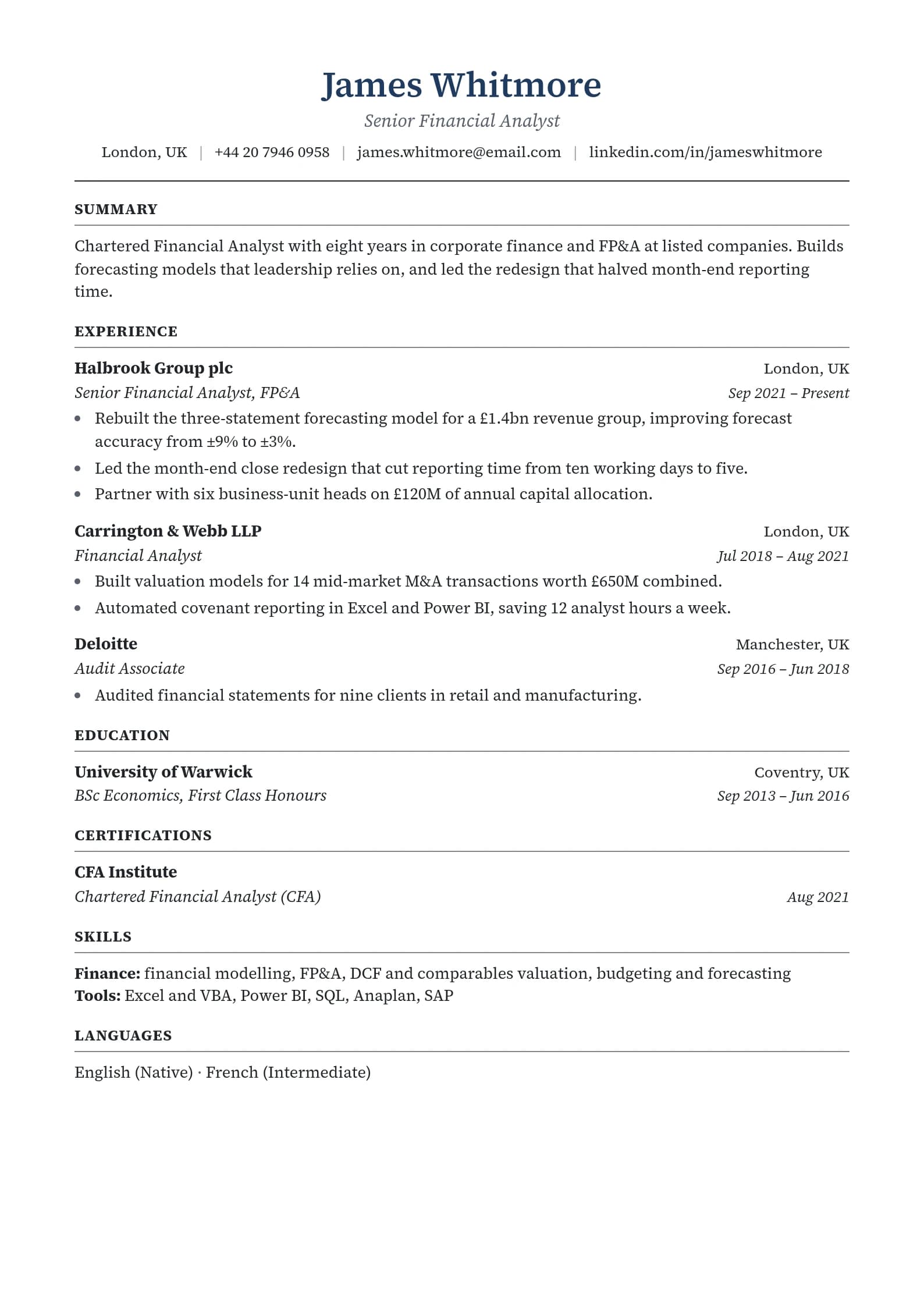
Build a resume that gets interviews
- ATS-optimized templates
- AI-powered writing
- Free to start
No credit card required
You applied for a marketing role at a mid-sized SaaS company. You expected the usual flow: submit resume, wait a week, maybe get a phone screen. Instead, you got an email within 24 hours containing a link to a 45-minute simulation. Your task: create a campaign strategy for a fictional product launch, complete with audience targeting, channel selection, and a draft email sequence.
No interview. No phone call. Just: show us what you can do.
If this caught you off guard, you're not alone. It is a common experience, and candidates who know the formats go in calmer.
Short answer: a pre-hire assessment is a test an employer asks you to take before or alongside interviews, such as a work sample, a situational judgment test, a cognitive test, a technical test or a game. Your resume still gets you into the pipeline, and some employers then use these tests to compare candidates on evidence. Many employers use none, so expect them in some searches, not all. This guide covers the five common types and how to prepare for each.
Why employers add assessments
We cannot give you a trustworthy share of employers that use them, so we do not quote one. The reasons employers give are consistent:
- Volume. Postings draw many applications, and keyword filters alone do not separate strong candidates from weak ones.
- Verification. A resume says "proficient in Python" and cannot prove it. A short task can.
- Consistency. The same task for every candidate is easier to compare than different interview impressions. Research on hiring methods supports this: the 2022 meta-analysis Revisiting meta-analytic estimates of validity in personnel selection (Sackett et al., Journal of Applied Psychology) found structured interviews and work-related tests among the better predictors of job performance, and cognitive ability tests weaker than older estimates suggested.
- Realistic preview. A work sample shows you what the job involves, so you can decide whether you want it.
Tests also add a step for you, so it helps to know what is coming.
What Are Job Simulations?
A job simulation is a realistic work sample that tests your ability to perform tasks you'd actually encounter on the job. Unlike personality tests or IQ assessments, simulations are designed to mirror real work as closely as possible.
Think of it as a 30 to 60-minute tryout. A marketing candidate might be asked to write a campaign brief. A data analyst might clean and analyze a messy dataset. A customer success manager might respond to a series of escalated support tickets. The work isn't theoretical. It's practical, contextual, and specific to the role.
Vendors such as HireVue, TestGorilla, Codility, HackerRank, Criteria and Harver (which includes Pymetrics) supply many of these tests, so an employer's careers page or invitation email usually tells you which one to expect.
The 5 Most Common Assessment Types
Not all pre-hire assessments are created equal. Here are the five categories you're most likely to encounter, in no particular order.
1. Work Sample Tests
What they are: You do a scaled-down version of the actual job, often within an hour or so.
Examples:
- A content marketing role asks you to write a blog post outline and draft the first 300 words
- A financial analyst role gives you a spreadsheet and asks you to build a forecast model
- A project manager role presents a scenario with competing deadlines and asks you to create a prioritization plan
- A UX designer role asks you to redesign a specific screen of an existing product
Why they're used: They are directly relevant to the job, hard to fake and give both sides a realistic preview.
What you should know: Check the stated time limit in the invitation. Quality matters more than speed. Companies are looking for your thought process and approach, not just the output.
2. Situational Judgment Tests (SJTs)
What they are: You're presented with realistic workplace scenarios and asked to choose the best response from multiple options, or rank responses from most to least effective.
Examples:
- "A client emails you at 4:55 PM with an urgent request that contradicts what your manager told you this morning. What do you do?" (with 4-5 response options)
- "Two team members disagree about the project direction in a meeting. You're the project lead. Rank these approaches from most to least effective."
Why they're popular: SJTs measure judgment, cultural fit, and interpersonal skills, all things that are nearly impossible to evaluate from a resume. They are usually short and easy to administer at scale.
What you should know: There's rarely one "correct" answer. Companies are looking for alignment with their values and management philosophy. The obvious "textbook" answer isn't always what they want. Think about what a competent, collaborative professional would actually do, not what a leadership book says you should do.
3. Cognitive Ability Assessments
What they are: Problem-solving, pattern recognition, verbal reasoning, and numerical reasoning tests. These measure how quickly you process new information and solve unfamiliar problems.
Examples:
- Number series completion (what comes next: 2, 6, 18, 54, ?)
- Logical deduction puzzles
- Reading comprehension with inference questions
- Data interpretation from charts and tables
Why they're used: They are quick to score and easy to compare across large pools of candidates. Platforms such as Criteria and Wonderlic offer them to employers of many sizes.
What you should know: These are almost always timed, and the time pressure is intentional. You're not expected to finish every question. Speed and accuracy both matter. If you haven't taken a timed reasoning test since the SAT, the format itself can be jarring. Practice matters here.
4. Technical Skills Tests
What they are: Role-specific assessments that test hard skills directly. The format depends entirely on the role.
Examples:
- Software engineers: coding challenges on HackerRank, CodeSignal, or LeetCode-style platforms
- Data analysts: SQL queries, data cleaning in Python or R, visualization tasks
- Designers: design exercises with specific constraints and deliverables
- Writers: editing tests, writing samples with brand voice guidelines
- Accountants: bookkeeping scenarios, tax preparation exercises
Why they're popular: They're the most objective way to verify claimed technical skills. When a candidate says "Advanced Excel" on their resume, a 20-minute spreadsheet test reveals whether that means pivot tables and VLOOKUP or just formatting cells.
What you should know: Technical tests typically have clear right/wrong answers, which makes them less ambiguous than SJTs. The difficulty level usually matches the job level, so don't panic if you're applying for a mid-level role and the test seems hard. They calibrate to the position. For coding tests specifically, companies care about clean, readable code and your problem-solving approach, not just whether it passes all test cases.
5. Game-Based Assessments
What they are: Interactive games that measure cognitive and emotional traits through gameplay. They look and feel like mobile games, but every action generates data points about how you think and react.
Examples:
- Balloon-pumping games that measure risk tolerance
- Memory-matching games that test working memory and attention
- Speed-reaction games that measure processing speed
- Strategy games that assess planning and adaptability
Why they're used: Vendors such as Pymetrics (now part of Harver) market them as a way to assess traits and potential rather than experience, and some large employers have adopted them. Evidence on how well they predict performance and whether they reduce bias is mixed, so treat the vendors' claims with care.
What you should know: You can't study for these in the traditional sense. The games measure baseline cognitive traits, not learned knowledge. The best approach is to be well-rested, focused, and to play the games as instructed without trying to "game" the system. Trying to outsmart the game rarely helps.
How to Prepare for Each Assessment Type
You can't cram for job simulations the way you'd study for an exam. But you absolutely can prepare. Here's what works for each type.
For work sample tests
Practice the actual work. If you're applying for marketing roles, spend an hour writing a campaign brief for a made-up product. If you're a data analyst, download public datasets from Kaggle and practice cleaning and analyzing them under time pressure. The goal is to make the format feel familiar so you can focus on quality during the real thing.
Read the brief carefully. The number one mistake candidates make is rushing past the instructions. Companies deliberately include specific constraints and requirements. Missing a key detail signals carelessness.
Show your reasoning. If the simulation allows for notes or explanations, use them. A well-reasoned approach that's 80% complete beats a sloppy finished product.
For situational judgment tests
Research the company's values. SJTs are designed to measure cultural alignment. If the company emphasizes "radical transparency," the best answer to a conflict scenario probably involves direct communication, not escalation to management. Read the company's careers page, leadership principles, and Glassdoor reviews before you take the test.
Avoid extremes. In most SJTs, the best response is assertive but collaborative. Responses that are overly passive ("I'd just do what my manager says") or overly aggressive ("I'd push back immediately") are usually ranked lower than balanced approaches.
For cognitive ability assessments
Practice the format. Sites like AssessmentDay, JobTestPrep, and SHL offer free practice tests. The content varies, but getting comfortable with timed reasoning questions under pressure is half the battle.
Don't get stuck. If a question stumps you, mark it and move on. These tests are designed so that most people won't finish. Spending three minutes on one question means missing two easier ones.
Be rested. Timed reasoning tests reward focus, so a full night's sleep helps more than last-minute cramming.
For technical skills tests
Practice on the platforms you'll be tested on. If the company uses HackerRank, do HackerRank practice problems. If they use CodeSignal, practice there. Each platform has slightly different interfaces and conventions.
Brush up on fundamentals. Most technical tests focus on core competencies, not obscure edge cases. For coding: data structures, algorithms, and clean code practices. For Excel: pivot tables, VLOOKUP/XLOOKUP, conditional formatting, and basic formulas. For SQL: JOINs, GROUP BY, subqueries, and window functions.
For game-based assessments
Play the practice rounds. Most platforms offer a practice game before the real assessment. Use it. The practice round exists to reduce test anxiety and familiarize you with the mechanics.
Don't overthink it. Play the way you naturally would. Trying to guess a "strategy" the company wants is unlikely to help, and the instructions usually say to answer honestly.
Your Resume Still Matters
Here's a critical point that gets lost in the hype around skills-based hiring: simulations don't replace your resume. They supplement it.
Your resume is still what gets you into the pipeline. The ATS still filters first. The recruiter still scans your experience during the initial screen. The simulation typically comes after your resume has already passed at least one gate.
Think of it as a two-key system. Your resume unlocks the first door. The simulation unlocks the second. You need both.
This means the best strategy for 2026 hiring is a combination: a strong, ATS-optimized resume that gets you past the initial screen, paired with genuine skills that perform under assessment conditions.
A few ways to make your resume work harder in a simulation-heavy hiring environment:
- Highlight relevant skills prominently. If the job posting mentions "data analysis" and you know there'll be a skills test, make sure your resume surfaces your strongest data analysis experience early. The free keyword matcher shows which skills in a posting your resume is missing.
- Quantify your experience with specifics. "Built financial models" is weaker than "Built a three-year revenue forecast in Excel for a product line, used in the annual budget" (an example; use your own facts). Specificity signals competence before the simulation even starts.
- Reference tools and platforms you'll be tested on. If you know the company uses Python for analytics, list Python with specific libraries (pandas, numpy, scikit-learn). This bridges the gap between your resume claims and what you'll demonstrate in the assessment.
Assessments are one stage in the funnel described in the job search strategy guide.
What to Do If You Fail an Assessment
It happens. You submitted the simulation, felt okay about it, and got the automated rejection email two days later. Here's what to know.
Retake rules vary. Some platforms and employers limit retakes for months. Check the invitation or ask the recruiter. A failed test is not a permanent mark on your record.
Ask for feedback. Some companies will share your assessment results even if you weren't selected. It's worth asking. An email to the recruiter saying "I'd love to understand how I performed on the assessment so I can improve" is professional and sometimes gets a response.
Use it as a skills gap identifier. If you bombed the SQL portion of a data analyst simulation, that's useful information. You now know exactly what to study. Spend the next few months building that skill, then reapply.
Don't take it personally. Assessment cutoff scores vary by company and role. A score that gets rejected at one company might land an interview at another. The test measures fit for a specific position, not your worth as a professional.
Frequently Asked Questions
Can I use AI to help during an assessment?
Read the instructions. Many assessments prohibit outside help, and some platforms use proctoring such as browser lockdown, screen recording or plagiarism checks. If AI is banned, using it can disqualify you. If the employer says it is allowed, say how you used it. The point of the test is to show your own judgment, so check our guide on AI job interview tips for related rules.
Are these tests fair?
Structured, job-related tests can be more consistent than unstructured interviews, but no assessment is perfectly fair, and vendors' claims about reducing bias deserve scrutiny. Candidates with test anxiety, those who aren't native English speakers (when the test is in English), or people with certain disabilities may face disadvantages. Reputable platforms offer accommodations.
What if I have a disability that affects my performance?
You have the right to request accommodations under the ADA (in the US) and similar laws in other countries. Most assessment platforms have formal accommodation request processes. Common accommodations include extended time, screen reader compatibility, and alternative formats. Request accommodations before starting the assessment, not after.
Do all companies use pre-hire assessments?
No. We have no reliable share to quote. Larger employers are more likely to use formal platforms, and small employers may give you a take-home task instead. See our guide to take-home assignments.
How are simulations scored?
It depends on the type. Work sample tests are typically scored by humans using a rubric (consistency across candidates). SJTs and cognitive tests are scored algorithmically against a validated answer key. Game-based assessments typically score your results against a profile built by the vendor. Technical tests usually have automated scoring for correctness plus human review for code quality.
Where can I practice?
- Work samples: Create your own. Pick a job posting, imagine what a simulation would look like, and do it.
- SJTs: JobTestPrep and AssessmentDay offer practice tests.
- Cognitive assessments: SHL practice tests, Criteria Corp sample assessments.
- Coding: HackerRank, CodeSignal, LeetCode (choose easy/medium difficulty).
- Game-based: many platforms offer a practice round before the real assessment.
The Bottom Line
Resumes are still the entry ticket, but some employers now add a test before the offer. Companies want proof that you can do the work, not just a document that says you've done similar work before.
The best strategy: pair a strong, tailored resume with genuine, demonstrable skills. Build the resume in the ResumeFast builder, check it with the free ATS checker, then prepare for the assessments that follow. Building and editing are free, and your first PDF or Word download is free (once per account). After that, PDF and Word need Pro at $6.95 a month, billed monthly, cancel anytime. Plain text (.txt) downloads are always free.
Treating a simulation as an opportunity rather than an obstacle helps: you get to show what you can do instead of just telling. For anyone who's ever felt that their resume undersells their actual abilities, that's good news.
Your resume is your first impression. Make it count.
Build an ATS-optimized resume that gets read, with AI help on every section.
No credit card required. Your first PDF or Word download is free; after that, Pro is $6.95 a month.
Continue Reading
View all articles
Two Weeks Notice Letter: 6 Samples You Can Copy

How to Pass an AI Job Interview in 2026 (and Your Rights)

How to Spot a Fake Job Posting: 2026 Scam Red Flags

Should You Apply for Jobs You're Not Qualified For?

Job Search Strategy Guide: How to Find a Job in 2026

Walk Me Through Your Resume: Sample Answers That Work
Build a resume that gets interviews
Ready to build your resume?