
How to Prepare for a Job Interview: Complete Guide 2026
A 5-step interview preparation framework: research, STAR stories, practice questions, logistics and follow-up, with templates and a resume-to-story method.

Raman M.
Software Engineer & Founder of ResumeFast

On this page
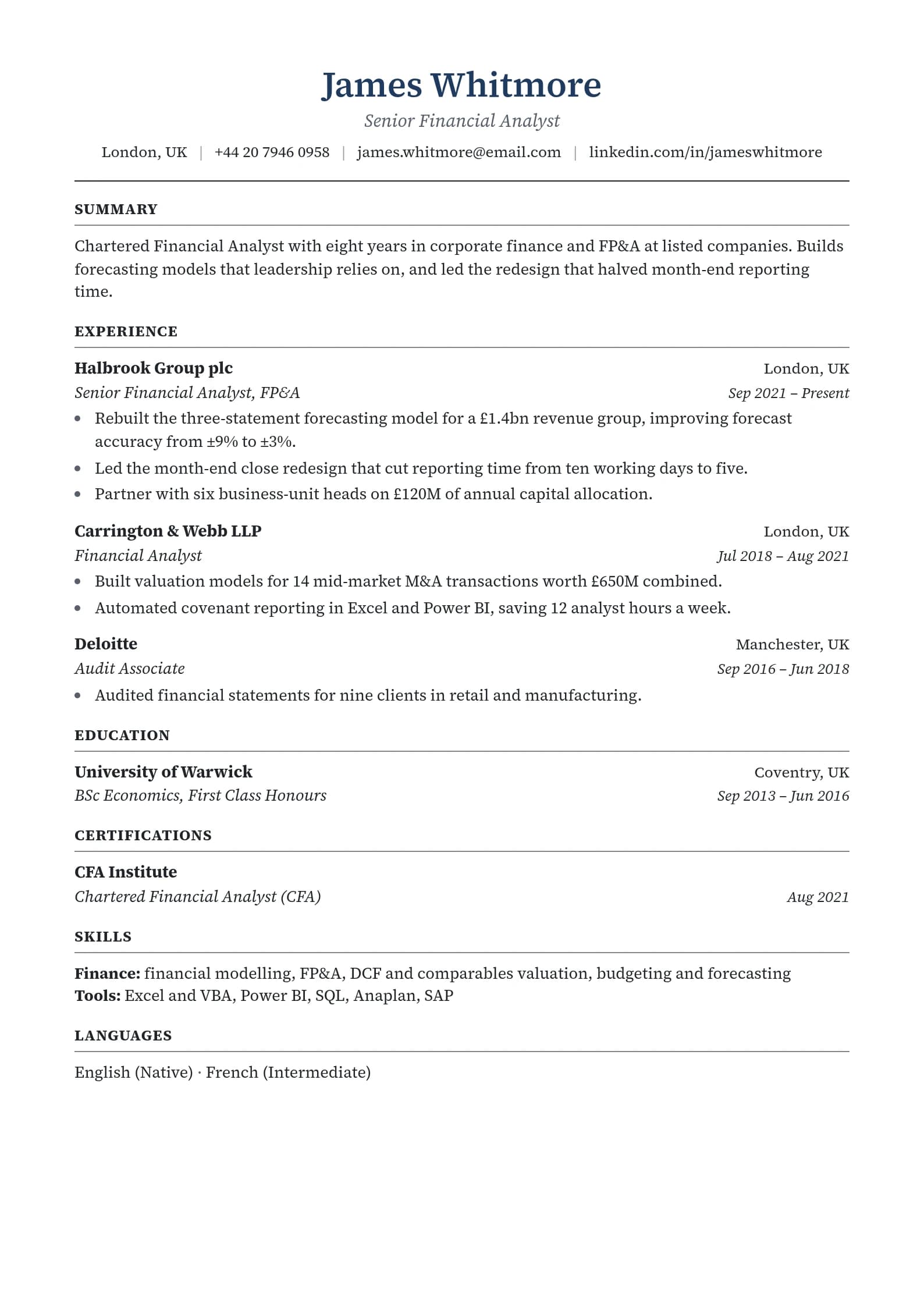
Build a resume that gets interviews
- ATS-optimized templates
- AI-powered writing
- Free to start
No credit card required
You made it past the ATS. Your resume survived the hiring funnel and caught someone's eye. Now comes the part that actually terrifies people: the interview.
Your palms are sweating. You're rehearsing answers in the shower. You're googling "what to say when they ask about your weaknesses" for the third time this week. You've convinced yourself that everyone else is naturally better at this than you.
Here's the truth: interview skills are learnable, not innate. The people who seem effortlessly polished in interviews aren't born that way. They've prepared. And preparation follows a system, not a talent.
This guide gives you that system. Five steps, no fluff, everything you need to walk into your next interview feeling ready instead of terrified.
TL;DR: The 5-Step Interview Preparation Framework
- Research the company, role, and people
- Prepare 5-7 STAR stories that cover key competencies
- Practice the 10 most common questions with answer frameworks
- Handle logistics so nothing throws you off on the day
- Follow up within 24 hours to stay top of mind
Let's break each one down.
Step 1: Research the Company, Role, and People
Most candidates walk into interviews with surface-level knowledge. They've glanced at the company website. Maybe they've read the "About Us" page. That's not research. That's skimming.
Real research gives you ammunition. It lets you answer "Why do you want to work here?" with something specific instead of something generic. It lets you ask smart questions that show genuine interest. And it gives you confidence because you actually know what you're talking about.
What to Research
The company itself:
- Mission statement and core values (you'll reference these in answers)
- Recent news: product launches, funding rounds, partnerships, leadership changes
- Company size, growth trajectory, and industry position
- Glassdoor reviews (look for patterns, not individual complaints)
- Their competitors and how they differentiate
The specific role:
- Every requirement and "nice to have" in the job description
- What team you'd join and where it fits in the org structure
- What success looks like in the first 90 days (if not stated, prepare to ask)
The people interviewing you:
- Check LinkedIn for your interviewer's background and role
- Look for shared connections, interests, or career paths
- Understand their perspective: a hiring manager cares about team fit, a VP cares about impact
The "3 Facts" Rule
Before every interview, prepare three specific company facts you can weave into your answers naturally. Not generic facts like "you're a leading tech company." Specific facts.
Generic (forgettable):
"I'm excited about your company because you're doing great work in the industry."
Specific (impressive):
"I noticed you launched your API platform in Q4 and already onboarded 200 enterprise clients. That kind of growth tells me the engineering challenges here are real, and that's exactly what excites me."
Three facts are enough. You don't need to memorize their entire annual report. You need enough to sound like someone who genuinely cares, not someone who's mass-applying.
Use the Right Tools
Your job description analyzer can help you decode what the company is really looking for. Paste in the job posting and you'll see which skills and qualifications matter most. That tells you exactly which STAR stories to prepare (more on that next).
Step 2: Prepare Your STAR Stories
If you remember one thing from this guide, let it be this: the best interview answer is a structured story, not a rehearsed script.
Interviewers, especially at mid-to-large companies, are trained to evaluate candidates using behavioral questions. These are the "Tell me about a time when..." questions. And the framework they expect is STAR.
What STAR Means
- Situation: Set the scene. Where were you? What was happening?
- Task: What was your specific responsibility or challenge?
- Action: What did you actually do? (This is the longest part.)
- Result: What happened? Quantify it if possible.
Why STAR Works
STAR works because it forces you to be specific. Vague answers like "I'm a team player" tell the interviewer nothing. A STAR story proves you're a team player by showing it in action.
Before (vague and generic):
"I'm a team player and I work well with others. I always make sure everyone is on the same page."
After (STAR, specific and memorable):
"When our team lost two developers mid-project with a client deadline in six weeks (Situation), I needed to redistribute the workload without delaying delivery (Task). I mapped every remaining task to team strengths, cut scope on two low-priority features with the client's agreement, and ran daily 15-minute standups to catch blockers early (Action). We delivered on time, the client renewed for another year, and our manager adopted the standup format for all future projects (Result)."
The second answer takes 30 seconds to tell. It's concrete. It's memorable. And it answers the real question the interviewer is asking: "Can you handle pressure and lead when things go wrong?"
Prepare 5-7 Stories That Cover These Themes
You don't need a different story for every possible question. Most behavioral questions fall into a handful of categories. Prepare one strong STAR story for each:
- Leadership: A time you led a team, project, or initiative
- Conflict resolution: A disagreement with a coworker or manager, and how you handled it
- Failure: A time something went wrong, and what you learned
- Achievement: Your proudest professional accomplishment
- Teamwork: A time you collaborated to achieve something you couldn't have done alone
- Initiative: A time you went beyond your job description
- Problem-solving: A complex challenge you figured out
Turn Your Resume Into Your Interview Script
The interviewer usually has your resume in front of them, so many of their questions start from something on it. That makes your resume the best prep material you have. Map your stories to your bullets before the interview:
- Pick the bullet. Start with ones that show results, leadership or an unusual project.
- Add back the context the bullet skipped: what was happening, what problem needed solving, what was your specific job.
- Write the action in detail. What did you do, in what order, with whom, and why?
- State the result and what changed afterward. Use a number you can defend, or describe the outcome.
You cannot prepare a story for every bullet, so prepare five thoroughly:
- Your biggest quantified result. Expect to be asked how you measured it.
- The bullet closest to the job description. They want proof you have done what they need.
- Any leadership or people-management bullet. Be ready to discuss conflict and delegation.
- Your most recent accomplishment. Recent work gets the most attention.
- Anything unusual. A pivot, an odd project or a well-known employer will prompt questions.
Expect questions about whatever looks odd. Short tenures, unexplained gaps, vague bullets ("assisted with various projects"), titles that do not match your LinkedIn profile and mismatched dates all invite questions. Fix the vague bullets and dates before the interview, and prepare one honest sentence of context plus what you learned for each of the rest. Do not badmouth a former employer. If a gap or layoff is the issue, see returning to work after a career break and explaining a layoff or firing.
For the opening question itself, use the four-part answer in Walk me through your resume.
How to Quantify Your Results
The "R" in STAR is where most people get lazy. "It went well" is not a result. Push yourself to quantify.
Weak results:
- "The project was successful"
- "My manager was happy with my work"
- "We met the deadline"
Strong results:
- "Customer complaints dropped from 15 per week to 3, based on our support dashboard"
- "We delivered 2 weeks ahead of schedule, saving $40K in contractor costs"
If you cannot find an exact number, say what you can support honestly: "Onboarding took about a week less, according to our team lead's tracker" is better than "improved onboarding." Never invent a figure an interviewer could ask you to defend. The examples in this guide are illustrative.
Need help turning your experience into compelling bullet points? The resume action verbs guide has 185 verbs organized by skill type that work just as well in interview answers.
Step 3: Practice the 10 Most Common Questions
You can't predict every question. But you can prepare for the ones that show up in nearly every interview. Here are the ten most common, with answer frameworks you can adapt.
Important: These are frameworks, not scripts. Memorized scripts sound robotic. Frameworks give you structure while letting your personality come through.
1. "Tell me about yourself."
Framework: Present + Past + Future (90 seconds max)
Start with what you do now, connect it to relevant past experience, and finish with why this role is your next step.
"I'm currently a marketing manager at a B2B SaaS company where I lead a team of four and manage our content and demand gen strategy. Before that, I spent three years in content marketing at a startup, where I built the blog from zero to 50K monthly readers. I'm looking to move into a larger organization where I can scale those skills across a bigger team and more complex campaigns, which is exactly what drew me to this role."
Common mistake: Starting with your childhood or college. They don't need your life story. Start with right now.
2. "Why do you want to work here?"
Framework: Company fact + Your career goal + Connection
This is where your research pays off. Connect a specific company fact to something you genuinely care about.
"I've been following your expansion into the European market, and the challenges of localizing a product for multiple regions is something I have direct experience with. In my current role, I led our localization effort across three languages. I'd love to bring that experience to a team that's tackling it at a much larger scale."
3. "What's your greatest weakness?"
Framework: Real weakness + Specific steps you're taking to improve
Pick a genuine weakness that isn't a dealbreaker for the role. Then show self-awareness by explaining what you're doing about it.
"I tend to over-research before making decisions, which can slow me down. I've gotten much better at setting time limits for research phases. In my last project, I gave myself two days to evaluate options instead of my usual week, and the decision turned out just as good."
Never say: "I'm a perfectionist" or "I work too hard." Interviewers have heard these a thousand times and they signal a lack of self-awareness.
4. "Tell me about a time you failed."
Framework: Use STAR, but spend 50% of your answer on the lesson
Everyone fails. The interviewer wants to know if you learn from it.
"I once launched a feature without running it past the support team first (Situation). I assumed it was intuitive enough that users wouldn't need guidance (Task). Within a week, support tickets doubled (Action/Result). The lesson was clear: I now include support in every launch checklist, and I write the FAQ documentation before the feature goes live. That one failure actually improved our entire launch process."
5. "Where do you see yourself in 5 years?"
Framework: Show ambition aligned with the company's trajectory
"In five years, I'd like to be leading a team in this space. This role gives me the foundation to deepen my expertise in product analytics, and I can see a natural path toward a senior or lead role as the team grows."
Avoid: Saying you want the interviewer's job (awkward) or that you want to start your own company (suggests you'll leave).
6. "Why are you leaving your current job?"
Framework: Always frame positively. Focus on what you're moving toward, not what you're running from.
"I've learned a lot in my current role, but I'm ready for a bigger challenge. This position offers the chance to work on a product with a much larger user base, and that's the kind of scale I want to grow into."
Never badmouth your current employer. Even if your boss is terrible and the company is a mess, keep it professional.
7. "What salary are you looking for?"
Framework: Deflect first, then give a range if pressed
"I'd like to learn more about the role's full scope before discussing compensation. But based on my research and experience level, I'd expect something in the range of $X to $Y. I'm flexible depending on the full package."
Key tip: Never give a single number first. A range gives you negotiating room. Research salary ranges on Glassdoor, Levels.fyi, or Payscale before the interview so your range is grounded in data. Our guide to salary negotiation covers how to handle this question and the offer that follows.
8. "Do you have any questions for us?"
Always have questions ready. "No, I think you covered everything" is a missed opportunity.
Here are questions that impress interviewers:
- "What does success look like in this role in the first 90 days?"
- "What's the biggest challenge the team is facing right now?"
- "How would you describe the team's working style?"
- "What's the company's approach to professional development?"
- "Is there anything about my background that gives you hesitation? I'd love the chance to address it."
That last question is bold, and it works. It shows confidence and gives you a chance to handle objections in real time.
9. "Why should we hire you?"
Framework: Match your top 3 strengths to the role's top 3 needs
"You need someone who can manage complex projects across multiple stakeholders, and I've done exactly that for the past four years. You're looking for experience with data-driven marketing, and I've built dashboards and attribution models from scratch. And you want someone who can hit the ground running, which my background in this industry gives me."
10. "Tell me about a time you disagreed with your manager."
Framework: STAR with emphasis on professionalism and resolution
"My manager wanted to cut our QA testing phase to meet a deadline. I believed that was risky given the number of open bugs. Instead of pushing back in a meeting, I put together a one-page risk summary showing the potential cost of shipping with known issues versus a one-week delay. She agreed to the delay, and we shipped a much more stable product. I learned that disagreements go better when you bring data, not just opinions."
Step 4: Handle the Logistics
It sounds basic, but logistical mistakes have derailed more interviews than bad answers. Don't let a dead laptop battery or a wrong address steal an opportunity you prepared for.
Format-specific preparation: video interview tips for Zoom and Teams, what employers verify in reference checks, and whether to do a take-home assignment.
The Day Before
- Confirm the time, location, and format. In-person? Video call? Which platform? Check the confirmation email again.
- Prepare your outfit. When in doubt, dress one level above the company's daily dress code. Lay it out the night before.
- Print 3-5 copies of your resume. Even for roles where everything is digital, having a physical copy shows preparation. Build yours with the resume builder so it's clean and ATS-friendly.
- Charge all your devices. Laptop, phone, earbuds. All of them.
- Prepare a notepad and pen. Taking brief notes during an interview signals engagement.
For Virtual Interviews
- Test your camera and microphone the night before, on the actual platform (Zoom, Teams, Google Meet)
- Clean your background. A plain wall or tidy bookshelf works. A pile of laundry does not.
- Good lighting matters more than you think. Face a window or put a lamp behind your monitor. Avoid overhead lighting that casts shadows on your face.
- Have a backup plan. Know where your phone hotspot is. Have the dial-in number saved. If your camera dies, be ready to switch to phone.
- Close every other app. Slack notifications popping up during your interview is not a great look.
- Check whether a human is on the other end. One-way video interviews and AI interviewers have time limits, retake rules and scoring of their own. Prepare for that format with how to pass an AI job interview.
For In-Person Interviews
- Map the route the day before. Account for traffic, parking, and finding the right entrance.
- Arrive 10 minutes early. Not 30 minutes (that's awkward for the receptionist). Not 2 minutes (that's cutting it too close). Ten minutes is the sweet spot.
- Bring everything in a clean folder or bag: resume copies, notepad, pen, ID (some offices require it).
- Be kind to everyone you meet. The receptionist, the person in the elevator, the person who walks you to the meeting room. Some companies ask front-desk staff how candidates behaved, so treat everyone the same.
The 5-Minute Rule
If you're not five minutes early, you're late. This applies to both virtual and in-person interviews. For video calls, join the waiting room at least five minutes before the scheduled time. For in-person, be checked in and seated five minutes before. It shows respect for the interviewer's time and gives you a moment to settle your nerves.
Step 5: The Follow-Up
The interview is over. You nailed it (or you think you did). Now what?
Send a thank-you email within 24 hours. This is not optional. It's expected by most hiring managers, and its absence is noticed more than its presence.
Thank-You Email Template
Subject: Thank you for the [Job Title] interview
Hi [Interviewer's Name],
Thank you for taking the time to speak with me today about the [Job Title] role. I really enjoyed learning about [specific topic you discussed, e.g., "the team's approach to product experimentation"].
Our conversation reinforced my enthusiasm for this position. [Reference a specific moment: "Your point about the challenges of scaling the platform resonated with me, and it's exactly the kind of problem I enjoy solving."]
I'm excited about the possibility of contributing to [Company Name] and would love to continue the conversation. Please don't hesitate to reach out if you need any additional information.
Best regards, [Your Name]
What to Do If You Don't Hear Back
Silence after an interview is stressful, but it's common. Here's your timeline:
- After 1 week: Send a brief check-in email. Reference your interview and ask about the timeline.
- After 2 weeks: Send a second follow-up. Keep it short and professional.
- After 3 weeks with no response: It's likely a pass. Send a final, gracious email and move on.
For detailed follow-up templates and timing strategies, check out 5 Follow-Up Email Templates That Turn Silence Into Interviews.
Bonus: Interview Red Flags to Watch For
An interview is a two-way evaluation. While you're trying to impress them, you should also be evaluating whether this is a place where you'll thrive. Watch for these warning signs:
- Vague job description that stays vague in the interview. If they can't clearly explain what you'd be doing, the role may not be well-defined yet. That means shifting expectations and unclear success metrics.
- The interviewer seems disengaged. If they're checking their phone, rushing through questions, or clearly haven't read your resume, that tells you something about how the company values its people.
- No clear timeline for next steps. A well-organized hiring process has a timeline. "We'll get back to you eventually" is a yellow flag.
- "We're like a family here." This phrase often means blurred boundaries, uncompensated overtime, and guilt trips when you set limits. Healthy workplaces don't need to compare themselves to families.
- Unrealistic expectations for the role. If a mid-level position expects you to single-handedly manage strategy, execution, and reporting for an entire department, the role is probably three jobs disguised as one.
- High turnover they can't explain. If the person who had this job left after six months, ask why. If they dodge the question, take note.
Trust your instincts. If something feels off in the interview, it's usually worse once you're on the inside.
Frequently Asked Questions
How long should I prepare for an interview?
Plan for 3 to 5 hours of total preparation spread across 2 to 3 days. That includes researching the company (1 hour), preparing STAR stories (1 to 2 hours), and practicing answers out loud (1 to 2 hours). Don't cram everything the night before. Spaced preparation leads to better recall.
What should I bring to a job interview?
Bring 3 to 5 printed copies of your resume, a notepad and pen, a list of questions you want to ask, photo ID (some offices require it), and a clean folder or portfolio to carry everything. For virtual interviews, have your resume open on screen and a glass of water nearby.
How do I calm interview nerves?
Nerves are normal and even helpful in small doses. To manage them: arrive early so you're not rushing, do slow breathing exercises (4 counts in, 4 counts out) in the waiting room, remind yourself that you were invited because your resume already matched the role, and reframe nervousness as excitement. Your body can't tell the difference.
Should I send a thank-you email after an interview?
Yes, always. Send it within 24 hours of the interview. Keep it brief (3 to 4 sentences), reference something specific from the conversation, and reiterate your interest in the role. Hiring managers notice when candidates don't follow up, and it can be the tiebreaker between two equally qualified people.
How long after an interview should I hear back?
Most companies take 1 to 2 weeks to respond after an interview. If the interviewer gave you a specific timeline ("We'll decide by Friday"), wait one business day past that date before following up. If no timeline was given, follow up after one week. Two follow-ups is the maximum before moving on.
What do I do if I don't know the answer to an interview question?
Don't panic, and don't bluff. It's perfectly acceptable to say: "That's a great question. I haven't encountered that specific situation, but here's how I would approach it." Then walk through your thought process. Interviewers value honesty and problem-solving ability more than a perfect answer. Admitting you don't know something shows intellectual honesty, which is a trait most hiring managers actively look for.
Your Resume Got You Here. Your Preparation Gets You the Job.
The hardest part of the job search is often the interview, but it doesn't have to be. With the right preparation framework, you can walk into any interview with confidence instead of anxiety.
Remember the system: Research, STAR stories, practice questions, logistics, follow-up. That's it. Five steps that turn interview anxiety into interview readiness.
And it all starts with a resume that gets you in the door. If yours needs work, the ResumeFast resume builder helps you create an ATS-optimized resume in minutes so you can spend your time on what really matters: preparing to ace the interview.
You've got this.
Related Reading
Your resume is your first impression. Make it count.
Build an ATS-optimized resume that gets read, with AI help on every section.
No credit card required. Your first PDF or Word download is free; after that, Pro is $6.95 a month.
Continue Reading
View all articles
Two Weeks Notice Letter: 6 Samples You Can Copy

How to Spot a Fake Job Posting: 2026 Scam Red Flags

Should You Apply for Jobs You're Not Qualified For?

Job Search Strategy Guide: How to Find a Job in 2026

Walk Me Through Your Resume: Sample Answers That Work

Job Hopping on a Resume: How Short Tenures Read in 2026
Build a resume that gets interviews
Ready to build your resume?