
Reference Checks Decoded: What Employers Verify
Reference checks are not a formality. See what employers verify, what former managers can say, and how to prepare references so they help you win the offer.

ResumeFast Team
The team behind ResumeFast

On this page
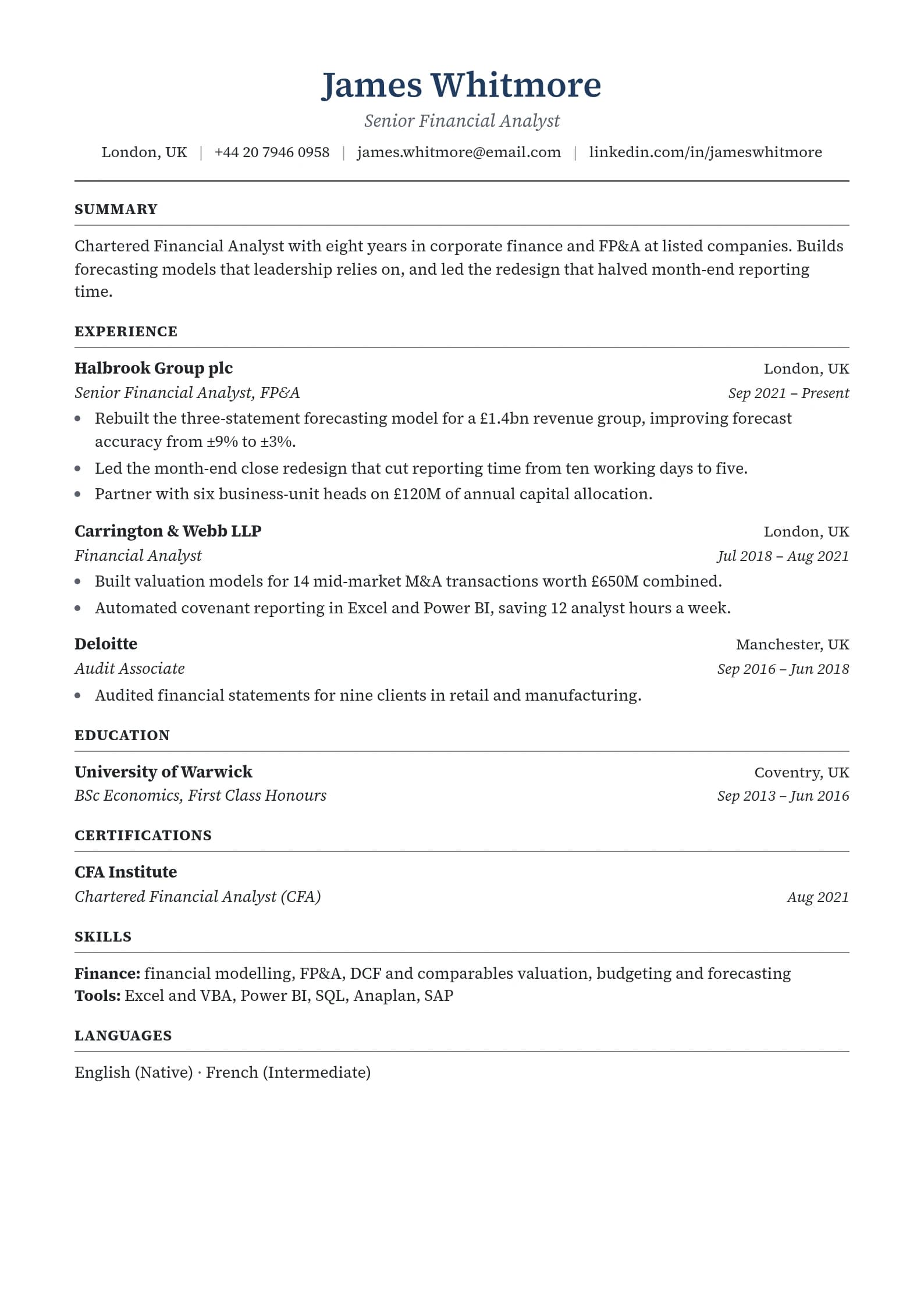
Build a resume that gets interviews
- ATS-optimized templates
- AI-powered writing
- Free to start
No credit card required
You're at the offer stage. The recruiter just asked for three references. You're tempted to view this as a formality. It is not.
Reference checks can change or end an offer, and most candidates have no idea what's actually being asked, who's allowed to say what, or how to set their references up to succeed. This guide fixes that.
The Direct Answer
A reference check is a conversation, usually 15-30 minutes, between a hiring manager or recruiter and someone you've worked with. They are looking for three things:
- Verification: Did you actually have the title, dates, and scope you claimed?
- Calibration: Are you as senior, technical, or strategic as you presented in interviews?
- Risk signals: Anything they should know about working with you (conflict, ethics, follow-through)
What references legally can say varies by company policy more than by law. In most US states, a former manager can say almost anything about you that's truthful, including specifics about performance and termination. The "name, title, dates only" policy is a corporate choice, not a legal requirement.
Translation: assume your reference can and will give a substantive opinion about you. Prepare accordingly.
What Reference Checkers Actually Ask
Reference questions are surprisingly consistent across industries. The hiring manager or recruiter will work through some version of this script:
The Standard Questions
- "How do you know [Candidate] and for how long?"
- "What was their role and your reporting relationship?"
- "What were their key strengths in the role?"
- "Where did they have the most room to grow?"
- "How did they handle conflict or disagreement?"
- "Would you hire them again? Why or why not?"
- "Is there anything else we should know?"
The last two questions do most of the work. "Would you hire them again?" is one of the most telling questions; a hesitation, a "depends," or a "for the right role" can sink an offer that was otherwise on track.
The Calibration Questions
If you're applying for a stretch role, expect these:
- "Have you seen them operate at the [next-level] scope they're being hired for?"
- "How would you describe the kind of decisions they were making independently vs. with guidance?"
- "Was there a specific moment where they exceeded expectations?"
These get at the "are they actually as senior as their resume says" question. References who can't answer with specifics often unintentionally torpedo the offer.
The Risk Questions
These come up especially for senior or sensitive roles:
- "Were there any issues with [conflict / ethics / follow-through]?"
- "Did they leave on good terms?"
- "Is there anything that would prevent us from working with them?"
Most references will not volunteer negative information here. But they will signal it through tone, hesitation, or a too-careful answer. Hiring managers are trained to listen for it.
Who Should Be Your References
The wrong references can hurt you more than no references. Here's the priority order:
Tier 1: Your most recent former manager
The most important reference, by far. If you can get them, get them. Hiring managers value the most recent manager more than all other references combined.
If you can't get them, expect questions about why. "I left on good terms but they had a strict policy" is a workable answer; "we didn't end on the best terms" requires more careful explanation.
Tier 2: Former skip-level or director who knew your work
A senior leader who saw you operate but wasn't your direct manager. Less detail than a direct manager, but more credibility about scope and impact.
Tier 3: Cross-functional partner or peer at level
Someone who collaborated with you on key projects. Useful for calibrating soft skills, leadership, and how you operate across teams.
Tier 4: Direct report (if you've managed people)
For management roles, hiring managers increasingly want to talk to someone who reported to you. This shows up in the script as: "How would you describe their management style?"
Avoid as references
- People you haven't worked with in 5+ years (memory blurs, they can't speak to current capabilities)
- Personal references (friends, family, mentors who haven't worked with you professionally)
- Anyone who already has reservations about your work
- Senior leaders who know you peripherally but can't speak to specifics
How to Prepare a Reference (The Coaching Conversation)
This is the step most candidates skip and most hiring managers wish they wouldn't. Your references are not omniscient. Brief them.
The 4-part reference briefing
Before the reference is contacted, send them an email or have a 15-minute call. Cover:
- The role you're applying for (title, level, key responsibilities)
- The two or three specific things you want them to highlight ("the [project] I led" or "the time I navigated [X]")
- Likely questions they'll get (use the standard questions above)
- The job description (so they can connect their answers to the company's needs)
Sample briefing email
Hi [Manager],
I'm in final stages with [Company] for a [Role] position and you're one of the references I provided. The hiring manager will likely reach out to you in the next week or two.
A few things that would be helpful to mention if it comes up naturally:
- The [specific project] we worked on together, especially [outcome]
- How I handled [specific situation] when [X happened]
- My approach to [specific skill the new role needs]
The role is heavy on [X and Y skills], so anything you can speak to in those areas would be golden. I've attached the JD and my resume for context.
Thanks again - this is genuinely the role I want.
Why this matters
A reference who's been briefed gives a 4x better reference than one who's been ambushed. They have specific stories ready. They connect their answers to the role. They sound like an advocate, not a checkbox.
A reference who hasn't been briefed will give a generic, lukewarm answer. Generic answers from references read as "this person was fine, I guess." That's not what you want.
What Your Former Employer Can Legally Say
This is where most candidates have an outdated mental model. Let's clear it up.
The myth
"Former employers can only confirm dates of employment and title. Anything else is illegal."
The reality
In most US states, a former employer can say anything truthful about you, including:
- Performance ratings
- Reasons for termination
- Specific incidents (conflicts, mistakes, terminations for cause)
- Whether they'd rehire you
- Subjective opinions about your work
What protects them is that they're sharing truthful information in a normal business context. Defamation law protects falsehoods, not honest assessments.
What companies actually do
Most large companies have a corporate policy of "name, title, dates only" because:
- It avoids legal risk
- It avoids HR overhead
- It's safer than letting individual managers say whatever they want
But this is the corporate policy. Individual managers often violate it, especially when speaking informally to other hiring managers in the same industry. The "I trust you, this is between us" reference call is real and common.
The implication
Assume the reference call is unfiltered. Don't list someone you parted with on bad terms because you think they "have to be careful." They don't.
For more on planning for sensitive situations like this, see our guides on laid off or fired and resume gaps.
What Background Checks Verify (the Other Half)
Reference checks and background checks are different processes that often get confused.
| Process | What it covers |
|---|---|
| Reference check | Subjective assessment from people who know you |
| Background check | Objective records: dates, criminal history, education, credit |
| Identity verification | Confirms you are who you say you are |
A reference can lie or shade the truth. A background check tightens the screws on objective claims:
- Employment dates: Verified directly with HR. Lying about dates is one of the easiest ways to lose an offer.
- Job title: Often verified, especially for senior roles. "Senior Engineer" on the resume vs. "Engineer II" in HR records can be a problem if the difference is meaningful.
- Degree and graduation date: Verified through the National Student Clearinghouse or equivalent. Faking a degree is the #1 background-check disqualifier.
- Criminal history: Varies by jurisdiction. Most checks cover the past 7 years.
- Credit checks: Less common, mostly for finance roles or roles with financial responsibility.
For more on how to handle background-check sensitivities, see the second-chance resume guide.
Red Flags That Sink References
These are the patterns that turn an offer into a withdrawn offer:
Red flag 1: Hesitation on "would you hire them again?"
A confident "absolutely" is the gold standard. A "yes, I would" is fine. A pause, a "well, it would depend on the role," or a non-answer reads as a soft no.
Defense: Brief your references explicitly: "If you get asked the 'would you hire them again' question, please answer with confidence if you can."
Red flag 2: Vague answers
"Yeah, [Candidate] was great. Solid work. We enjoyed having them." This says nothing. The hiring manager will read it as your reference not having anything specific to say.
Defense: Give your references specific stories to draw from. Vague references aren't malicious; they're unprepared.
Red flag 3: Only peer-level references
If you can't list a single former manager, hiring managers ask why. Two or three peer references with no managers reads as "they couldn't get a manager to speak for them."
Defense: If your most recent manager is unreachable, list a manager from a previous role and explain in advance: "My most recent manager is at [Company] and is not in a position to give external references; my prior manager from [Company B] is happy to speak."
Red flag 4: References from too long ago
Three references all from before 2022 makes it look like your recent work is hidden. Hiring managers worry about what you're not showing.
Defense: Provide at least one reference from your current or most recent role. If you can't, explain why upfront.
Red flag 5: A reference who doesn't actually answer the phone
A reference who agrees but is unreachable for two weeks of follow-up is worse than no reference. The hiring manager assumes the worst.
Defense: Confirm with each reference that they're available in the next two weeks before listing them. Re-confirm the day before you submit your reference list.
What to Do When You Have a Bad Manager Problem
You parted on bad terms with your most recent manager. Now what?
Option 1: Skip them and explain
Provide alternative references (skip-level, peer, prior manager) and address the gap proactively in your conversation with the hiring manager: "I'm not providing my most recent manager because we had significant disagreements about [scope / direction] toward the end of my tenure, and I didn't think they'd be a fair reference. I've provided my skip-level instead."
This sometimes works. It depends on the hiring manager's threshold for risk.
Option 2: Brief the bad manager carefully
If you're confident they'll be civil but not enthusiastic, brief them tightly: "I know our last few months were difficult. I'd appreciate if you could speak to the [specific positive contributions] from earlier in my tenure when you're contacted." Some managers respond well to this professional framing; others don't.
Option 3: Use them, accept the lukewarm reference, and let your other references carry the weight
This is the highest-risk option. Sometimes works for senior candidates with strong other references. Generally avoid.
Frequently Asked Questions
Can a former employer call me a "no rehire"?
Yes, internally and often on a reference call. "No rehire" status is one of the most damaging signals in a reference check, and many large companies will share it. If you suspect you're flagged this way, address it before the reference check happens.
Can I refuse to provide references?
You can, but it almost always loses you the offer. Companies who skip reference checks for senior roles are rare. If you're uncomfortable providing references, the issue is usually solvable with the right framing rather than refusal.
How long does a reference check take?
15-30 minutes per reference, plus 1-2 weeks of scheduling friction. If you're at the offer stage, expect 1-2 weeks before the offer is finalized. Don't quit your current job until references are complete.
Do all employers do reference checks?
Most US large companies do. Startups vary widely; some skip it, some are obsessive about it. Federal and government roles always do them, often more deeply than private sector.
Can I use a written reference letter instead of a phone call?
Sometimes for academic roles or certain industries. For most corporate roles, hiring managers want a live conversation specifically because they can probe and listen for hesitation. Written letters are weaker signal.
What if my references say something negative?
You usually don't get to know. The hiring manager will simply pull the offer or quietly downgrade it. This is why the briefing step is non-negotiable: you can't recover from a bad reference, only prevent it.
The Bottom Line
A reference check is not a formality, and your references are not a fixed asset. They're the last interview, conducted by people whose preparation level is up to you.
Three concrete actions for any active job search:
- Build a list of 5-7 potential references now, before you need them, with current contact info
- Re-engage each one before you start interviewing so they're not surprised by the call
- Send a tailored briefing email before each reference check, with the role, talking points, and JD attached
For the broader interview prep, see the job interview preparation guide. For positioning your overall candidacy before the offer stage, see salary negotiation positioning and our hiring funnel benchmarks.
ResumeFast Team
The team behind ResumeFast
The team that builds ResumeFast's resume templates and ATS checker and writes its expert reviews..
Your resume is your first impression. Make it count.
Build an ATS-optimized resume that gets read, with AI help on every section.
No credit card required. Your first PDF or Word download is free; after that, Pro is $6.95 a month.
Continue Reading
View all articles
Walk Me Through Your Resume: Sample Answers That Work

Take-Home Assignments in 2026: Do Them or Walk Away

Two Weeks Notice Letter: 6 Samples You Can Copy

How to Pass an AI Job Interview in 2026 (and Your Rights)

How to Spot a Fake Job Posting: 2026 Scam Red Flags

Should You Apply for Jobs You're Not Qualified For?
Build a resume that gets interviews
Ready to build your resume?