
Salary Negotiation: Resume Signals and Scripts That Work
Salary negotiation starts with your resume. Learn which resume signals set your pay band, then use word-for-word scripts, email templates and new grad tips.

ResumeFast Team
The team behind ResumeFast

On this page
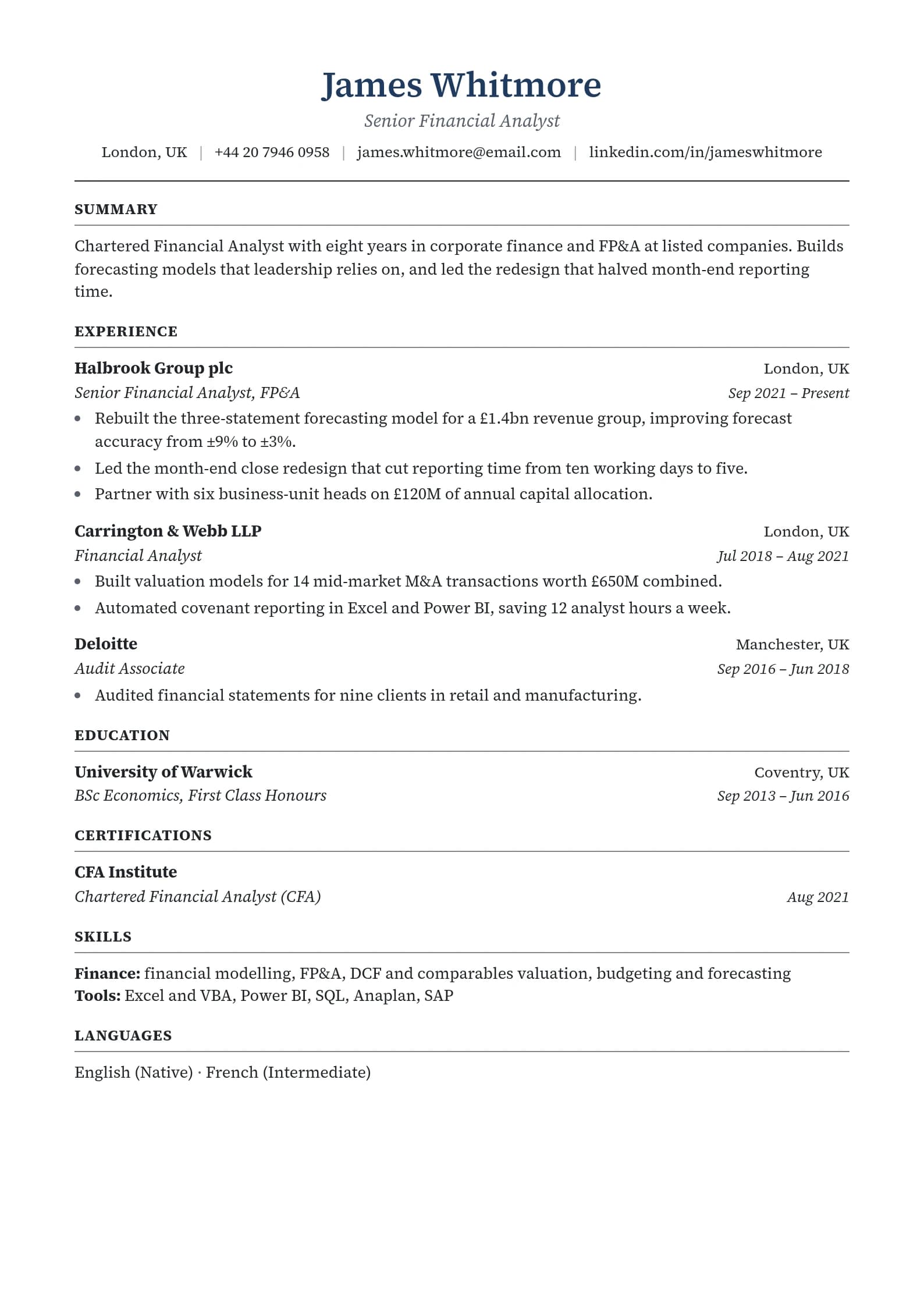
Build a resume that gets interviews
- ATS-optimized templates
- AI-powered writing
- Free to start
No credit card required
Your resume starts your salary negotiation before the first call, because the way you describe scope, level and results shapes the pay band an employer has in mind. Do not put salary on your resume. Show scope with real numbers, research the market range, and when you get an offer, ask in writing with data, enthusiasm and a specific number.
Most negotiation advice starts after the offer. But a recruiter reading your resume is already forming a picture of how senior you are, and that picture influences which number appears in the offer. Below, the resume side comes first, then the negotiation itself, including scripts and a section for new graduates and career changers.
How Your Resume Shapes the Pay Band
A hiring team usually has a salary range for the role. Where you fall in it depends on how senior and valuable you look. Your resume signals that through:
- Titles and progression. Are you moving up, sideways or stalled?
- Scope. Did you manage a small budget or a large one? A team of two or twenty?
- Specialization. Are you a general contributor or a specialist in something the employer struggles to hire for?
- Language. "Led" and "built" read differently than "helped with" and "assisted."
Every one of these should be true, and none of them requires inflation. It is about including the context a reader needs.
Signal 1: Honest Titles and Context
Job titles vary a lot between companies. If your official title understates what you did, do not invent a new one. Employers verify titles, and a mismatch can end an offer. Keep the real title and put the scope in the first bullet or in parentheses:
Customer Success Associate (managed a four-person pod and the largest accounts), TechCo
Or make the scope impossible to miss in the first line:
Customer Success Associate | TechCo | 2021-2025
- Led a four-person pod and owned onboarding for the company's largest accounts
If you were "acting manager," say "Acting Manager" with the dates you held that role.
Signal 2: Numbers That Show Scope
Scope numbers tell a reader what level you operated at. Use the ones you can support:
- Budget managed: "Owned a $3.2M annual marketing budget."
- Revenue influenced or owned: "Managed a portfolio of 40 accounts representing $1.8M in annual revenue."
- Team size: "Led a cross-functional team of 12."
- Scale: "Supported a product used by 50,000 people each day."
- Results: "Reduced onboarding time from 14 days to 9."
These examples are placeholders. Pull yours from reports, reviews or your manager. If you cannot measure something, describe the scope (how many people, how often, how large). Never make up a number. For the formula, see the resume bullet point formula, and use the bullet point grader to check your lines.
Signal 3: Specialist Skills
Generalists are easier to replace than specialists. Put the skills that are hard to find in your market near the top: a marketing manager who also writes SQL and builds dashboards, a software engineer with machine learning infrastructure experience, a nurse with informatics training. Check job postings for your target role to see what employers ask for and which extras show up in better-paid postings. Salary data sites and the BLS Occupational Outlook Handbook help here.
Signal 4: Business Impact, Not Tasks
Before (task):
Managed the company's social media accounts and created monthly reports.
After (impact):
Ran the social media program that supplied a large share of marketing-qualified leads, and presented monthly results with recommendations that shaped quarterly planning.
Add the actual percentage and dollar figure if you have them. The second version reads as someone who understands outcomes.
Signal 5: Show Promotions
If you were promoted, make it visible:
Senior Product Manager | Acme Corp | Jan 2025 - Present (Promoted from Product Manager)
Product Manager | Acme Corp | Jul 2023 - Dec 2024
Progression within a company tells a reader that an employer chose to invest in you.
What to Leave Off
- Salary history and expectations. Do not list them on a resume. Many states and cities restrict employers from asking about pay history, and a number on your resume can anchor the wrong way. If an application field asks, check your local rules and consider "negotiable" or a range you researched.
- Basic skills everyone has. "Microsoft Office" and "email" add nothing at mid-career.
- Minimizing language. "Helped with," "assisted" and "supported" understate your contribution if you actually led the work.
Research the Market Before Any Salary Conversation
Pay transparency laws in a growing number of states require employers to post pay ranges, so read the range in the posting. Cross-check with Glassdoor, Levels.fyi, Payscale and the BLS Occupational Outlook Handbook, and with the NACE salary survey if you are a new grad. Write down:
- A realistic range for your role, level and city
- Your target number
- The minimum you would accept
- Two or three reasons you are worth the upper end
When to Discuss Salary
Delay it until you understand the role and the employer is invested in you. If a recruiter asks early, redirect politely:
"I'd like to learn more about the role first. I'm sure we can find a number that works for both of us. What range have you budgeted for this position?"
If they insist and you must name a number, give a researched range and say your expectations depend on the full package.
Negotiation Scripts
Get the offer in writing first, then respond.
You have a competing offer
"Thank you for the offer. I'm excited about the [role] at [Company]. I'll be transparent: I have another offer at $[amount]. [Company] is my first choice, and I'd like to find a way to make this work. Could you move closer to $[target]?"
No competing offer, but the data supports more
"Thank you for the offer. I researched pay for [role] in [city], and the range I'm seeing is $[low] to $[high]. Given my [specific experience], I'd like to discuss $[target]. I'm also open to talking about the full package."
The salary can't move
"I understand the band is set. Could we look at other parts of the offer? I'd like to discuss [a signing bonus, extra vacation days, a flexible schedule, a professional development budget, or a performance review at six months]."
Email version
Weak:
Hi, thanks for the offer. I was hoping for a higher salary. Is there any flexibility?
Stronger:
Hi [Name],
Thank you for the offer for the [Role] position. I'm excited about joining [Company] and working on [specific project].
After reviewing the offer and the market data for this role in [city], I'd like to discuss the base salary. The range I'm seeing is $[low] to $[high]. Given my experience with [specific skill or project], I believe $[target] reflects the value I'd bring. I'm also open to discussing other parts of the package.
Thank you again, and I look forward to hearing your thoughts.
[Your name]
The difference is data, a specific ask, and enthusiasm.
What If They Say No?
Ask whether the number can be revisited at a set date, such as a six-month review, and whether any other terms can move. Thank them whatever the answer. If the offer is below what you can accept, it is fine to decline politely. To compare several offers fairly, see the job offer evaluation guide.
New Grads: Negotiate Too
It is normal to negotiate an entry-level offer, even with no work history. Employers expect some candidates to ask, and a polite, well-researched request is professional. No one can promise an offer will never be reconsidered, but courteous negotiation is common practice.
- Base your ask on market data, not what you need.
- Point to relevant evidence: an internship, a project, a skill, a certification.
- Ask for non-salary terms if pay is fixed: a signing bonus, relocation help, a start date, remote days, a learning budget.
- Turn an internship into leverage by describing what you delivered.
- Practice aloud with a friend or career center.
See the new grad resume guide for the resume side.
Changing Careers? Salary Needs Extra Care
When you move fields, you may be offered less than your experience would suggest, because the employer sees you as new to the work. Reduce that gap by showing scope: budgets, team sizes and results from your old career, translated for the new one. Compare your target to entry-level and mid-level ranges for the new role and decide in advance what you will accept. Guides for specific moves: career change resume guide, teacher career change and nurse career change.
Frequently Asked Questions
Should I include a desired salary on my resume?
No. Show value and let the conversation happen later.
Is it okay to negotiate an entry-level salary?
Yes. Stay polite, ground your request in market data and be ready to discuss the full package.
How much above the initial offer should I ask for?
There is no universal figure. Use the market range for the role and your qualifications. A request inside the range, supported by evidence, is easier to say yes to than a random percentage.
Should I negotiate over email or phone?
Either works. Phone allows give-and-take, while email gives you a written record and time to think. Many people do both: call to discuss, then confirm in writing.
What if the employer says the offer is final?
Ask about other parts of the package or a date to revisit pay. Then decide whether the offer works for you.
Does my resume format affect salary perception?
A clean, easy-to-scan resume with specific results reads as more experienced than a cluttered one full of vague duties. See modern resume templates.
Key Takeaways
- Your resume sets the starting point. Show scope and results with real numbers.
- Keep titles honest. Add context instead of changing them.
- Research before you talk numbers, and delay salary talk until you understand the role.
- Negotiate in writing with data, enthusiasm and a specific ask.
- Ask for other terms if the salary is fixed.
Need a resume that shows your scope clearly? Building in ResumeFast is free, and your first PDF or Word download is free.
ResumeFast Team
The team behind ResumeFast
The team that builds ResumeFast's resume templates and ATS checker and writes its expert reviews..
Your resume is your first impression. Make it count.
Build an ATS-optimized resume that gets read, with AI help on every section.
No credit card required. Your first PDF or Word download is free; after that, Pro is $6.95 a month.
Continue Reading
View all articles
Job Hopping on a Resume: How Short Tenures Read in 2026

Best Resume Review Services in 2026: Prices Compared

Accomplishments vs Responsibilities on a Resume (Examples)

The Hidden Job Market: Is the 80% Claim True?

How to Email a Resume: Templates & Examples

Resume Bias Audit: 12 Details That Can Invite Discrimination
Build a resume that gets interviews
Ready to build your resume?