Skills-Based Hiring in 2026: What It Actually Means for Your Resume
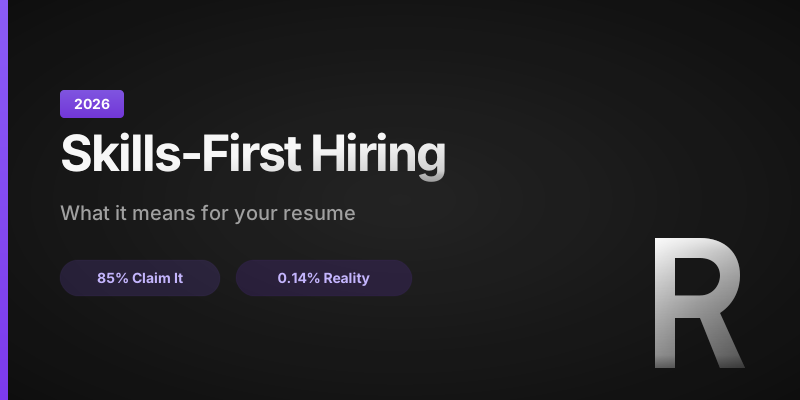
85% of companies say they're adopting skills-based hiring, but only 0.14% of hires reflect it. Learn what skills-first hiring really means and how to optimize your resume for it.

Raman M.
Software Engineer & Career Coach
On this page
Build a resume that gets interviews
- ATS-optimized templates
- AI-powered writing
- Free to start
No credit card required
Every company in your LinkedIn feed is talking about "skills-first hiring." They post about removing degree requirements, valuing what you can do over where you went to school. It sounds like a revolution.
The data tells a very different story.
The Gap Between Talk and Action
A 2024 Harvard Business School study found that 85% of companies said they had adopted skills-based hiring practices. That number gets thrown around constantly. What gets left out is the follow-up finding: only 0.14% of actual hires were affected by the removal of degree requirements.
That's not a rounding error. That's a canyon between corporate messaging and hiring reality.
Here's what the research actually shows:
| What Companies Say | What Actually Happens |
|---|---|
| "We've removed degree requirements from 46% of postings" | Hiring rates for non-degreed candidates increased by just 3.5% |
| "We use skills assessments in our process" | 76% of hiring managers still rank education as a top-3 filter |
| "We value portfolios and certifications" | Only 18% of job postings mention certifications as alternatives |
| "Our interviews focus on skills demonstrations" | Most interviews still follow behavioral + background review format |
| "We're committed to skills-first culture" | Internal promotion criteria still weight tenure and credentials heavily |
This isn't cynicism. It's the reality you need to plan around.
When Skills-Based Hiring Actually Works
Some companies are genuinely doing this. You can spot them by looking for concrete signals, not just PR statements.
Real skills-first employers tend to:
- Include specific technical assessments or work samples in their application process
- List "or equivalent experience" next to every degree mention
- Post detailed skills requirements rather than vague qualifications
- Have visible career paths for non-traditional candidates on their careers page
- Partner with bootcamps, apprenticeship programs, or certification bodies
Companies like IBM, Google, and Accenture have made measurable changes. Google dropped degree requirements for many roles back in 2018 and now has over 13% of their workforce without a four-year degree. That's real movement. But it's still the exception, not the norm.
How to Hedge Your Bets
The smart move in 2026 is to optimize for both systems. You don't know whether your resume will land in front of a genuinely skills-first recruiter or a traditional one who still filters by education first.
Keep Your Education Section, But Don't Lead With It
If you have a degree, keep it on your resume. Removing it gains you nothing and costs you with traditional screeners. But move it below your skills and experience sections. Let your capabilities speak first.
Stack Certifications as Degree Alternatives
For candidates without traditional degrees, industry certifications act as trust signals. They tell a hiring manager: "This person invested in structured learning and passed an external assessment."
Strong certification examples by field:
- Tech: AWS Solutions Architect, Google Professional Cloud Developer, CompTIA Security+
- Marketing: Google Analytics Certification, HubSpot Inbound Marketing
- Project Management: PMP, Scrum Master (CSM), Six Sigma Green Belt
- Data: Google Data Analytics Certificate, IBM Data Science Professional
Build Portfolio Evidence
The strongest skills-based signal you can send is showing your work. Link to a portfolio, GitHub profile, case study, or published project. One demonstrable project outweighs three bullet points about skills you claim to have.
Restructuring Your Resume: Before and After
Here's what the shift looks like in practice.
Before (traditional format):
Education B.S. Computer Science, State University, 2021
Experience Software Developer, TechCorp (2021-Present)
- Developed web applications using React and Node.js
- Collaborated with cross-functional teams
- Participated in code reviews
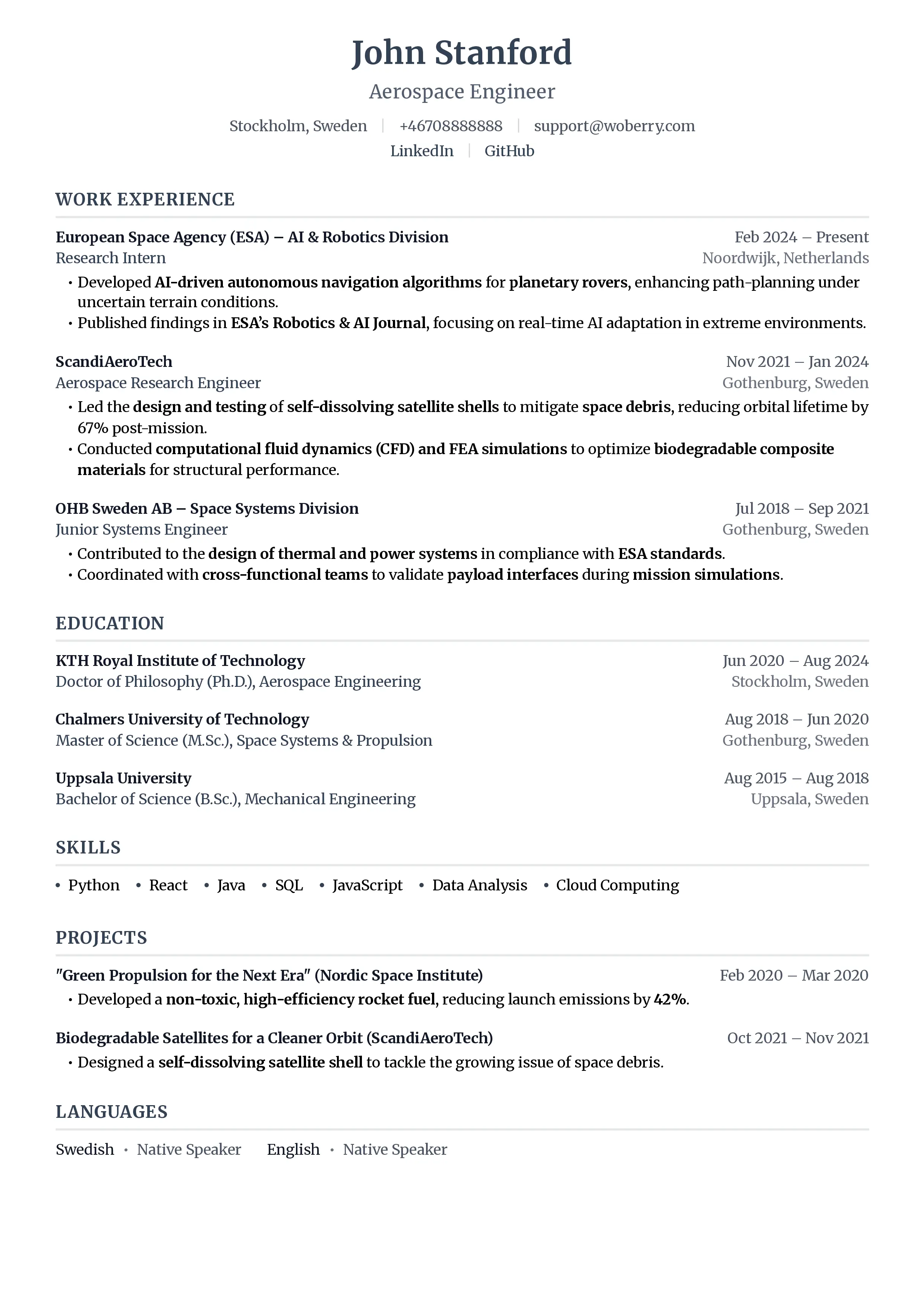
After (skills-led format):
Core Skills React, TypeScript, Node.js, PostgreSQL, AWS (Lambda, S3, CloudFront), CI/CD, REST API Design
Key Projects
- Built a real-time inventory system handling 50K+ SKUs, reducing stock discrepancies by 34%
- Designed and deployed a microservices architecture serving 2M monthly API requests at 99.97% uptime
Experience Software Developer, TechCorp (2021-Present)
- Reduced page load times by 60% through code splitting and CDN optimization
- Led migration from monolithic architecture to event-driven microservices
Education & Certifications B.S. Computer Science, State University | AWS Solutions Architect Associate
Notice what changed. Skills moved to the top. Experience bullets shifted from responsibilities to measurable outcomes. Education dropped to the bottom and shares a line with certifications.
This format works for both traditional ATS screening (the keywords are all there) and skills-first reviewers (capabilities are immediately visible).
What This Means for Your Job Search Strategy
Skills-based hiring is real, but it's moving slowly. The companies doing it well are still a small minority. Your resume needs to work in both worlds.
The good news: a skills-led resume format doesn't hurt you with traditional employers. Leading with capabilities and results is just good resume writing, regardless of whether the company has officially adopted a skills-first policy.
If you're building or updating your resume, ResumeFast makes it easy to experiment with different section orderings. You can quickly test whether leading with skills or experience works better for your target roles.
For a broader look at how the 2026 job market is shifting and what it means for your search strategy, check out our Spring 2026 Job Search Strategy Guide. And if you're curious about how ATS systems are adapting to skills-based filtering, we covered that in ATS Skills-Based Filtering in 2026.
Frequently Asked Questions
Should I remove my degree from my resume if I'm targeting skills-first companies?
No. Keep your degree. Even at companies that genuinely practice skills-based hiring, a degree is never a negative signal. Removing it only risks filtering you out at companies that still weight education. Lead with your skills section instead, and let your education support rather than anchor your candidacy.
How do I know if a company is genuinely skills-first or just saying it?
Look at their application process. If they include a skills assessment, work sample, or technical exercise early in the pipeline, they're likely serious. If the application is just a resume upload followed by a phone screen about your background, the "skills-first" language is probably marketing. Also check LinkedIn for employees without traditional degrees in roles you're targeting. That's the clearest signal of all.
Your resume is your first impression. Make it count.
Join 50,000+ job seekers using ResumeFast to build ATS-optimized resumes that actually get interviews.
No credit card required. Free forever.
Continue Reading
View all articles
AI-Proof Resume Skills: What to Highlight in 2026

Europass CV Guide: When to Use It and When to Avoid It
CV Format for Gulf Jobs: UAE, Saudi Arabia and Qatar
Resume Format Philippines: Local Jobs and Work Abroad
Australian Resume Format: What Employers Expect in 2026
International CV Formats: Country-by-Country Guide 2026
Build a resume that gets interviews
Ready to build your resume?