
Informational Interview Guide: How to Ask and Follow Up
How to request, prepare for and follow up on an informational interview, with message tips, 15 questions to ask and a follow-up schedule that builds referrals.

ResumeFast Team
The team behind ResumeFast

On this page
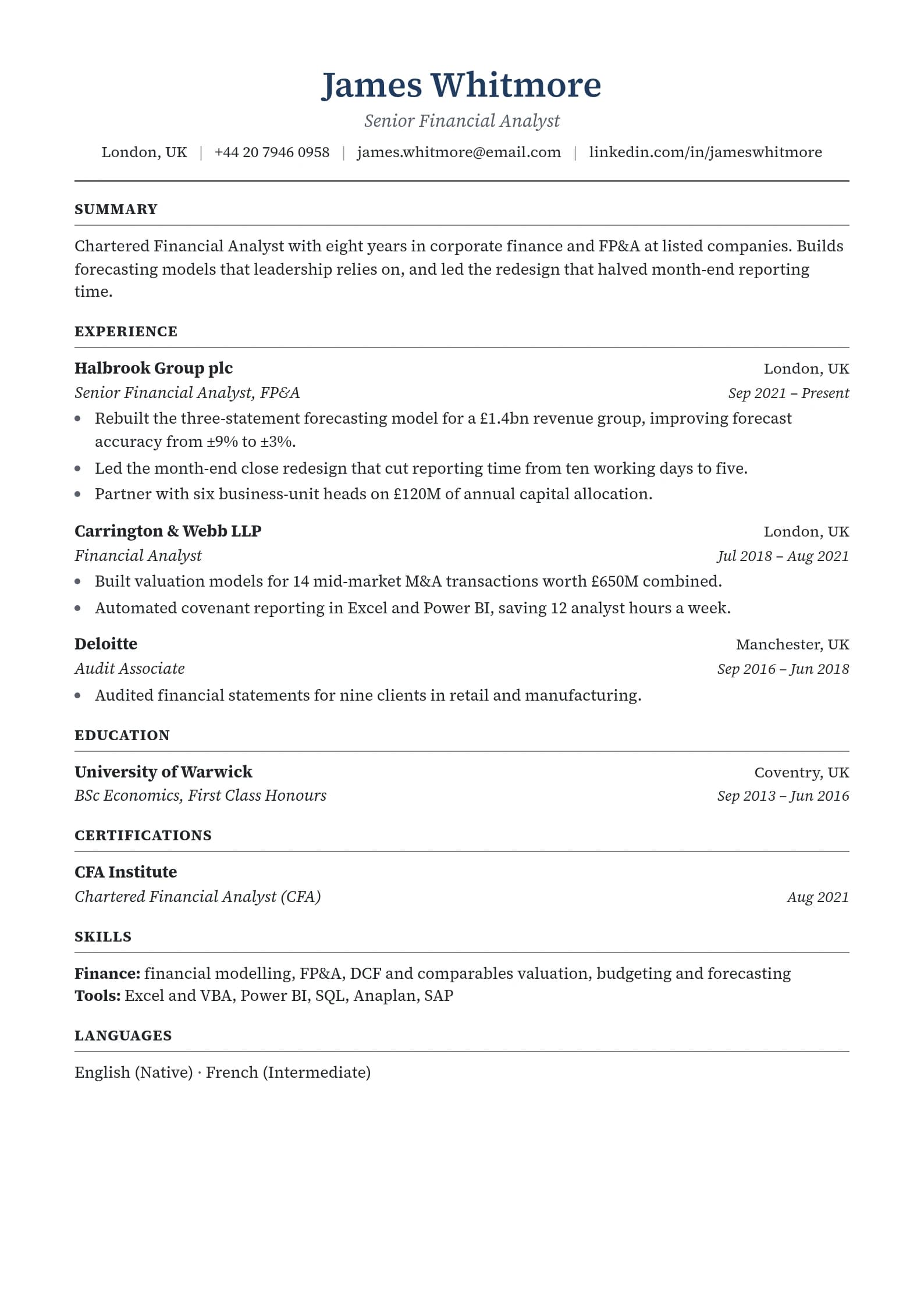
Build a resume that gets interviews
- ATS-optimized templates
- AI-powered writing
- Free to start
No credit card required
You've been applying to jobs online for weeks. You're tailoring each resume, writing custom cover letters, and hitting submit over and over. Your application disappears into the void, and you never hear back.
Meanwhile, someone with a similar background just got hired at your dream company. The difference? They knew someone on the inside. Not because they were lucky or well-connected, but because they had a 20-minute coffee conversation six weeks ago.
Informational interviews are the most effective and most underused job search strategy. They don't involve applying for anything. They don't require you to sell yourself. They just require genuine curiosity and a willingness to ask.
What Is an Informational Interview?
An informational interview is a conversation where you ask a professional about their career, their company, or their industry. You're not asking for a job. You're asking for insight.
An informational interview is not a job interview. There's no pressure, no evaluation, no hiring decision at stake. It's a conversation between two professionals, one of whom happens to know things the other wants to learn.
The difference matters. When you approach someone asking for information (not a job), they're far more likely to say yes. People love talking about their work when there's no obligation attached.
Why Informational Interviews Lead to Jobs
Here's why this strategy works, based on what the evidence supports:
- Referrals matter, but the famous "80% of jobs are hidden" claim has no traceable source. Source-of-hire data shows referrals as one of the biggest channels alongside posted jobs. We lay out the evidence in the hidden job market.
- Moderately weak ties help most. A large LinkedIn experiment, A causal test of the strength of weak ties (Science, 2022), found that acquaintances you know a little were more useful for job mobility than very close or very distant contacts. A former colleague is a better bet than a stranger.
- A person can move your application to the top of a pile. That is the practical value of a relationship.
When you have an informational interview with someone at a company, you create a relationship. When a position opens up that fits your background, you're no longer a stranger in the applicant pile. You're "the person Sarah talked to last month who had great experience in supply chain optimization."
That's not nepotism. It's how people get introduced to opportunities.
How to Find the Right People to Talk To
You don't need to know anyone yet. Here's where to find people:
LinkedIn: Search for people with the job title you want at companies you're interested in. Second-degree connections (friends of friends) are ideal because you can get a warm introduction.
Alumni networks: Your college or university alumni network is one of the most underused resources in job searching. Alumni are disproportionately willing to help fellow graduates.
Industry events and communities: Slack groups, professional associations, and online communities are full of people who are open to conversation.
Existing contacts: Former colleagues, classmates, professors, and family friends who work in adjacent fields can all make introductions.
The key: aim for people 1-2 levels above where you want to be. They're senior enough to have useful perspective but not so senior that they're inaccessible.
The Outreach Message That Gets a "Yes"
Most informational interview requests fail because they're too long, too vague, or they secretly ask for a job. Here's a template that works:
Subject: Quick question about your experience at [Company]
Hi [Name],
I'm a [your title/background] exploring opportunities in [industry/role type]. I came across your profile and was really interested in your path from [previous role] to [current role] at [Company].
Would you be open to a 20-minute virtual coffee chat? I'd love to hear about your experience and any advice you might have for someone looking to move in a similar direction.
Completely understand if you're too busy. Either way, thanks for considering it.
Best, [Your Name]
Why this works:
- It's short (under 100 words)
- It references something specific about them (shows you did your homework)
- It asks for a specific, small commitment (20 minutes)
- It gives them an easy out ("completely understand if you're too busy")
- It does NOT mention a job opening or ask for a referral
Response rates: We have no reliable data on how many people say yes. Expect many non-replies, send to more people than you think you need, and do not take silence personally.
15 Questions to Ask During the Conversation
Come prepared with 5-7 questions. You won't use all of them, because good conversations flow naturally. But having them ready prevents awkward silence.
About their career:
- What does a typical day look like in your role?
- What's the most rewarding part of your work?
- What surprised you most when you started this job?
- How did you get from [previous role] to where you are now?
About the company: 5. What's the culture like at [Company]? 6. What qualities do the most successful people at your company share? 7. How has the company changed in the last year or two?
About the industry: 8. What trends are you seeing in [industry] right now? 9. What skills are most in-demand for someone entering this field? 10. What do most people get wrong about working in [industry]?
About your path: 11. Given my background in [your field], what do you think would be the strongest entry point? 12. Are there any certifications or skills that would make me a stronger candidate? 13. What would you recommend I focus on if I want to move into this space?
Closing questions: 14. Is there anyone else you'd suggest I talk to? 15. Would it be okay if I kept you posted on my progress?
Critical rule: never ask "Are there any openings at your company?" during an informational interview. This breaks the implicit agreement. If they want to mention openings, they will. Let them bring it up.
During the Conversation: How to Make a Great Impression
Be on time. If it's virtual, have your tech working before the scheduled start.
Let them do most of the talking. You're there to learn, not to pitch yourself. The ratio should be roughly 70% them, 30% you.
Take notes. Jotting down key points shows you value what they're saying.
Share relevant context about yourself when it flows naturally, but don't turn it into a 10-minute monologue about your resume. A brief, genuine comment like "That's interesting, I dealt with something similar when I..." builds connection without being salesy.
Respect the time limit. If you asked for 20 minutes, start wrapping up at 18 minutes. Say "I know I asked for 20 minutes and I want to respect your time." If they're enjoying the conversation, they'll say "No, I have time, keep going."
The Follow-Up That Turns Conversations Into Opportunities
What you do after the conversation matters more than the conversation itself.
Within 24 hours: Send a thank you email referencing something specific you discussed. Connect on LinkedIn with a personalized note.
Within 1-2 weeks: If they mentioned a resource, article, or book, read it and send a brief note about what you found useful.
Within 1-3 months: Send a brief update on your job search. "I wanted to let you know I took your advice about [specific tip] and it led to [result]." This keeps the relationship warm.
When a relevant job opens up at their company: Now you can mention it naturally. "I saw [Company] just posted a [Role]. Based on our conversation, it seems like a great fit. Would you be comfortable referring me?"
This is how informational interviews turn into jobs. Not through a single conversation, but through the relationship that develops over time.
How Many Informational Interviews Should You Do?
Aim for 3-5 informational interviews per week during an active job search. That might sound like a lot, but each one is only 20-30 minutes. In a week, that's less time than you'd spend on a single lengthy application.
Over a month, 15-20 conversations will give you:
- A much clearer picture of your target industry
- 15-20 new professional contacts who know your name
- Several potential referral sources
- Inside knowledge about company cultures, team dynamics, and hiring timelines
This approach pairs perfectly with a strong resume. When someone asks "Can you send me your resume?", you need to be ready with a polished, tailored document. Build yours in the ResumeFast builder so it's always ready to share. Building and editing are free, and your first PDF or Word download is free (once per account). After that, PDF and Word need Pro at $6.95 a month, billed monthly, cancel anytime. Plain text (.txt) downloads are always free.
Informational interviews are one stage of a full search: the job search strategy guide shows where they fit.
Common Mistakes to Avoid
Asking for a job in disguise. People can tell when your "informational interview" is actually a pitch. Be genuinely curious and the opportunities will follow naturally.
Not doing your homework. If you ask questions that could be answered by reading their LinkedIn profile, you've wasted their time and yours.
Failing to follow up. A conversation without follow-up is a missed connection. The follow-up is where relationships are built.
Only talking to people at companies with open positions. The best informational interviews happen before a job is posted. You want to be top of mind when the opening appears, not scrambling to build relationships after.
Treating it as transactional. The best networking is generous. Ask how you can help them. Share articles they might find interesting. Offer to connect them with someone in your network. Relationships are two-way streets.
Frequently Asked Questions
Isn't it awkward to ask a stranger for their time?
It feels awkward the first time. By the third, it's routine. Most professionals remember what it was like to be in your position and are happy to help. The worst they can say is "no" or not respond. Neither outcome costs you anything.
How long should an informational interview last?
Ask for 20 minutes. Most conversations naturally extend to 25-30 minutes if they're going well. Never go past 30 minutes unless the other person explicitly wants to continue. Respecting time boundaries shows professionalism.
Should I bring my resume to an informational interview?
Don't lead with it. But have it ready in case they ask. If the conversation goes well and they say "Send me your resume," you want to follow up within hours, not days. For more on how to email your resume professionally, check our dedicated guide.
What if the person I want to talk to is very senior (VP, C-suite)?
Try anyway, but calibrate your expectations. Very senior people are busy but often surprisingly willing to help if your request is specific and brief. If you can't reach them directly, aim for someone on their team who might introduce you later.
ResumeFast Team
The team behind ResumeFast
The team that builds ResumeFast's resume templates and ATS checker and writes its expert reviews..
Your resume is your first impression. Make it count.
Build an ATS-optimized resume that gets read, with AI help on every section.
No credit card required. Your first PDF or Word download is free; after that, Pro is $6.95 a month.
Continue Reading
View all articles
Two Weeks Notice Letter: 6 Samples You Can Copy

How to Spot a Fake Job Posting: 2026 Scam Red Flags

Should You Apply for Jobs You're Not Qualified For?

Job Search Strategy Guide: How to Find a Job in 2026

Walk Me Through Your Resume: Sample Answers That Work

Job Hopping on a Resume: How Short Tenures Read in 2026
Build a resume that gets interviews
Ready to build your resume?