
Cold-Message Recruiters on LinkedIn: 4 Templates
How to message a recruiter on LinkedIn: find the right person, research first, four copy-ready templates, a follow-up plan and what to do if they ignore you.

ResumeFast Team
The team behind ResumeFast

On this page
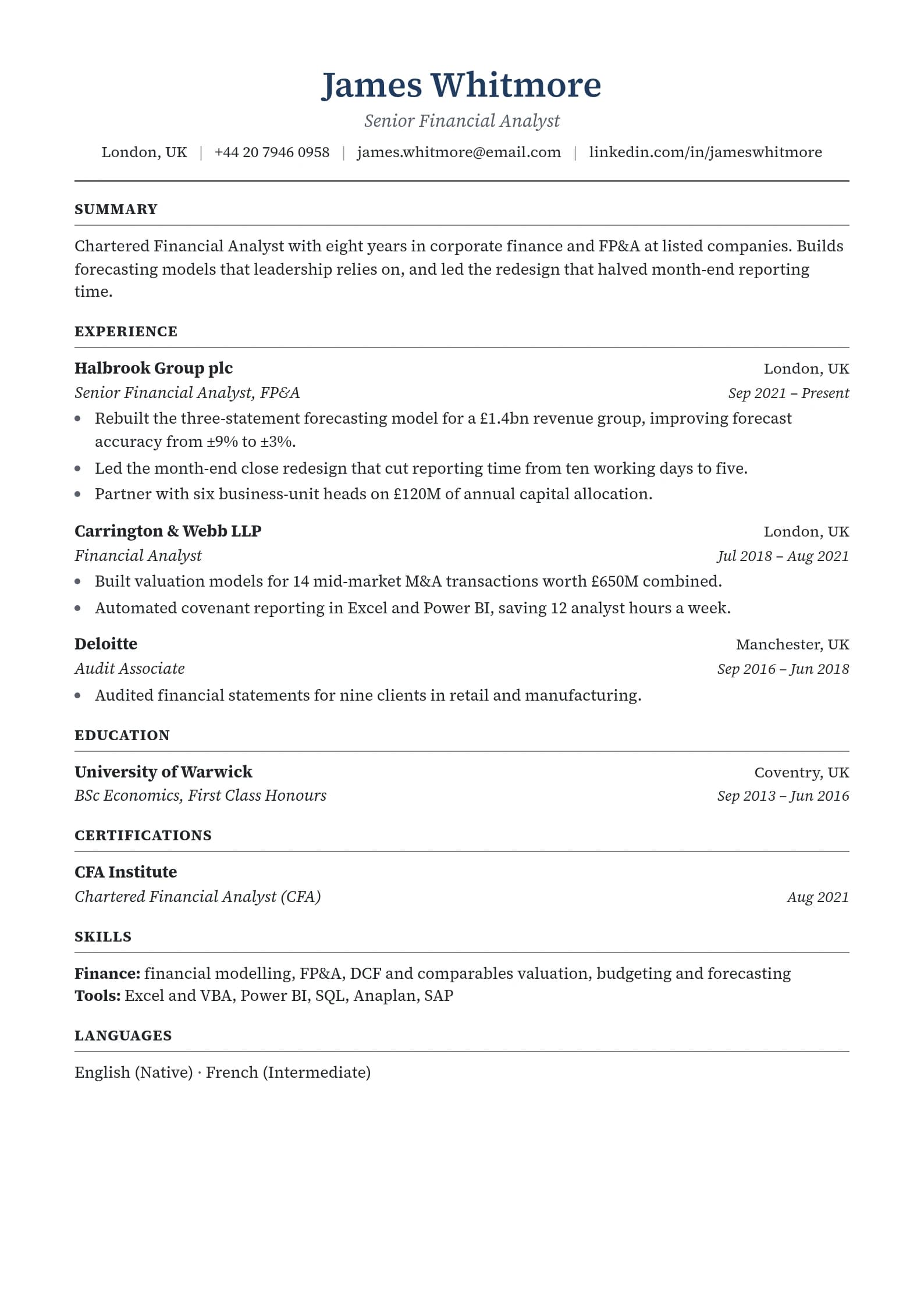
Build a resume that gets interviews
- ATS-optimized templates
- AI-powered writing
- Free to start
No credit card required
You found a recruiter at the company you want. Their inbox is full of messages like yours.
Most candidates send the same recruiter DM. It's the LinkedIn equivalent of "Hi" and it gets ignored at the same rate. A well-targeted cold message to a recruiter still works in 2026, but the bar is higher: better targeting, shorter messages, and a reason for them to care.
This guide gives you the workflow: how to find the right recruiter, what to research first, and four templates you can adapt in 10 minutes.
The Direct Answer
A cold message to a recruiter on LinkedIn gets a reply when:
- You message the right recruiter (not the most senior, not a generic "talent partner")
- The message is under 90 words and references something specific about them, the role, or the company
- You include a clear ask that's easy to say yes to (a 15-minute call, a referral to the right person, or feedback on whether you'd be a fit)
- You attach proof of fit without making them dig (specific accomplishments tied to the role, not your full resume)
Generic "I'd love to chat about opportunities" messages are easy to ignore. A specific message with a clear hook gives the recruiter a reason to answer. There is no reliable public data on reply rates, so treat any figure you see for them with suspicion, including on other sites.
Step 1: Find the Right Recruiter (Not Just Any Recruiter)
This is where most candidates lose before they start. You're going to send 5-10 messages this week. The targeting matters more than the writing.
The recruiter hierarchy
| Type | Title clues | Use when |
|---|---|---|
| Technical sourcer | "Sourcer", "Talent Sourcer" | Early career, you have a specific role in mind |
| Recruiter | "Recruiter", "Talent Acquisition Specialist" | Most cases |
| Recruiting manager | "Recruiting Lead", "TA Manager" | Only if other recruiters can't help |
| Agency / external | "Headhunter", "Executive Search" | Senior roles, contract work |
| Hiring manager | Engineering / Product titles | When you have a strong, specific pitch |
Sourcers are often the best first target. Their job is finding candidates, while recruiters manage pipelines and hiring managers manage teams.
How to find them
On LinkedIn, search:
"recruiter" AND [Company Name]"sourcer" AND [Company Name] AND [Function](e.g., "engineering")"talent" AND [Company Name]
Filter by 2nd or 3rd connections. 1st-degree connections are usually saturated; 2nd and 3rd give you mutual context without feeling stale.
For more on positioning your LinkedIn so recruiters notice you organically, see our LinkedIn optimization guide for recruiters and the LinkedIn recruiter algorithm breakdown.
Match recruiter to role
A general "talent partner" at a 5,000-person company won't know your role exists. Find the recruiter who specifically supports the function you want:
- "Engineering recruiter, infrastructure team" - reaches out about your role
- "Senior recruiter" with no specialty - won't know if you fit
Look at their recent activity on LinkedIn. If they've posted job listings for your function in the last 90 days, they're the right person.
Step 2: Research Before You Write (5-Minute Checklist)
Before drafting the message, spend 5 minutes finding a hook. The hook is what separates "Hi I'm interested in opportunities" from a message that converts.
What to look for
- A specific job listing they've posted recently
- A post they wrote about hiring criteria, team culture, or the function
- A LinkedIn comment showing what they care about (interesting people, niche skills)
- A mutual connection who'd recognize your name
- A shared background: same school, same prior employer, same hometown
- Recent company news: funding, product launch, leadership change
You only need one hook. The best hooks are personal but professional. "I saw you posted about [X]" beats "I noticed we both went to [University]" but either works.
Step 3: The Four Templates
Adapt these. Don't paste them verbatim. Recruiters read enough messages to spot a copy-paste in 3 seconds.
Template 1: You Saw a Specific Posting
Hi [Name], I saw you posted the [Specific Role] opening for [Team]. The combination of [specific aspect of role] and [specific aspect of company] is exactly what I'm looking for next.
Quick context: I'm a [current role] at [current company] with [X years] doing [most relevant skill]. Last year I [specific accomplishment with number].
Would you be open to a 15-minute call to see if I'd be a fit? Happy to send my resume in advance.
Thanks, [Your name]
Why it works: It references the specific role (signals you read the post), gives them one quantified accomplishment (signals you're not a junior cold-emailing dozens), and asks for a small ask (15 minutes).
Word count target: 75-90 words.
Template 2: You Have a Mutual Connection
Hi [Name], [Mutual] mentioned you might be the right person to talk to about [Team / Function] roles at [Company]. They thought my background in [Specific Skill] could be a fit for the kind of hiring you're doing.
I'm currently [current role] at [current company]. The piece of my work I'd want to highlight: I [specific result] that resulted in [measurable outcome].
Open to a quick call this week or next?
[Your name]
Why it works: Warm intro (or implied warm intro) is the strongest hook on LinkedIn. Even a 2nd-degree mutual connection works if you've had real recent contact with the mutual.
Important: Only use this if the mutual connection is real. Recruiters DO sometimes verify with the mutual.
Template 3: You're Targeting the Company, Not a Specific Role
Hi [Name], I've been following [Company] since [specific event: launch, IPO, recent product] and would love to learn more about how the team is growing. Your post about [their post topic] gave me a clearer sense of what you look for.
I'm a [role] focused on [specialty]. Recent work: [one quantified result]. I'd be most interested in roles around [specific function], if your team is hiring.
Would 15 minutes work this week to compare notes on your priorities?
Thanks, [Your name]
Why it works: Honest about the cold reach but anchors on something they wrote. This is the highest-volume template, so not every recipient will answer, but it scales.
Template 4: You Just Got Laid Off and Want to Be Direct
Hi [Name], I was part of last week's reduction at [Company]. I'm reaching out to recruiters at companies I'd want to work for next. [Company] is high on that list, especially [Team / Product].
Background: [role] with [X years] in [function]. Highlights: [2 short accomplishments].
If you have any open roles I'd fit, I'd appreciate even 10 minutes to learn more. Resume attached.
Thanks for your time, [Your name]
Why it works: Directness signals you're serious. Recruiters often have priority pipelines for laid-off candidates from known companies. For more on framing a layoff in your overall job search, see explaining a layoff on your resume.
What Makes Messages Get Ignored
The recurring mistakes that kill reply rates:
"I'd love to learn more about opportunities"
Vague. Gives the recruiter zero information about what you do, what you want, or whether you're even qualified. They will not write back asking clarifying questions; they will not write back at all.
"Here's my resume, let me know what you think"
Reviewing resumes is a recruiter's job, not a favor. Ask for a conversation, not a free resume review.
A wall of text
Anything over 150 words gets skimmed at best, ignored at worst. Recruiters read these on their phones between meetings.
No specific accomplishment
"I have 8 years of experience and a strong background in marketing" tells them nothing. "I led the campaign that doubled trial signups in Q3" tells them everything. For help quantifying your work, see our guide on quantifying resume achievements.
No clear ask
"I'd love to connect" and "I'd love to chat" force the recruiter to figure out what you actually want. Make it easy: "a 15-minute call this week."
Sending it late at night, weekends, or holidays
Weekday mornings in the recruiter's time zone are a reasonable default. Nobody has published reliable data on the best hour.
What to Do When They Don't Reply
Many cold messages get no response. That's normal. Don't take it personally. Here's the follow-up sequence:
Day 1: Initial message
Send the message above.
Day 7: One short follow-up
Hi [Name], following up on my note from last week. Totally understand if the timing isn't right; just wanted to make sure it didn't get lost. Open to picking it up later if your team's hiring shifts.
That's it. One follow-up. Two follow-ups feels desperate; three is harassment.
Day 21+: Move on
After three weeks of no response, find a different recruiter at the same company or move to a different company. Coming back to the same person 90 days later with a new specific hook is fair; chasing them weekly isn't.
When InMail Beats a Connection Request
LinkedIn has two outreach mechanisms: connection request with note, or direct message (InMail, often paid).
Use a connection request with note when:
- You're a 2nd-degree connection
- The note can be under 300 characters
- You're early-career or your hook is strong enough to stand alone
Use InMail when:
- You're a 3rd-degree or out-of-network
- You want to send a longer, more detailed pitch
- You're targeting senior recruiters who get many connection requests but few thoughtful InMails
Paid LinkedIn plans include a limited number of InMail credits each month. Check LinkedIn's current plans and credit counts before you pay, and spend credits only on well-targeted messages.
What tends to work
Across the templates above the pattern is the same: signal effort, signal fit, and signal that you are easy to work with. Reference something the recruiter posted or the role they hire for. Lead with one accomplishment, not five generic ones. Keep the tone pleasant and the ask small.
Frequently Asked Questions
Should I attach my resume in the first message?
Mention it ("happy to send my resume") rather than attaching directly. Most recruiters won't open an attachment from a stranger; they will open one once you've replied to their reply. Save the attachment for the second message.
How many recruiters can I message at the same company?
One per role function, one to two total. Multiple messages at the same company in the same week feels desperate and recruiters do talk to each other. If your first contact doesn't reply in two weeks, then it's fine to try someone else.
Should I mention salary expectations in the cold message?
No. Save it for the screening call. The first message is about getting a reply, not negotiating. For the negotiation phase, see salary negotiation positioning.
Is it weird to message a recruiter you've already applied through ATS?
Not at all. Many recruiters explicitly recommend it. Reference the application: "I applied for [Role] last week and wanted to introduce myself directly." This often pulls your application out of the queue.
What if the recruiter is from an external agency?
Treat them as a partner, not a gatekeeper. They get paid when you get hired, so they're motivated. But understand they may pitch you to multiple companies; ask which roles they're considering you for before getting too invested.
Should I mention I'm interviewing elsewhere?
Only if it's true and only if you're past the initial response. In an opening message, it reads as posturing. In a follow-up after they've replied, it's useful context that can speed up the process.
The Cumulative Move
Most cold messages will not get a reply, so this is a volume game played with precision: a handful of well-targeted, well-researched messages per week beats dozens of sloppy ones.
Three concrete actions for this week:
- List 10 companies you'd genuinely want to work at
- Find the right recruiter at each (filter for sourcer or function-specific recruiter)
- Send a few personalized messages this week using the templates above
If you already applied and want to nudge the application, use the follow-up email templates. The cover letter guide covers the longer letter a recruiter may ask for next. Once someone replies, have your resume ready: build it in the resume builder and check it with the ATS checker. Your first PDF or Word download is free, once per account, and plain text (.txt) downloads are always free. After that, PDF and Word need Pro at $6.95 a month, billed monthly, no trial, cancel anytime.
For the broader job search context, see our guides on LinkedIn optimization, the hidden job market, and job search timeline expectations.
ResumeFast Team
The team behind ResumeFast
The team that builds ResumeFast's resume templates and ATS checker and writes its expert reviews..
Your resume is your first impression. Make it count.
Build an ATS-optimized resume that gets read, with AI help on every section.
No credit card required. Your first PDF or Word download is free; after that, Pro is $6.95 a month.
Continue Reading
View all articles
How to Prepare for a Career Fair: Resume, Pitch, Follow-Up

Two Weeks Notice Letter: 6 Samples You Can Copy

Ghost Jobs in 2026: Statistics, Laws and How to Spot One

How to Pass an AI Job Interview in 2026 (and Your Rights)

How to Spot a Fake Job Posting: 2026 Scam Red Flags

Seasonal Job Resume: How to Land a Holiday Job in 2026
Build a resume that gets interviews
Ready to build your resume?