How to Apply for an Internal Promotion
Everything you need to apply for an internal promotion: when to have the manager conversation, how to write your resume and cover letter, interview tips, and what to do if you don't get it.

Raman M.
Software Engineer & Career Coach

On this page
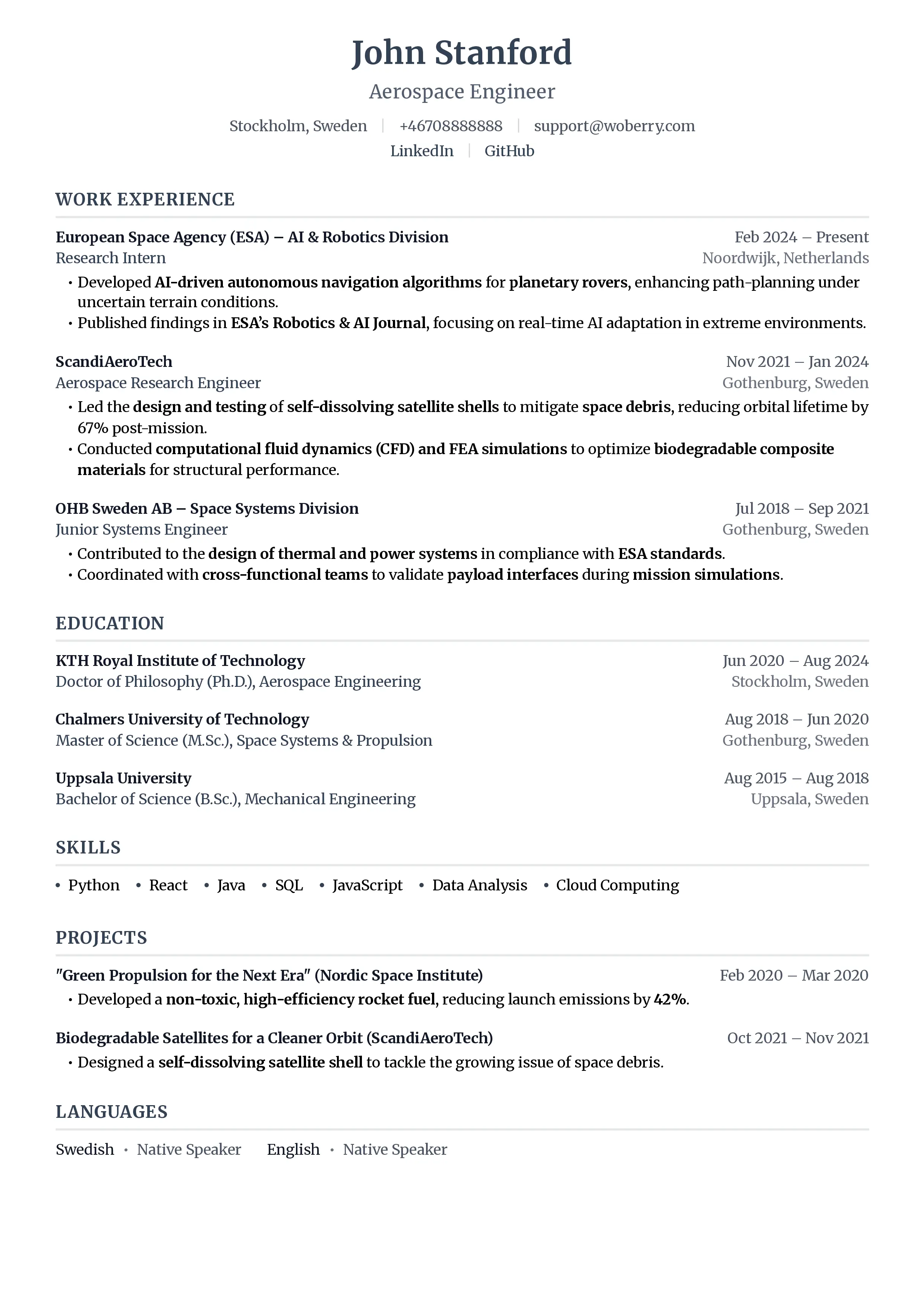
Build a resume that gets interviews
- ATS-optimized templates
- AI-powered writing
- Free to start
No credit card required
Your company just posted the role you've been waiting for.
It's the title you've been eyeing for eighteen months. The team, the scope, the salary band. All of it lines up. You know the product. You know the people. You know you can do this job because, frankly, you've been doing half of it already.
And then the anxiety sets in. Who else is applying? Does my manager even know I'm interested? Should I submit a resume to people who already know me? What do I write in a cover letter to someone I had coffee with last Tuesday?
Applying for an internal promotion is one of the highest-stakes, least-discussed career moves you'll make. The advice online is either too generic ("just ask your boss!") or too focused on one piece of the puzzle. This guide covers the whole thing: the groundwork before you apply, the resume, the cover letter, the interview, and what to do if you don't get it.
Let's walk through it.
Before You Apply: Lay the Groundwork
The application itself is the tip of the iceberg. The real work happens in the weeks and months before the posting goes live.
Have the Manager Conversation Early
If your manager finds out you applied for a promotion by seeing your name on the candidate list, you've already made a political mistake. Even if your relationship is great, this feels like a blindside.
Have the conversation before you apply. The ideal timing is well before the role is even posted. In your next one-on-one, try something like:
"I've been thinking about my career trajectory here, and I'm really interested in growing into a [target role] over the next year. What would you need to see from me to feel confident recommending me for that kind of move?"
This does three things:
- Signals ambition without threatening anyone. You're asking for guidance, not making demands.
- Turns your manager into an advisor. Once they've given you a roadmap, they're invested in your success.
- Gets you concrete feedback. You'll learn exactly what gaps to close before the opportunity appears.
If the role is already posted and you haven't had this conversation yet, have it now. Today. Before you submit anything. A quick message works: "I saw the posting for [role] and I'm planning to apply. I wanted you to hear that from me first."
Timing Matters More Than You Think
Not every moment is right to push for a promotion. Avoid applying during these situations:
- Mid-reorg. When leadership is reshuffling, decisions are unpredictable and the role itself may change.
- Right after a bad review. Even if the feedback was unfair, applying immediately looks tone-deaf. Close the gaps first, then move.
- When your team is in crisis mode. If your current project is on fire, applying elsewhere signals that you're checking out instead of leading through difficulty.
The best timing? After a visible win. You just delivered a major project. Metrics are up. People are saying your name in rooms you're not in. That's when to move.
Build Your Case Before the Posting Goes Live
Internal promotions are rarely decided in the interview alone. Much of the decision happens in hallway conversations, Slack threads, and leadership meetings where your name comes up.
Start building evidence months before you apply:
- Track your wins weekly. Keep a running document of accomplishments, metrics, and positive feedback. You'll need this for your resume and interview, and you'll forget 80% of it if you don't write it down.
- Take on stretch assignments. Volunteer for cross-functional projects, lead a meeting your manager usually runs, or mentor a junior team member. These signal readiness for a bigger role.
- Make your work visible. Share project updates in team channels. Present results in all-hands meetings. Write internal documentation others reference. The people who get promoted aren't just doing great work, they're making sure the right people see it.
Get Informal Advocates
Identify two or three people who would naturally be asked about you during the hiring process. These might be:
- A senior leader who's seen your cross-functional work
- A peer on the hiring team who respects your contributions
- A stakeholder from another department you've collaborated with
You don't need to ask them formally. Just make sure they're aware of your recent wins. Share a project update. Ask for their input on something strategic. When your name comes up in a calibration meeting, you want people in the room who can say, "Actually, let me tell you what they did on the Q3 initiative."
Your Promotion Resume: Key Principles
Yes, you need a resume. Even if the application system doesn't require one. Even if the hiring manager sits ten feet away from you.
An internal resume isn't about introducing yourself. It's about reframing what people think they know about you. Your colleagues have a mental model of you based on the 15-20% of your work they've personally witnessed. Your resume fills in the other 80%.
For a deep dive on building your internal resume, see our complete guide: Resume for Internal Promotion: How to Apply When They Already Know You.
Here are the core principles:
Surface Results Your Manager Hasn't Seen
The biggest mistake internal candidates make is listing responsibilities their team already knows about. That's wasted space. Focus instead on impact that happened outside direct visibility.
Before (what they already know):
- Managed the company blog and content calendar
- Coordinated with design team on marketing materials
- Ran weekly team standups
After (what they don't know):
- Redesigned the editorial workflow, reducing content production time by 30% and enabling a publishing increase from 8 to 14 posts per month
- Initiated a content partnership with three industry publications, generating 4,200 referral visits in Q4 (a new channel that hadn't existed before)
- Built and mentored a team of two freelance writers, managing $45K in annual contractor budget and maintaining 95% on-time delivery
The key question for every bullet: Would the hiring manager be surprised to learn this? If they already know it, replace it with something they don't.
For strong action verbs that demonstrate leadership and growth, check out our list of 185 resume action verbs organized by category.
Show Cross-Functional Impact
Internal promotions often require demonstrating you can work beyond your current scope. Highlight moments where you collaborated across teams:
- Partnered with Product and Customer Success to redesign the onboarding flow, reducing time-to-activation by 18% for enterprise accounts
- Led a cross-departmental task force on data quality that standardized reporting across Sales, Marketing, and Finance
Demonstrate Growth Trajectory
Show that you've been operating at the next level, not just performing well in your current one:
Before:
Marketing Coordinator, 2023-Present
After:
Marketing Coordinator (promoted from Marketing Assistant, 2022), 2023-Present Scope expanded to include enterprise campaigns and direct client relationships in 2024
Build your promotion-ready resume with ResumeFast's Resume Builder, which helps you structure achievements for maximum impact.
Your Promotion Cover Letter: Key Principles
The internal cover letter is where most candidates either overthink it or skip it entirely. Both are mistakes.
For a deep dive on the internal cover letter, including tone, structure, and politics, see our complete guide: The Internal Cover Letter: How to Apply for a Promotion Without Making It Awkward.
The Tone Balance
An internal cover letter walks a tightrope. Too formal, and it feels weird. Too casual, and it doesn't signal you're taking the process seriously.
Too formal:
Dear Ms. Rodriguez, I am writing to express my enthusiastic interest in the Senior Product Manager position at Acme Corporation. With over four years of experience in product management...
Too casual:
Hey Maria! Saw the PM lead posting and figured I'd throw my hat in. You know me, you know my work, so I won't bore you with the details.
Just right:
Maria, I'm excited to formally apply for the Senior Product Manager role. Over the past three years on the platform team, I've built deep knowledge of our technical architecture and customer pain points. I'd love the chance to apply that context at a broader scope.
What to Include (That External Letters Don't)
Internal cover letters should hit three things that external letters never need to:
- Institutional knowledge as a competitive advantage. What do you know about the company, product, or customers that no outside hire could match?
- A vision for the role. Don't just say you want the job. Say what you'd do in the first 90 days.
- Acknowledgment of growth areas. If there's a gap between your current skills and the role requirements, address it directly. They already know about it.
Before (generic):
I'm passionate about product management and believe my experience makes me an ideal candidate for this position.
After (internal-specific):
Having led our API redesign from discovery through launch, I've seen firsthand how our enterprise customers integrate with us. In the Senior PM role, I'd bring that technical context to our pricing and packaging overhaul, something I know the team has been discussing since Q2.
Draft your internal cover letter with our Cover Letter Generator, which adapts to the unique tone internal applications require.
Promotion Application Letter Template
If you're looking for a usable starting point, here's a template you can adapt. This targets the common structure that works for most internal promotion applications.
Subject line: Application for [Role Title], [Req ID if applicable]
[Hiring Manager's first name],
Opening (2-3 sentences): State your interest and frame your internal advantage.
I'm writing to formally apply for the [Role Title] position on the [Team Name] team. Over the past [X years] in my current role as [Current Title], I've developed a deep understanding of [specific area: our product architecture / our customer base / our go-to-market motion / our operational workflows] that I'm eager to bring to this expanded scope.
Paragraph 2 (3-4 sentences): Your strongest evidence of readiness.
Highlight 1-2 accomplishments that directly connect to the new role's responsibilities. Be specific.
The initiative I'm most proud of is [specific project]. When [brief context of the problem], I [what you did], which resulted in [measurable outcome]. This experience taught me [skill or insight directly relevant to the new role], and it's the kind of work I want to do more of.
Paragraph 3 (2-3 sentences): Your vision for the role.
Show that you've thought about what success looks like in the new position.
In this role, I'd prioritize [specific initiative or area of focus], because [reason tied to company goals or team needs]. I've already started exploring this by [something you've done: conversations with stakeholders, research, a small pilot], and I see a clear path to [outcome].
Paragraph 4 (2-3 sentences): Address any gaps honestly, then close with confidence.
I know that [specific gap, like "I haven't managed a team of this size" or "my experience with enterprise clients is more limited"]. I've been actively closing that gap by [what you've done: taken a course, shadowed a colleague, led a smaller version of the work]. I'm confident I'm ready for this step, and I'd welcome the chance to discuss how I can contribute at this level.
Thank you for considering my application. I'm happy to share more detail on any of the above.
[Your name]
A few notes on using this template:
- Keep it to one page. This isn't a manifesto. Three to four paragraphs is the sweet spot.
- Use their first name. You work with this person. "Dear Mr. Thompson" creates unnecessary distance.
- Don't repeat your resume. The letter adds context and narrative. The resume provides the evidence.
- Customize the vision paragraph. This is what separates your letter from every other internal applicant who just says "I want this job." Hiring managers want to see that you've thought about the role, not just the title.
Internal Interview Tips
You got the interview. This is where the dynamics get interesting, because internal interviews play by different rules than external ones.
They Already Know Your Weaknesses
External candidates get to present a curated version of themselves. You don't have that luxury. If you struggled with a project six months ago, the interviewer knows. If you had friction with a colleague, they've heard about it.
Don't pretend these things didn't happen. Instead, address them proactively:
"I know the Q2 migration didn't go as smoothly as we'd planned. I've reflected on that a lot. The biggest lesson was that I was trying to manage the technical work and the stakeholder communication simultaneously, and the communication suffered. Since then, I've created a structured update cadence for my projects, and the Q4 launch went much more smoothly as a result."
This shows self-awareness and growth, exactly what they're looking for in a promotion candidate.
"Culture Fit" Is Already Settled
External interviews spend significant time assessing whether someone will mesh with the team. For you, that question is answered. This means the bar for everything else is higher. The interview will focus more heavily on:
- Strategic thinking. Can you operate at the next level, not just execute?
- Vision for the role. What would you do in the first 30, 60, 90 days?
- Leadership capability. Can you influence people, manage ambiguity, and make decisions with incomplete information?
Show Vision, Not Just Track Record
The most common mistake internal candidates make in interviews is spending all their time talking about past work. The hiring team already knows your track record. What they need to see is forward-looking thinking.
Prepare answers to questions like:
- "What would you prioritize in the first 90 days?"
- "What's the biggest opportunity you see for this team?"
- "How would you approach [specific challenge the team is facing]?"
Have a point of view. Even if your ideas aren't perfect, demonstrating that you've thought strategically about the role signals you're ready for it.
What Not to Say
A few things that hurt internal candidates in interviews:
- "I deserve this because I've been here the longest." Tenure isn't a qualification. Impact is.
- "I already do most of this job." Even if it's true, this dismisses the scope of the new role. Instead, talk about what you'd do differently with the expanded authority.
- "I don't really have any weaknesses for this role." They know your weaknesses. This answer signals either a lack of self-awareness or a lack of honesty. Neither is good.
- Badmouthing the current person in the role (if it's a backfill). Focus on what you'd bring, not what was missing.
Prepare Like an External Candidate
This is counterintuitive, but important. The candidates who treat internal interviews casually are the ones who don't get the job. Prepare as thoroughly as you would for any other interview:
- Research the team's current priorities and challenges
- Practice your answers to behavioral questions
- Prepare 3-5 thoughtful questions for the panel
- Review the job description line by line and prepare examples for each requirement
Being an internal candidate is your advantage. Being underprepared is how you waste it.
What If You Don't Get It
You applied. You interviewed. And the job went to someone else.
This is one of the hardest moments in a career, because unlike an external rejection, you have to go back to your desk and sit next to the people who made the decision. Here's how to handle it.
The First 48 Hours
Feel what you feel, but control what you show. It's okay to be disappointed. It's not okay to let that disappointment define how people perceive you going forward.
Send a brief, professional message to the hiring manager:
"Thanks for letting me know. I'm disappointed, but I respect the decision. I'd love to schedule time to debrief so I can understand what would make me a stronger candidate next time."
This message does two things: it shows maturity, and it opens the door to feedback that will actually help you.
Request the Debrief
This is the most important conversation you'll have after a rejection. Ask for 30 minutes with the hiring manager and come prepared with specific questions:
- "What were the key factors in the final decision?"
- "Were there specific skills or experiences where I fell short compared to the selected candidate?"
- "What would you recommend I focus on to be the strongest candidate next time this kind of role opens up?"
- "Is there a timeline for when similar opportunities might come up again?"
Write down the answers. Not because you'll forget, but because you'll want to reference them when you build your development plan.
Build a Development Plan
Take the debrief feedback and turn it into a concrete plan. If they said you needed more leadership experience, volunteer to lead the next cross-functional initiative. If they said your strategic thinking needed work, ask to join a planning committee or take on a project that requires you to think beyond execution.
Share this plan with your manager: "Based on the debrief, I'm going to focus on X and Y over the next six months. Can we check in on this during our one-on-ones?"
This signals that you're resilient, growth-oriented, and serious about your career. Those are exactly the qualities that get people promoted.
Know When to Look Externally
Sometimes the rejection reveals something important: this company isn't going to promote you. Maybe the culture favors external hires. Maybe your manager is subtly blocking your growth. Maybe the feedback you received was vague enough to suggest they don't see you in a bigger role.
If you've been passed over twice for roles you're qualified for, and the feedback doesn't give you a clear, achievable path forward, it may be time to look outside. The fastest way to get a promotion is sometimes to get it at a different company.
Before you start applying externally, make sure your LinkedIn profile is optimized alongside your resume so you're visible to recruiters.
Frequently Asked Questions
Should I tell my manager before applying for an internal promotion?
Yes. Always. Even if your company's HR policy says internal applications are confidential, your manager will very likely find out. Hearing about it from you directly shows respect and professionalism. It also gives them the chance to advocate for you rather than being caught off guard.
Do I need a resume for an internal application?
Absolutely. Even if the application system doesn't require one, submit one anyway. Your colleagues have a partial view of your work. A resume fills in the gaps and lets you control the narrative. For a detailed guide on structuring it, see Resume for Internal Promotion.
How is an internal cover letter different from an external one?
An internal cover letter skips the "let me introduce myself" portion and focuses instead on three things: your institutional knowledge as a competitive advantage, your vision for what you'd do in the role, and honest acknowledgment of any gaps. For examples and templates, see The Internal Cover Letter Guide.
What if I'm interested in a lateral move rather than a promotion?
Lateral moves have their own dynamics. The challenge isn't proving you're ready for more responsibility, it's explaining why you want to move sideways and how your current skills transfer. For lateral-specific advice, see our guide on cover letters for internal lateral moves.
What if there's no formal posting but I know the role is coming?
In many companies, roles exist before they're posted. If you hear through the grapevine that a position is opening up, you can write a letter of interest to the hiring manager expressing your enthusiasm and qualifications. This is different from a formal application and requires a lighter, more conversational approach. See our guide on writing a letter of interest for an internal position.
How long should I wait before applying for a promotion after starting a new role?
There's no universal rule, but 12 months in your current role is a reasonable minimum. Applying sooner can signal that you're not committed to your current team. The exception is when the role is a natural extension of work you're already doing and your manager actively encourages you to apply.
What if an external candidate gets the job over me?
This happens, and it stings more than losing to another internal candidate. Ask for the same debrief, and pay close attention to what the external hire brought that you didn't. Sometimes it's a specific skill set. Sometimes it's a fresh perspective the team wanted. Use the feedback to decide whether to build the missing skills internally or look for that growth opportunity elsewhere.
The Bottom Line
Applying for an internal promotion is equal parts strategy, documentation, and interpersonal navigation. The candidates who win aren't always the most qualified on paper. They're the ones who laid the groundwork early, made their case clearly, and treated the process with the same seriousness they'd bring to any other job application.
Start with the conversation. Build your evidence. Write a resume that reveals what people don't know about you. Draft a cover letter that shows vision, not just ambition. And if it doesn't work out this time, respond in a way that positions you as the obvious choice next time.
The best time to start preparing for a promotion is six months before the role opens. The second best time is right now.
Your resume is your first impression. Make it count.
Join 50,000+ job seekers using ResumeFast to build ATS-optimized resumes that actually get interviews.
No credit card required. Free forever.
Continue Reading
View all articles
Cover Letter for Internal Lateral Move

Internal Letter of Interest: Templates
Cover Letter Psychology: 5 Biases That Win
Internal Promotion Cover Letter: A Guide
Career Objective for Freshers: 25 Examples That Work
Resume for Freshers: Format, Skills and Examples (2026)
Build a resume that gets interviews
Ready to build your resume?