Internal Promotion Cover Letter: A Guide
Writing a cover letter for an internal promotion is completely different from external applications. Learn how to navigate the politics, tone, and strategy of applying where you already work.

Raman M.
Software Engineer & Career Coach

On this page
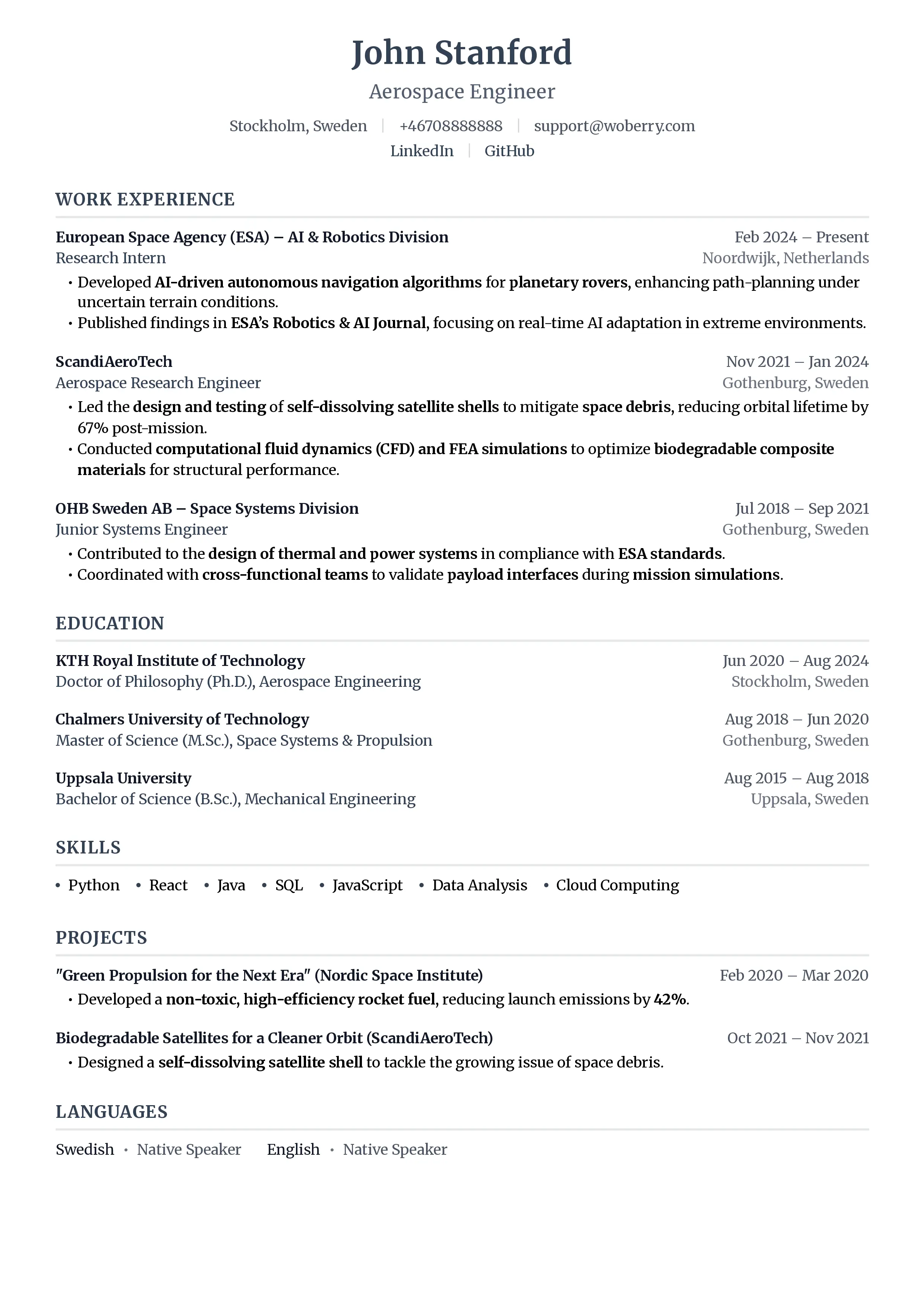
Build a resume that gets interviews
- ATS-optimized templates
- AI-powered writing
- Free to start
No credit card required
Your company just posted the perfect role. It's the logical next step in your career. You're qualified. You know the team. You know the product. You know the culture.
Then the doubt hits: How do you apply to people who already know you?
Do you write a formal cover letter? That feels weird. You see these people in the hallway. You were on a Zoom with the hiring manager yesterday. Writing "Dear Ms. Johnson" to someone you call Sarah feels like wearing a tuxedo to a barbecue.
But skip the cover letter entirely? Now you look like you're not taking it seriously.
Internal applications are a completely different game. The standard cover letter advice, "research the company," "explain why you're interested," "introduce yourself," breaks down entirely when the reader already has two years of context on you. Let's walk through how to navigate this.
Why Standard Cover Letter Advice Breaks Internally
External candidates write cover letters to answer one question: "Who is this person?"
Internal candidates face a different question: "Why should we bet on this person for a bigger role?"
Your readers already know who you are. They've seen you in meetings, read your Slack messages, and reviewed your work. That means:
- You can't hide weaknesses. If you struggled with a project last quarter, they know. Address it rather than pretend it didn't happen.
- Generic praise falls flat. "I admire the company's innovative culture" sounds ridiculous when you've been complaining about the legacy codebase for six months.
- Your reputation precedes you. For better or worse, the hiring manager has already formed an impression. Your letter needs to either reinforce a positive one or reframe a limited one.
An external candidate competes on potential. An internal candidate competes on track record.
The Politics Nobody Talks About
Before you write a single word, handle the human dynamics:
Tell Your Manager First
This is non-negotiable. If your manager finds out you applied for another role by reading it on the internal jobs board, you've damaged a relationship that you'll need regardless of the outcome.
How to frame it:
"I saw the [Role Title] posting and I'm really interested. It feels like a natural next step given the work I've been doing on [Project]. I wanted to talk to you about it before I apply because your support means a lot to me."
This accomplishes three things:
- Shows respect for your manager
- Frames the move as growth, not escape
- Opens the door for them to advocate for you
What if your manager reacts badly? That tells you something important about whether this is a healthy environment for your career. A good manager supports your growth, even when it means losing you from their team.
Navigate Colleague Competition
You might be competing against people you eat lunch with. Don't pretend it's not happening, and don't make it adversarial.
- Don't campaign or lobby visibly
- Don't badmouth other internal candidates
- Don't ask colleagues if they're applying (puts them in an awkward position)
- Do your best work during the application period. Everyone is watching
The Internal Cover Letter Structure
Here's the structure that works for internal moves. It's different from external letters because your reader has context you don't need to repeat.
Opening: Lead with Institutional Knowledge
External candidates open by introducing themselves. You open by demonstrating what only an insider would know.
Before (sounds external):
I am excited to apply for the Senior Product Manager position. With three years of product management experience, I believe I would be a strong addition to the team.
After (sounds internal):
After spending two years on the Platform team, I've developed a detailed understanding of how our enterprise customers use the API, including the three integration pain points that drive 60% of our support tickets. The Senior PM role on the Growth team is positioned to solve exactly these problems, and I'd like to bring that firsthand customer knowledge to the effort.
Why this works: You're not introducing yourself. You're demonstrating institutional value that no external candidate can match. You know the customers, the product, and the problems because you've lived them.
Body: Results They Don't Know About
Here's the paradox of internal applications: your readers think they know your work, but they usually only see a fraction of it.
Your manager sees your daily output. The hiring manager in another department might only know you from cross-functional meetings. And the VP making the final decision might associate you with one project from eight months ago.
Your cover letter's job is to surface the results that your reputation hasn't captured yet.
Before (repeating what they know):
As you know, I've been managing the customer onboarding flow for the past year.
After (revealing what they don't):
Beyond the onboarding project the team knows about, I've been quietly running experiments on our self-serve activation flow. Two of those experiments are now in production and increased Day-7 retention by 18%. I also built a lightweight analytics dashboard that three other PMs have adopted for their own tracking, which wasn't part of my role but filled a gap I kept running into.
Why this works: You're expanding their mental model of your capabilities. The hiring manager is thinking: "I didn't know they did all that. They're already operating at the next level."
Why This Role (Not "Why This Company")
External candidates explain why they want to work at the company. You already work there. Instead, explain why this specific role is the right next step for your growth and the company's benefit.
Before (sounds like you want to escape):
I'm looking for new challenges and opportunities to grow my career.
After (sounds like strategic alignment):
The Growth team's charter to improve activation and expansion revenue connects directly to the patterns I've been seeing in our enterprise customer data. I've spent two years learning where the friction lives. This role would let me actually fix it, with a broader scope and the cross-functional leverage to make changes that stick.
Closing: Address Succession Planning
External candidates close by expressing enthusiasm. Internal candidates should address a concern the hiring manager won't say out loud: "What happens to their current role if we move them?"
Before (doesn't address the gap):
I'm available to discuss this role at your convenience. Thank you for your consideration.
After (eases the transition concern):
I've already begun documenting my current processes, and I've been mentoring Priya on the onboarding system she'd be positioned to take over. I'm committed to making any transition smooth for the Platform team while ramping up quickly in the Growth role.
This shows leadership maturity. You're not just thinking about what you want. You're thinking about what the organization needs to make this work.
Tone Calibration
Getting the tone right is the hardest part. Too formal and it reads as if you're a stranger. Too casual and it reads as if you're not taking it seriously. Here's the balance:
| Too Formal | Too Casual | Just Right |
|---|---|---|
| "Dear Ms. Johnson" | "Hey Sarah!" | "Hi Sarah," |
| "I wish to express my interest" | "So I saw the posting and figured why not" | "The Growth PM role is a natural fit for the work I've been doing" |
| "My qualifications include" | "You already know what I can do" | "Building on the platform work you've seen, here's what else I bring" |
| "I am confident I would excel" | "I'd crush this role" | "I'm ready for this scope, and here's why" |
Write like a colleague who's earned the next step, not a stranger trying to impress.
Handling Known Weaknesses
If there's an elephant in the room, acknowledge it. Ignoring a known weakness internally is far worse than addressing it. Your readers are already thinking about it.
Before (ignoring it):
[No mention of the Q3 project delay]
After (acknowledging and reframing):
I know Q3's project timeline didn't go as planned. I've spent significant time reflecting on what went wrong: I underestimated the dependency on the data team and didn't escalate the blocker early enough. Since then, I've changed how I scope cross-team dependencies, including building buffer time and weekly check-ins with dependent teams. The Q4 launch came in on time and under budget as a result.
Why this works: You've demonstrated self-awareness, accountability, and growth. Pretending it didn't happen would make the hiring manager wonder if you learned anything. Addressing it head-on shows maturity.
Full Annotated Example
Here's a complete internal cover letter with annotations:
Hi David, [Appropriate internal tone]
After two years on the Platform team, I've developed a detailed understanding of how our enterprise customers interact with the API, including the three integration pain points that generate most of our support volume. [Opens with institutional knowledge, specific value]
The Senior PM role on Growth sits at the intersection of the problems I already understand and the solutions I want to build. [Connects current experience to new role's mission]
Beyond the onboarding improvements the team is familiar with, I've been running self-serve activation experiments that increased Day-7 retention by 18%. I also built an analytics dashboard that three other PMs now use for their own tracking, which wasn't in my job description but filled a gap I kept encountering. [Surfaces unknown results, shows initiative beyond role]
I recognize that the Q3 timeline miss was a learning experience. I've since overhauled how I manage cross-team dependencies, and Q4's launch came in ahead of schedule as a result. [Addresses known weakness with accountability and growth]
I've already started documenting my current processes and have been mentoring Priya on the systems she'd take over. I'm committed to a smooth transition for the Platform team. [Addresses succession, shows leadership]
I'd love to discuss how my enterprise customer expertise could accelerate the Growth team's activation goals. I'm free anytime this week.
Best, [Name]
Notice what's missing: no "Dear Sir or Madam," no company research paragraph, no generic enthusiasm. Everything is specific, internal, and forward-looking.
Recovery Plan If You Don't Get It
Let's be honest: applying internally and not getting the role is painful. You still have to work with the people who passed on you. Here's how to handle it:
Day 1: Process it privately. It's okay to be disappointed.
Day 2-3: Ask for feedback. "I'd appreciate hearing what I could do differently to be a stronger candidate in the future." This is genuine, not performative.
Week 1: Return to your current role with full energy. Nothing damages your internal reputation more than visibly sulking.
Month 1-3: Act on the feedback. If they said "more cross-functional experience," volunteer for a cross-team project. Show you're building toward the next opportunity.
The long game: Internal candidates who handle rejection gracefully get remembered. The next opening might be yours, and the hiring manager will remember that you took the feedback seriously.
Frequently Asked Questions
Do I need a cover letter for an internal application?
Not always, but it significantly helps. Many internal candidates skip it, which means submitting one immediately differentiates you. Think of it as a brief, structured case for why you're ready for the role. Even a 200-word email to the hiring manager can serve this purpose.
Should I apply if my manager might not support it?
Have the conversation with your manager first. If they genuinely don't support your growth, that's important information about your long-term trajectory at the company. Some organizations require manager approval for internal transfers, so check your company's policy. For more on navigating difficult professional dynamics, explore cognitive biases that influence hiring decisions.
How is an internal cover letter different from an external one?
Internal letters skip the introduction and company research. Instead, they lead with institutional knowledge, surface results the reader doesn't know about, connect current experience to the new role's mission, address known weaknesses, and ease succession concerns. The tone is more collegial than formal.
What if I'm applying across departments to a team that doesn't know me?
This is a hybrid situation. You still benefit from institutional knowledge (you know the company, products, and culture), but you need more "introduction" than a same-team promotion. Lean heavier on the results section and ask a mutual colleague for an introduction or endorsement.
Can applying internally hurt my current position?
It shouldn't in a healthy organization. If your company penalizes employees for pursuing internal opportunities, that's a cultural red flag. Most organizations encourage internal mobility because it retains talent and institutional knowledge. However, applying for every open role does send the wrong signal. Be strategic.
Internal applications are uncomfortable because the stakes feel personal. You're not just risking rejection. You're risking your daily work relationships.
But the alternative, staying in a role you've outgrown because applying feels awkward, is worse. Companies that encourage internal mobility have 41% longer employee tenure. They want you to apply.
Write the letter. Have the conversation with your manager. Surface the work they don't know about. And if it doesn't work out, ask for feedback and try again.
Need help structuring your case? Start with the cover letter fundamentals, learn to decode what the role really needs, and build a resume that captures your full impact at ResumeFast.
Your resume is your first impression. Make it count.
Join 50,000+ job seekers using ResumeFast to build ATS-optimized resumes that actually get interviews.
No credit card required. Free forever.
Continue Reading
View all articles
How to Apply for an Internal Promotion

Cover Letter for Internal Lateral Move

Internal Letter of Interest: Templates
Cover Letter Psychology: 5 Biases That Win

Career Objective for Freshers: 25 Examples That Work
Resume for Freshers: Format, Skills and Examples (2026)
Build a resume that gets interviews
Ready to build your resume?