Federal Worker to Private Sector: Resume Translation Guide
300K federal workers are transitioning to private sector jobs in 2026. Learn how to translate government experience, GS levels, and federal jargon into a resume that corporate recruiters understand.

Raman M.
Software Engineer & Career Coach

On this page
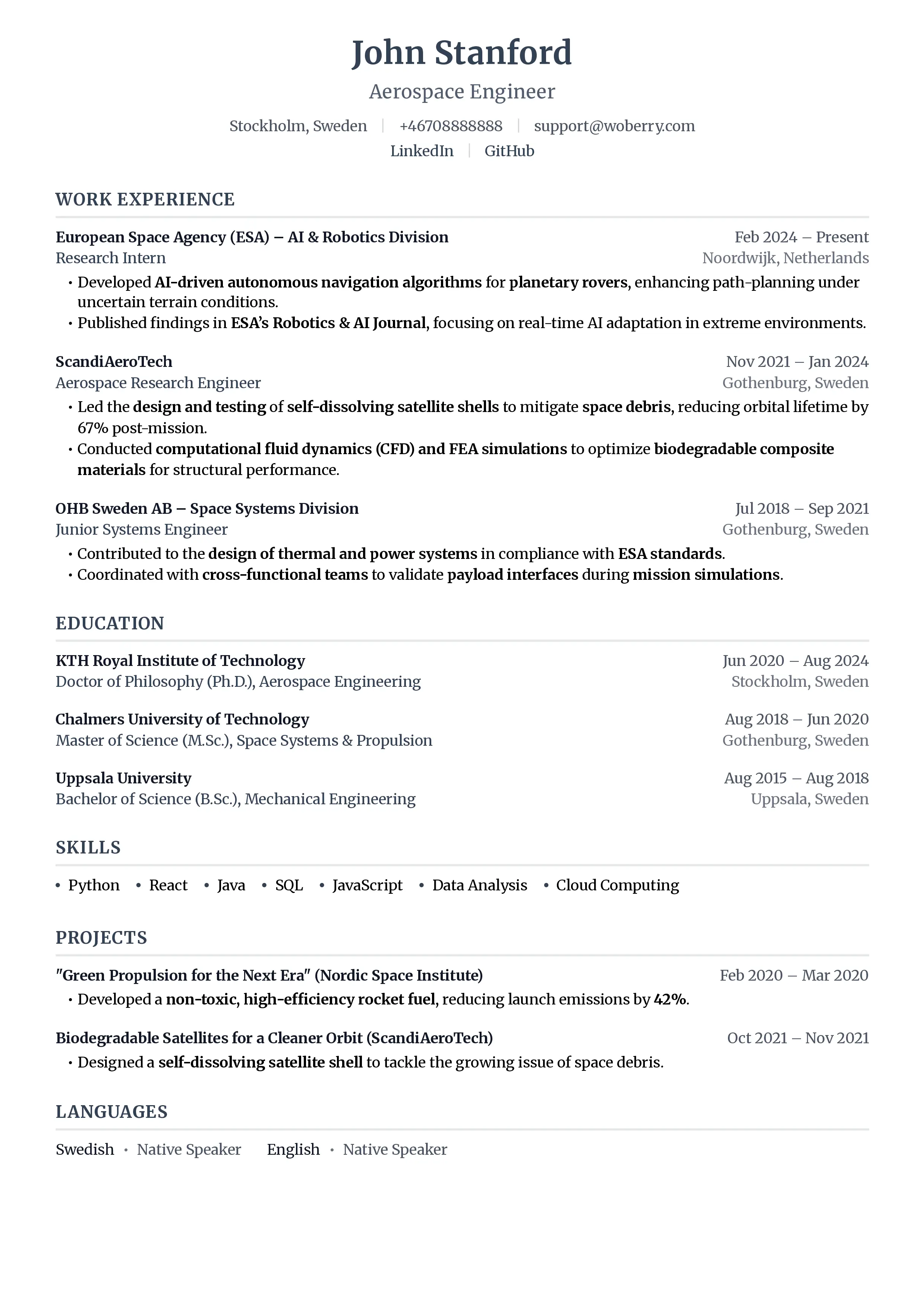
Build a resume that gets interviews
- ATS-optimized templates
- AI-powered writing
- Free to start
No credit card required
If you're one of the 300,000 federal workers displaced by DOGE restructuring in 2026, your resume needs a complete translation. Not just an update. Not just a trim. A full conversion from government-speak to corporate language.
Here's the problem: the resume that got you promoted from GS-9 to GS-13 will get you rejected by every private sector ATS and recruiter. Federal resumes and corporate resumes are essentially different documents written for different audiences with different expectations.
This guide will show you exactly how to bridge that gap.
Why Your Federal Resume Won't Work in the Private Sector
Federal resumes and private sector resumes share a name, but that's about it. If you've spent 5, 10, or 20 years in government, you've been trained to write resumes in a way that actively hurts you in the corporate world.
Here's what's different:
- Length. Federal resumes run 3 to 7 pages. Corporate recruiters expect 1 to 2 pages, max. Anything longer goes straight to the reject pile.
- KSA narratives. Knowledge, Skills, and Abilities statements are a federal requirement. No corporate recruiter knows what these are, and they won't read them.
- GS-level references. Saying "GS-13, Step 7" means nothing outside government. You need to translate that into a title and scope that corporate hiring managers recognize.
- Jargon density. Terms like "Contracting Officer's Representative," "FISMA compliance," or "acquisition lifecycle" need context or replacement for a private sector audience.
- Passive, procedural language. Government writing culture favors phrases like "was responsible for the oversight of" instead of "led" or "managed." Corporate recruiters want impact, not process descriptions.
The good news: your actual experience is valuable. The translation is the hard part, and that's what we're solving here.
The GS-Level Translation Table
One of the first questions federal workers ask is: "What's my GS level worth in the private sector?" Here's a practical mapping.
| GS Level | Approximate Corporate Equivalent | Typical Scope |
|---|---|---|
| GS-5 to GS-7 | Associate, Coordinator, Analyst | Individual contributor, early career |
| GS-9 to GS-11 | Manager, Senior Analyst, Specialist | Team lead or subject matter expert |
| GS-12 to GS-13 | Senior Manager, Program Manager | Multi-team oversight, budget authority |
| GS-14 to GS-15 | Director, Vice President | Department leadership, strategic decisions |
| SES | C-Suite, SVP, Executive Director | Organization-wide impact |
Important nuance: Don't just slap "Director" on your resume if you were a GS-14. The translation depends on the scope of your work. A GS-14 managing a $50M program with 30 direct reports maps to Director. A GS-14 working as a solo technical expert maps to Senior Principal or Lead. Match the scope, not just the number.
Translating Federal Jargon: Before and After
This is where the real work happens. Every bullet point on your federal resume needs to be rewritten for a corporate audience. Here are concrete examples.
Before (federal):
Served as Contracting Officer's Representative (COR) for multiple IDIQ contracts with a combined ceiling of $12M.
After (corporate):
Managed $12M in vendor contracts across 4 suppliers, ensuring on-time delivery and compliance with service-level agreements.
Before (federal):
Developed and maintained POA&Ms in accordance with FISMA requirements and NIST 800-53 controls.
After (corporate):
Created cybersecurity remediation plans that resolved 95% of audit findings within 90 days, reducing organizational risk exposure.
Before (federal):
Provided oversight and guidance to a team of 8 GS-11/12 analysts in the execution of the agency's strategic plan.
After (corporate):
Led a team of 8 analysts to deliver the organization's strategic initiatives, completing 12 projects on time and 15% under budget.
Before (federal):
Coordinated interagency working groups to develop policy recommendations for senior leadership consideration.
After (corporate):
Facilitated cross-functional teams of 20+ stakeholders to develop policy proposals, 3 of which were adopted by executive leadership.
Before (federal):
Managed the acquisition lifecycle for IT modernization efforts valued at $8.5M, including requirements development, source selection, and post-award administration.
After (corporate):
Led $8.5M technology modernization program from vendor selection through implementation, delivering the project 2 months ahead of schedule.
Before (federal):
Conducted program evaluations utilizing GAO and OMB frameworks to assess organizational effectiveness.
After (corporate):
Designed and executed program assessments that identified $1.2M in cost savings and improved operational efficiency by 18%.
Notice the pattern? The corporate versions are shorter, metric-driven, and focused on outcomes rather than processes. You're not describing what you were supposed to do. You're showing what you actually accomplished.
What Corporate Recruiters Actually Value from Government Experience
You might feel like your government background is a disadvantage. It's not. Several aspects of federal experience are highly sought after in the private sector. You just need to frame them correctly.
Security Clearances
If you hold an active TS/SCI or Secret clearance, lead with it. Defense contractors, consulting firms, and cybersecurity companies will pay a premium for cleared professionals. A TS/SCI clearance can add $15,000 to $30,000 to your salary in cleared roles because it takes 6 to 12 months and significant cost for a company to sponsor one.
Compliance and Regulatory Expertise
You've navigated FISMA, FedRAMP, NIST, FAR/DFAR, or similar frameworks. Private companies in healthcare, finance, and technology spend millions on compliance. Your deep understanding of regulatory environments translates directly to GRC (Governance, Risk, and Compliance) roles.
Large-Scale Program Management
Managing programs with $10M+ budgets, multi-year timelines, and dozens of stakeholders is exactly what companies need for enterprise program managers. The scale of government projects often exceeds what most private sector managers have experienced.
Stakeholder Management
Working across agencies, congressional committees, and public interest groups develops a level of stakeholder navigation that corporate environments value enormously. Translate "interagency coordination" into "cross-functional leadership" and you'll get nods from hiring managers.
Data-Driven Decision Making
If you've built dashboards, written program evaluations, or used data to justify budget requests, you've done exactly what private sector companies want from operations and strategy roles.
Format Changes: From Federal to Corporate
Beyond the language translation, you need to restructure the document itself.
Cut to 1 to 2 pages. Yes, this means removing 60% or more of your federal resume. Focus on the last 10 to 15 years. Earlier roles get one line each, if anything.
Remove KSA narratives entirely. If a specific competency is relevant, weave it into your bullet points instead.
Add a professional summary. Replace the federal-style "objective" with a 3 to 4 line summary that states your value proposition. Example:
Operations leader with 12 years of experience managing $50M+ programs in federal agencies. Proven track record of delivering technology modernization projects on time and under budget. Secret clearance active through 2028.
Use a modern, clean layout. Federal resumes are plain text by tradition. Corporate resumes should use clear section headers, consistent formatting, and strategic use of white space. Tools like ResumeFast can help you build a polished, ATS-compatible layout quickly.
Lead with metrics in every bullet. If a bullet point doesn't contain a number, a percentage, or a dollar amount, rewrite it until it does. Corporate recruiters scan for quantified impact.
Quick Wins for Your Transition
Optimize LinkedIn Immediately
Your LinkedIn profile needs the same translation as your resume. Update your headline to use private sector language (not your GS title), rewrite your About section for a corporate audience, and turn on "Open to Work" for recruiters only so your current network doesn't see it.
Network Into the Private Sector
The federal-to-private pipeline is well-established. Organizations like the Partnership for Public Service and LinkedIn groups for federal career changers can connect you with people who've made this exact transition. Informational interviews with former federal employees now in the private sector will give you the clearest picture of what to expect.
Target Companies That Value Government Experience
Government contractors (Booz Allen, Deloitte, SAIC, Leidos) actively recruit from federal agencies and understand your background. Consulting firms value your policy expertise. Regulated industries (healthcare, finance, energy) need your compliance knowledge. Start your job search where your experience translates most directly, then expand from there.
Frequently Asked Questions
Should I list my GS level on my private sector resume?
No. Replace it with an equivalent corporate title that reflects your actual scope of work. Use the translation table above as a starting point, and adjust based on your specific responsibilities.
How do I explain a government-to-private-sector transition in a cover letter?
Focus on the transferable skills, not the career change itself. Open with the value you bring (program management, compliance expertise, team leadership), then briefly note your government background as the source of that experience. Don't apologize for your career path. Frame it as an asset. For help structuring this, check out our cover letter builder.
Is my federal experience less valuable than private sector experience?
Not at all. The challenge is translation, not value. A GS-13 who managed a $20M IT modernization program has directly relevant experience for a Senior Program Manager role at a tech company. The recruiter just needs to understand it in their language.
If you're coming from a federal or government background and want to see how the reverse process works, that guide covers optimizing for USAJobs and federal applications specifically.
Your federal career gave you skills that most private sector candidates don't have: navigating complex bureaucracies, managing enormous budgets, working under intense public scrutiny, and delivering results within rigid regulatory frameworks. Once you translate that experience into language that corporate recruiters understand, you'll find that your government background is one of your strongest selling points.
Start by picking five bullet points from your current resume and rewriting them using the before-and-after framework above. That single exercise will transform how you present your experience and give you momentum for the full rewrite.
Your resume is your first impression. Make it count.
Join 50,000+ job seekers using ResumeFast to build ATS-optimized resumes that actually get interviews.
No credit card required. Free forever.
Continue Reading
View all articles
Cover Letter vs Resume: Differences and When You Need Both
The Complete ATS Resume Guide (2026)
Resume Writing Guide: How to Write a Resume in 2026

Job Hopping in 2026: How Short Tenures Actually Read on Your Resume

New Grad Resume Guide: How to Get Hired in 2026 Without Experience

Defense and Cybersecurity Resume Guide: How to Land a Job in the Fastest-Growing Sectors of 2026
Build a resume that gets interviews
Ready to build your resume?