UK CV Sections: What to Include in Every Heading (2026)
Complete breakdown of every UK CV section. Learn the proper headings, order, and content British employers expect to see.

Raman M.
Software Engineer & Career Coach
On this page
Build a resume that gets interviews
- ATS-optimized templates
- AI-powered writing
- Free to start
No credit card required
If you're applying for jobs in the UK with an American-style resume, you're making a mistake that could cost you interviews.
UK CVs aren't just American resumes with British spelling. The structure, expected sections, and cultural conventions differ in ways that matter to British employers. Get them wrong, and you'll signal that you don't understand the local job market.
This guide breaks down every section British employers expect to see, in the right order, with the right content.
The 7 Essential UK CV Sections
Every UK CV should include these sections in this order:
- Personal Details (Contact information)
- Personal Statement/Profile (3-4 sentence summary)
- Key Skills (Relevant abilities)
- Work Experience (Employment history)
- Education (Qualifications)
- Additional Sections (Certifications, languages, interests)
- References (Usually "Available upon request")
Let's examine each in detail.
Section 1: Personal Details
A UK CV should include a personal statement, not an objective statement. This is one of the most important distinctions from American resumes.
What to Include
- Full name (first and surname)
- Phone number (include country code if applying internationally: +44)
- Email address (professional, not novelty)
- Location (city and county, not full address)
- LinkedIn profile (optional but recommended)
- Portfolio/website (if relevant to your field)
What NOT to Include
Never include a photo on a UK CV unless applying for acting or modeling roles. UK employers actively avoid photos to prevent discrimination claims. Also omit:
- Date of birth or age
- Marital status
- National Insurance number
- Nationality (unless relevant to visa/work authorization)
- Gender
- Religion
Example Format
SARAH WILLIAMS
London, Greater London
+44 7700 900123
sarah.williams@email.com
linkedin.com/in/sarahwilliams
Section 2: Personal Statement (Profile)
The personal statement is a 3-4 sentence overview at the top of your CV. Unlike American objective statements that focus on what you want, UK personal statements emphasize what you offer.
Structure
- Who you are (professional identity + years of experience)
- What you're known for (key achievement or expertise)
- What you're seeking (optional, brief mention of goal)
Writing Style
First-person is optional in UK CVs. Both approaches are acceptable:
First-person:
I am a digital marketing manager with 7 years of experience driving B2B campaigns across EMEA markets. I specialise in content strategy and marketing automation, having increased qualified leads by 156% at my current role.
Third-person:
Digital marketing manager with 7 years of experience driving B2B campaigns across EMEA markets. Specialises in content strategy and marketing automation, having increased qualified leads by 156%.
Common Mistakes
- Being too vague ("passionate professional seeking opportunities")
- Writing more than 4-5 lines
- Copying directly from job descriptions
- Using American spelling ("specialized" instead of "specialised")
Section 3: Key Skills
A dedicated skills section helps recruiters quickly assess your fit. Format as bullet points or a clean list.
Format Options
Bullet points:
- Digital Marketing Strategy
- Google Analytics & Data Studio
- HubSpot Marketing Automation
- Team Leadership (8 direct reports)
- Budget Management (up to 500K)
Grouped by category:
Technical: Google Analytics, HubSpot, Salesforce, SQL Leadership: Team management, Stakeholder engagement, Budget oversight Languages: English (native), French (professional working)
Tips
- Keep to 6-10 key skills
- Match skills to the job description
- Be specific (not "IT skills" but "Advanced Excel, including pivot tables and macros")
- Include both hard and soft skills
Section 4: Work Experience
British employers expect dates in DD/MM/YYYY format, not American MM/DD/YYYY. This is a detail that immediately signals whether you understand UK conventions.
Format
COMPANY NAME, Location
Job Title
MM/YYYY - MM/YYYY (or Present)

- Achievement-focused bullet point with quantified result
- Another accomplishment demonstrating impact
- Third point showing relevant skill application
What to Include
For each role:
- Company name and location (city)
- Your job title
- Dates (month/year format)
- 3-5 bullet points focusing on achievements, not duties
Achievement vs. Duty
Duty (weak):
Responsible for managing social media accounts
Achievement (strong):
Grew LinkedIn following from 5,000 to 45,000 in 18 months, generating 200+ qualified leads monthly through targeted content strategy
Date Formatting
British employers expect dates in DD/MM/YYYY format. For CVs, month/year is standard:
January 2022 - Present   or   01/2022 - Present
June 2019 - December 2021   or   06/2019 - 12/2021
How Far Back?
- Include last 10-15 years of relevant experience
- Older roles can be summarised briefly
- Recent graduates should include part-time and volunteer work
Section 5: Education
Order by recency. Include grades for recent graduates (within 5 years of graduation), but established professionals can omit them.
Format
UNIVERSITY/INSTITUTION NAME
Degree Title, Subject
Graduation Year (or Expected Year)
Grade: 2:1 (or First Class, etc.) - if recent graduate

Relevant modules: List if applicable to the role
Dissertation: Title if relevant
UK Grading System
For those unfamiliar with British university grades:
- First Class (1st): 70%+ - Top tier
- Upper Second (2:1): 60-69% - Good standard
- Lower Second (2:2): 50-59% - Acceptable
- Third Class: 40-49% - Pass
What to Include
For recent graduates:
- Degree classification
- Relevant modules
- Dissertation title (if relevant)
- Academic achievements
For experienced professionals:
- Degree title and institution
- Graduation year
- Professional qualifications (more prominent than academic)
A-Levels and GCSEs
Include A-Levels if you're a recent graduate or they're highly relevant. GCSEs are rarely needed unless you're in an entry-level role and don't have higher qualifications.
Section 6: Additional Sections
Add these based on relevance to the role:
Professional Certifications
List certifications prominently if they're industry requirements:
PROFESSIONAL QUALIFICATIONS
ACCA Qualified (2021)
Google Analytics Certified
Prince2 Practitioner
Languages
Important for international roles or companies:
LANGUAGES
English: Native
German: Professional working proficiency (B2)
Spanish: Conversational (A2)
Interests (When Appropriate)
Only include if they:
- Demonstrate relevant skills
- Show leadership or commitment
- Provide conversation starters
Good:
Captain of local football team, organising fixtures and managing 20+ players
Skip:
Reading, watching films, socialising
Volunteer Work
Increasingly valued by UK employers:
VOLUNTARY EXPERIENCE
Mentor, Prince's Trust (2021 - Present)
Support young people aged 16-25 with employment skills and CV writing
Section 7: References
Standard practice in the UK is:
References available upon request
Don't include actual referee details unless specifically requested. Employers will ask for references later in the hiring process.
What NOT to Include on a UK CV
These items should never appear:
| Don't Include | Why |
|---|---|
| Photo | Discrimination concerns |
| Date of birth | Age discrimination |
| Marital status | Irrelevant, potentially discriminatory |
| National Insurance number | Privacy/security risk |
| Full home address | Security risk; city is sufficient |
| Nationality | Unless work authorisation is questioned |
| "CV" as a heading | Obvious, wastes space |
UK CV Length: One Page or Two?
Unlike American one-page resume convention, UK CVs are typically two pages for experienced professionals. Here's the guidance:
- Graduates/early career (0-3 years): One page preferred
- Mid-career (3-10 years): Two pages acceptable
- Senior/executive: Two pages, possibly three for academic CVs
The key is relevance, not length. A focused one-page CV beats a padded two-page CV every time.
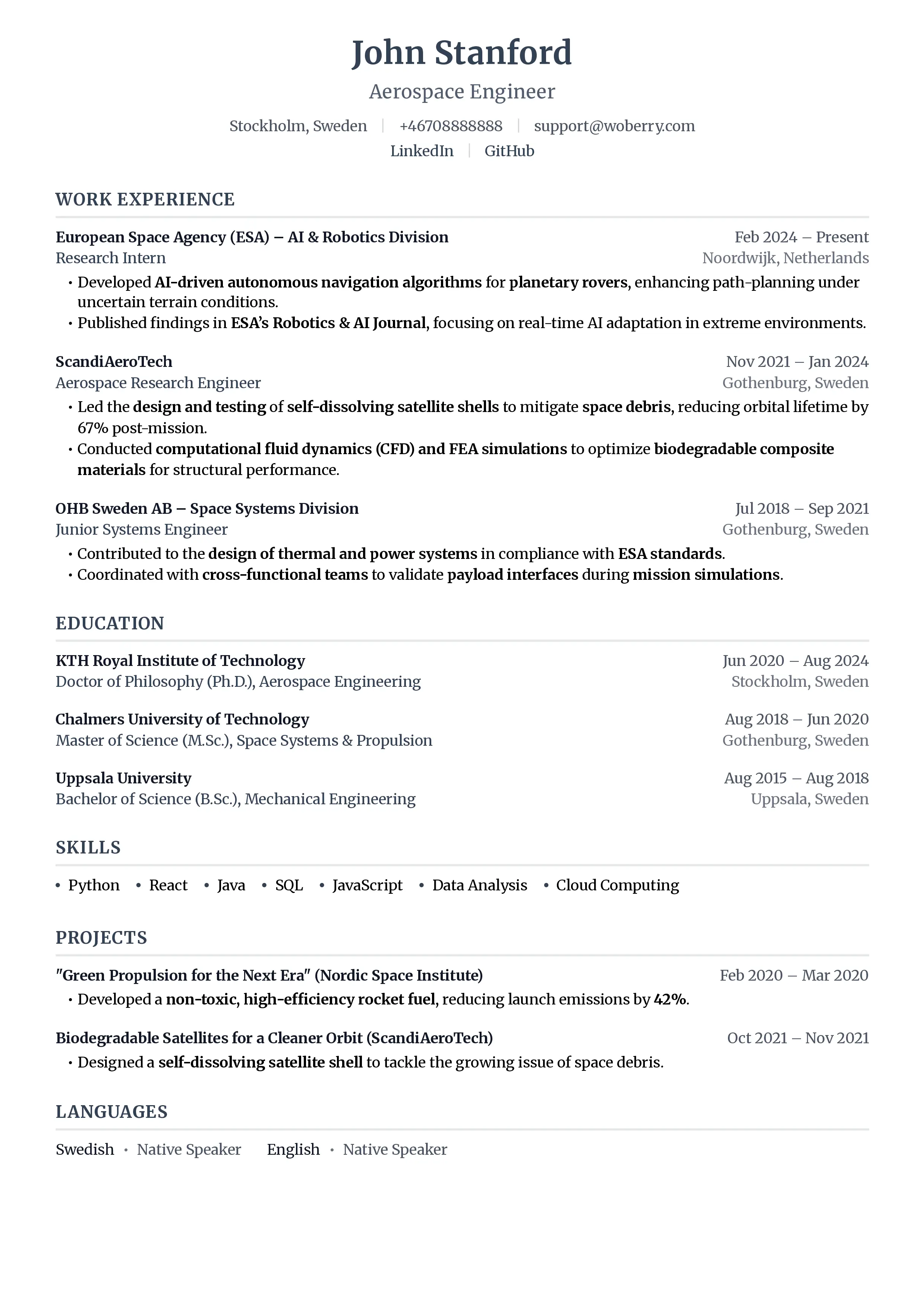
Complete UK CV Example
Here's how all sections come together:
JAMES THOMPSON
Manchester, Greater Manchester
+44 7700 123456 | james.thompson@email.com
linkedin.com/in/jamesthompson

PERSONAL STATEMENT

Senior software engineer with 8 years of experience building scalable
applications for fintech companies. Led development of payment processing
system handling 2M+ daily transactions. Seeking to bring technical
leadership and architecture expertise to a growing engineering team.

KEY SKILLS

Technical: Python, Java, AWS, Kubernetes, PostgreSQL, REST APIs
Leadership: Team mentoring, Technical interviews, Sprint planning
Methodologies: Agile, Scrum, CI/CD, Test-driven development

WORK EXPERIENCE

FINTECH SOLUTIONS LTD, Manchester
Senior Software Engineer
03/2020 - Present

- Architected payment processing system handling 2M+ daily transactions
  with 99.99% uptime
- Led team of 5 engineers, conducting code reviews and mentoring
  junior developers
- Reduced deployment time by 70% through CI/CD pipeline improvements
- Collaborated with product team to define technical requirements for
  new features

TECH STARTUP LTD, London
Software Engineer
06/2016 - 02/2020

- Developed core API serving 500K monthly active users
- Implemented automated testing framework, increasing code coverage
  from 40% to 85%
- Migrated legacy monolith to microservices architecture

EDUCATION

University of Manchester
BSc Computer Science
2016
Grade: First Class Honours

CERTIFICATIONS

AWS Solutions Architect Professional (2023)
Certified Kubernetes Administrator (2022)

References available upon request
Frequently Asked Questions
Should I include references on a UK CV?
No. Write "References available upon request" or omit the section entirely. Employers will ask for references at the appropriate stage.
One page or two for a UK CV?
Two pages are acceptable and common for experienced professionals. Graduates should aim for one page. The rule is relevance: don't pad to reach two pages, but don't cram if you have substantive experience.
Do I need to include my photo?
No. In fact, including a photo may hurt your application. UK employers avoid photos to prevent discrimination claims, and including one suggests you don't understand local practices.
What's the difference between a CV and a resume?
In the UK, "CV" (curriculum vitae) is the standard term for what Americans call a resume. Academic CVs are longer documents detailing research, publications, and teaching history. For most UK job applications, "CV" means a 1-2 page career document.
Should I include my nationality?
Only if work authorisation might be questioned. EU nationals post-Brexit, for example, might note their settled or pre-settled status. Otherwise, omit it.
How do I handle employment gaps?
Address them briefly and positively. If you took time for caregiving, education, or travel, note it: "Career break for family responsibilities (2020-2021)." Don't leave unexplained gaps. For more detail, see our guide to explaining resume gaps.
Final Checklist
Before sending your UK CV:
- Contact info includes UK phone format (+44) and city location
- Personal statement is 3-4 sentences about what you offer
- Dates use British format (DD/MM/YYYY or Month YYYY)
- No photo, age, marital status, or NI number
- British spelling throughout (specialise, organise, colour)
- Two pages maximum for most roles
- References section says "Available upon request"
- Education includes grades if you're a recent graduate
Moving to the UK job market? Check out our guide to converting a US resume to UK CV for a step-by-step transformation process, or explore our complete UK CV guide for more context on British job search expectations.
Your resume is your first impression. Make it count.
Join 50,000+ job seekers using ResumeFast to build ATS-optimized resumes that actually get interviews.
No credit card required. Free forever.
Continue Reading
View all articles
Europass CV Guide: When to Use It and When to Avoid It
CV Format for Gulf Jobs: UAE, Saudi Arabia and Qatar

Resume Format Philippines: Local Jobs and Work Abroad

Australian Resume Format: What Employers Expect in 2026

International CV Formats: Country-by-Country Guide 2026
Biodata vs Resume vs CV: Differences and When to Use Each
Build a resume that gets interviews
Ready to build your resume?