German CV Photo Guide: Bewerbungsfoto Rules
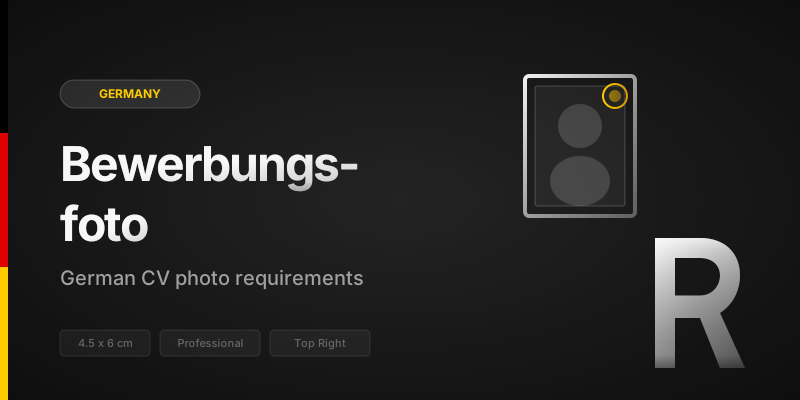
Everything you need to know about German CV photos (Bewerbungsfoto). Professional standards, specifications, what to wear, and common mistakes that hurt your application.

Raman M.
Software Engineer & Career Coach
On this page
Build a resume that gets interviews
- ATS-optimized templates
- AI-powered writing
- Free to start
No credit card required
In Germany, your CV photo isn't optional. It's expected. And a bad one can sink your application before anyone reads a word.
For job seekers coming from the US, UK, or other countries where CV photos are unusual or even illegal to request, this requirement feels strange. But in Germany, the Bewerbungsfoto (application photo) remains a standard part of the job application process.
This guide covers everything you need to know about getting your German CV photo right.
Why Germans Expect CV Photos
Before diving into specifications, it helps to understand the cultural context.
German hiring culture values thoroughness and complete information. A CV photo isn't about your looks. It's about demonstrating professionalism and showing you understand German business conventions. Submitting an application without a photo signals unfamiliarity with local expectations.
While anti-discrimination laws technically make photos optional, most traditional German companies still expect them. Leaving it off can raise more questions than including it.
When photos are still expected:
- Traditional German companies (Mittelstand, family businesses)
- Public sector positions
- Most corporate roles
- Banking and finance
- Law firms
When photos may not be needed:
- International companies with English job postings
- Tech startups (especially Berlin-based)
- Roles explicitly stating "AGG-konform" (anti-discrimination compliant)
- Applications through international job platforms
When in doubt, include a professional photo. It's never wrong to have one ready.
Photo Specifications
German CV photos follow specific standards. Here are the exact requirements:
Dimensions and Format
| Specification | Requirement |
|---|---|
| Size | 4.5 cm x 6 cm (standard) |
| Orientation | Portrait (vertical) |
| Aspect ratio | 3:4 |
| Resolution (digital) | 300 DPI minimum |
| File format | JPEG or PNG |
| File size | 500 KB - 2 MB |
For digital applications, the photo should be high-resolution enough to print clearly if needed.
Composition
The photo should show:
- Head and shoulders (not just face, not full body)
- Face occupying 70-80% of the frame
- Eyes at approximately one-third from the top
- Straight-on or slight angle (no more than 15 degrees)
- Both ears visible (or at least one fully)
Technical Quality
- Sharp focus on the eyes
- Even lighting with no harsh shadows
- Neutral or light background (white, light gray, or light blue)
- No lens distortion (avoid phone cameras at close range)
- Professional colour balance (not overly edited)
What to Wear
Your clothing should reflect your target industry while remaining professionally appropriate.
Corporate and Finance
- Men: Dark suit jacket, white or light blue shirt, conservative tie
- Women: Blazer or professional blouse, minimal jewellery
Creative Industries
- Men: Smart casual with quality fabrics, no tie required
- Women: Modern professional attire, subtle personal style acceptable
Tech and Startups
- Men: Collared shirt or quality sweater, no jacket required
- Women: Professional but less formal, personality acceptable
General Guidelines
Do:
- Wear solid colours (navy, gray, black, white work well)
- Choose clothes that fit well
- Ensure clothes are pressed and clean
- Dress one level above your target position
Don't:
- Wear busy patterns or loud colours
- Show logos or brand names
- Wear casual clothing (t-shirts, hoodies)
- Over-accessorise
Expression and Pose
The Bewerbungsfoto is not a passport photo. You should look approachable yet professional.
Expression Guidelines
- Smile naturally but not excessively (a slight, genuine smile works best)
- Eyes should be engaged and looking at the camera
- Avoid extreme expressions (no big grins, no stern frowns)
- Aim for confident and approachable
German CV photos tend to be more formal than American headshots but warmer than passport photos. Think "professional LinkedIn photo" rather than "ID card."
Posture
- Sit or stand straight with shoulders back
- Slight turn of the body (up to 30 degrees) can be flattering
- Face the camera directly or with very slight angle
- Keep chin level (not too high or low)
Background Requirements
The background matters more than you might think.
Recommended Backgrounds
- Pure white (most common, safest choice)
- Light gray (professional, adds depth)
- Light blue (common in Germany, looks clean)
- Soft gradient (subtle light variation acceptable)
Backgrounds to Avoid
- Busy environments (offices, outdoor scenes)
- Bright or saturated colours
- Patterned backgrounds
- Dark backgrounds (can look harsh)
- Props or other people
Professional photographers typically shoot against a neutral backdrop and can adjust the colour in post-processing.
Where to Get Your Photo
Professional Photographers (Recommended)
The best option is a professional photographer who specialises in Bewerbungsfotos.
What to expect:
- Session length: 15-30 minutes
- Number of shots: 20-50 photos to choose from
- Cost: €50-100 in most cities, €80-150 in expensive areas
- Turnaround: Same day to one week
- Retouching: Light touch-ups typically included
Finding a photographer:
- Search "Bewerbungsfotos [city name]" on Google
- Check reviews on Google Maps
- Ask for sample portfolios
- Confirm digital delivery is included
Photo Studios and Chains
Department stores and photo chains like dm or Rossmann offer Bewerbungsfoto services at lower prices (€15-30). The quality is acceptable but less personalised.
Pros: Cheaper, quick, consistent Cons: Less individual attention, limited outfit feedback, basic retouching
DIY Options
Taking your own Bewerbungsfoto is possible but risky. If you must:
- Use a tripod and timer or have someone help
- Shoot in natural light near a large window
- Use a plain wall as background
- Use the rear camera of your phone, not the selfie camera
- Take many photos and be selective
- Consider light editing (brightness, contrast) but avoid filters
Warning: DIY photos often look amateur. For important applications, invest in professional photography.
Photo Placement on Your CV
Where you place the photo matters for German CV conventions.
Standard Placement
The traditional position is the top right corner of the first page.
┌─────────────────────────────────┐
│ Name and Contact    │   Photo  │
│ Info                │          │
├─────────────────────┴──────────┤
│ Personal Profile               │
│                                │
│ Berufserfahrung...             │
Alternative: Cover Page (Deckblatt)
Some German applications include a separate cover page with:
- Your name in large text
- The photo prominently displayed (larger than on CV)
- Contact information
- Target position
This is more traditional and common in conservative industries.
Size on Document
- On CV: 4.5 x 6 cm or slightly smaller
- On Deckblatt: Up to 6 x 8 cm
- Placement: Right-aligned, with text wrapping if needed
Digital vs Print Considerations
For Digital Applications
Most applications today are submitted digitally.
Photo requirements:
- Resolution: 300 DPI (will be around 530 x 710 pixels for standard size)
- Format: JPEG (smaller file size) or PNG (better quality)
- File size: Keep under 2 MB
- Embed the photo in your PDF CV
How to embed:
- Insert the photo into your CV document
- Position in the top right corner
- Export the entire document as PDF
- Verify the photo displays correctly in the PDF
For Print Applications
Some positions (particularly public sector) may request printed applications.
Print requirements:
- Photo resolution: 300 DPI minimum
- Print on high-quality photo paper
- Attach with photo corners or light adhesive (not glue that damages)
- Consider ordering printed copies from your photographer
Common Photo Mistakes
These errors are immediately obvious to German hiring managers:
1. Using a Cropped Social Photo
A cropped vacation or party photo is obvious. Professional photos have different lighting, backgrounds, and composition.
2. Selfie-Style Photos
Front-facing phone cameras distort facial proportions. Even well-lit selfies look unprofessional.
3. Outdated Photos
Your photo should reflect how you look today. Using a photo from five years ago creates a disconnect at interviews.
4. Over-Retouching
Heavy editing, skin smoothing, or obvious filters look artificial. Light retouching is fine; heavy modification is not.
5. Wrong Attire
Casual clothing or inappropriate dress for your target industry signals poor judgement.
6. Poor Quality
Blurry images, bad lighting, pixelation, or low resolution all reflect poorly on your attention to detail.
7. Wrong Expression
Too serious looks unwelcoming. Too casual looks unprofessional. Aim for approachable confidence.
8. Incorrect Size or Placement
A photo that's too large, too small, or poorly positioned disrupts your CV layout.
When Photos Are NOT Required
Some contexts explicitly don't require or discourage photos:
International Companies
Many multinational companies operating in Germany follow home-country practices. American or British companies may prefer no photos.
AGG-Compliant Applications
Applications marked "AGG-konform" (compliant with Germany's anti-discrimination law) may explicitly request no photo.
Anonymous Application Processes
Some companies use anonymised initial screening. They'll specify if photos should be omitted.
Tech Industry Trends
Berlin's tech scene increasingly follows American norms. When in doubt, check if the job posting mentions photo requirements.
Rule of thumb: Unless the posting says otherwise, assume a traditional German company expects a photo.
Photo Quality Checklist
Before using your Bewerbungsfoto, verify:
- Professional quality (not a selfie or crop)
- Head and shoulders visible
- Neutral background (white, gray, or light blue)
- Appropriate business attire for target industry
- Natural, approachable expression
- Sharp focus, especially on eyes
- Even lighting without harsh shadows
- Recent photo (within 2 years)
- Correct dimensions (approximately 4.5 x 6 cm)
- High resolution for digital use (300 DPI)
- File size appropriate for application system
- Properly positioned on CV (top right corner)
Summary
The German CV photo requirement surprises many international job seekers, but it's a straightforward box to check. Invest in a professional photographer, dress appropriately for your target industry, and aim for an expression that's confident yet approachable.
A good Bewerbungsfoto won't get you the job on its own, but a bad one can prevent your qualifications from being considered. Treat it as part of your professional presentation.
For a complete guide to German CV formatting beyond the photo, read our comprehensive German CV Guide covering all sections of the Lebenslauf. German speakers can also check our guide Lebenslauf schreiben for native-language tips.
Ready to create a professional German CV? ResumeFast's templates help you build a properly formatted Lebenslauf that meets German employer expectations.
Your resume is your first impression. Make it count.
Join 50,000+ job seekers using ResumeFast to build ATS-optimized resumes that actually get interviews.
No credit card required. Free forever.
Continue Reading
View all articles
German CV for English Speakers: Full Guide

Europass CV Guide: When to Use It and When to Avoid It
CV Format for Gulf Jobs: UAE, Saudi Arabia and Qatar

Resume Format Philippines: Local Jobs and Work Abroad
Australian Resume Format: What Employers Expect in 2026
International CV Formats: Country-by-Country Guide 2026
Build a resume that gets interviews
Ready to build your resume?